
The week of 12 to 16 October 2026 was packed with data for currency traders. The US released hotter-than-expected consumer and producer inflation figures, India published retail inflation, wholesale inflation and trade data, and Fed Chair Kevin Warsh spoke at the IMF meetings in Bangkok. Despite the inflation surprises, the US dollar ended the week lower, and the Indian rupee posted its best week in seven months.
This forex weekly wrap covers how the major currencies and the rupee performed, what drove the moves day by day, what changed in Fed and RBI expectations, and what Indian traders should watch in the week of 19 to 23 October.
The Week in Brief
The US Dollar Index fell about 0.6% over the week to 101.61, its first weekly drop in more than a month against the euro and yen, according to Reuters. Hot US inflation data lifted the dollar briefly, but Fed officials signaled no urgency to raise rates, Treasury yields fell, and a sell-off in AI-related stocks hurt US assets. The rupee closed at 94.96 per dollar on Friday, a weekly gain of about 2%, helped by RBI measures and the softer dollar.
Weekly Scorecard
| Market | Friday 16 October | Weekly move |
|---|---|---|
| US Dollar Index (DXY) | 101.61 | Down about 0.6% |
| EUR/USD | 1.1255 | Up about 0.5% |
| GBP/USD | 1.3353 | Up about 0.9% |
| USD/JPY | 157.79 | Yen up about 0.3% |
| USD/CHF | 0.8228 | Franc up about 0.9% |
| USD/INR | 94.96 | Rupee up about 2% |
| Gold | Near USD 4,167 an ounce | Down about 0.5% |
| WTI crude oil | Above USD 100 a barrel | Up about 8% |
| US 10-year Treasury yield | Near 5.09% | Down from about 5.24% |
| S&P 500 | n/a | Down about 2.1% |
Sources: Reuters via Business Recorder for currency levels; Babypips weekly recap for gold, oil, yields and equities; Reuters via Business Recorder and Investing.com for the rupee. Figures are approximate and timed to the US session on 16 October.
Day by Day
Monday 12 October: India CPI and a Dollar High
India’s Ministry of Statistics reported that retail inflation rose to 5.54% in September from 4.83% in August, with food inflation at 7.74%. The figure is inside the RBI’s 2% to 6% tolerance band but rising. The Dollar Index touched an 18-month high near 102.37 at the start of the week before easing, according to Capital Street FX.
Wednesday 14 October: Hot US CPI, Hot Indian WPI
US consumer prices rose 3.7% from a year earlier in September, above the 3.6% forecast, and core inflation reached 2.6%. The dollar jumped, the 10-year Treasury yield rose to about 5.33%, and the market-implied chance of an October Fed rate hike briefly reached about 50%. Most of the move reversed by the next morning.
Earlier that day, India’s wholesale inflation rose to 11.39% in September from 9.92% in August, led by fuel and power prices up 25.85%. The rupee closed near 95.15, a one-month high, as RBI measures to curb speculative dollar demand took effect.
Thursday 15 October: PPI, Retail Sales and India’s Trade Deficit
US producer prices rose 1.3% in September, the biggest monthly increase since 2022, and retail sales rose 0.8%. Both beat forecasts, but gasoline drove most of the gains, and the retail sales control group rose only 0.1%. Fed officials, including San Francisco Fed President Mary Daly, said there was no urgency to tighten further. The dollar fell about 0.5% and Treasury yields dropped.
India’s merchandise trade deficit widened to USD 30.21 billion in September from USD 26.86 billion in August, as petroleum imports rose about 31%. In Australia, a surprisingly weak September jobs report led markets to scale back expectations of another rate hike, and the Australian dollar was the week’s weakest major currency.
Friday 16 October: Warsh, Reserves and Oil
Speaking at the IMF and World Bank meetings in Bangkok, Warsh declined to signal his plans: “I don’t prejudge meetings.” He said the Fed had “removed a dose of accommodation” in September and described a “synchronous tightening in monetary policy in most places around the world.” Bank of Japan Governor Kazuo Ueda said the BoJ would keep raising rates in line with economic developments.
The RBI’s weekly data showed foreign exchange reserves fell by USD 8.58 billion to USD 726.03 billion in the week ended 9 October. WTI crude topped USD 100 a barrel in the afternoon.
Why the Dollar Fell Despite Hot Inflation
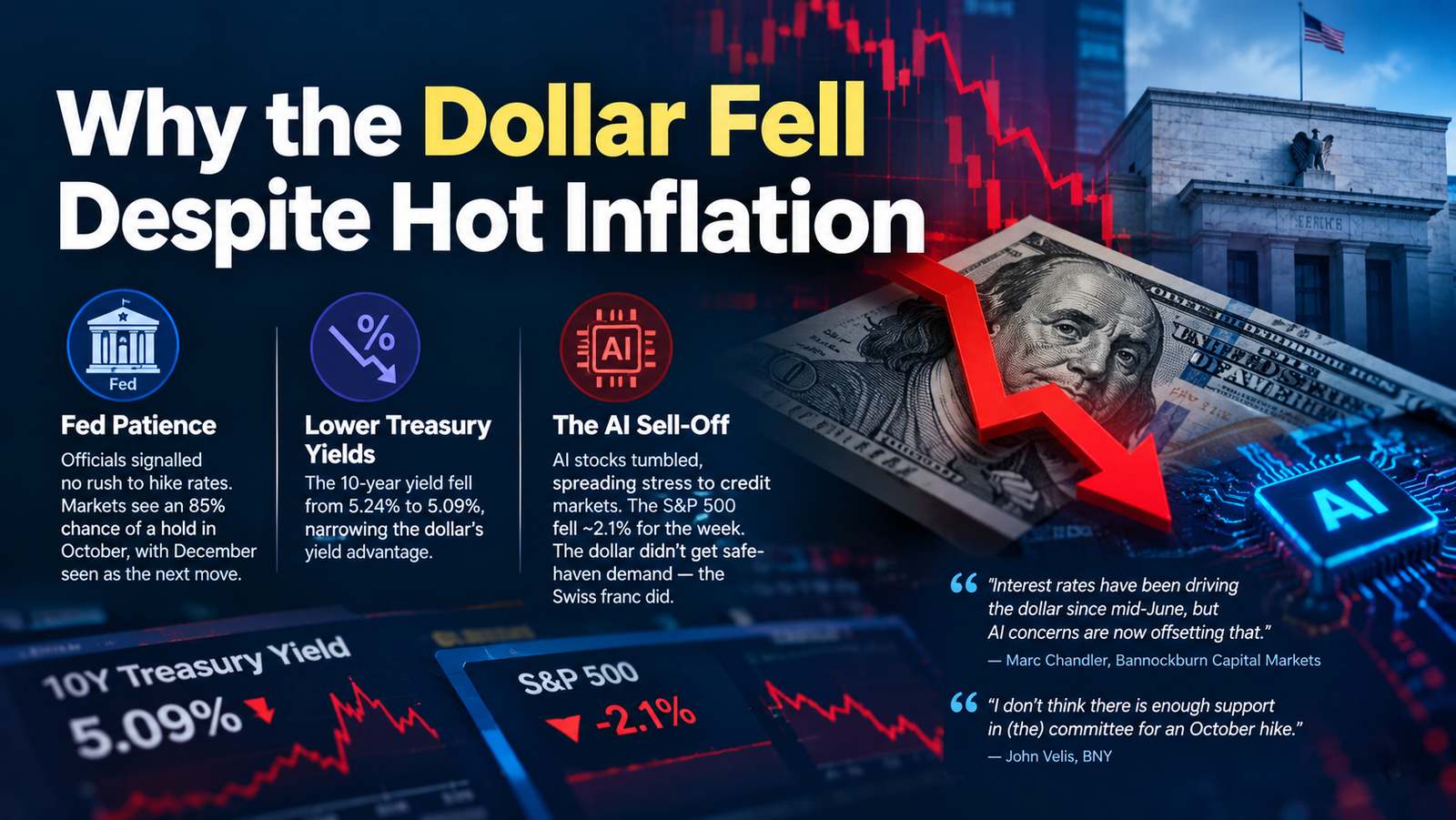
On the surface, a week with higher-than-expected CPI and PPI should have supported the dollar. Three factors outweighed the data.
- Fed patience. Officials including New York Fed President John Williams, Governor Michelle Bowman and Daly said there was no need to hurry. By Friday, CME FedWatch showed about an 85% chance that the Fed holds rates at its 27 to 28 October meeting, according to Reuters. Most brokerages expect the next hike in December.
- Lower Treasury yields. The 10-year yield fell from about 5.24% at the start of the week to near 5.09%, narrowing the dollar’s yield advantage.
- The AI sell-off. AI-related stocks fell sharply and the stress spread to parts of the credit market, on concerns that data centre operators may not become profitable in time to repay debt. The S&P 500 fell about 2.1% on the week. The dollar did not attract safe-haven buying; the Swiss franc did.
Marc Chandler of Bannockburn Capital Markets told Reuters that “interest rates have been driving the dollar” since mid-June, but AI concerns are now offsetting that. BNY’s John Velis said he did not think “there is enough support in (the) committee” for an October hike.
Major Currencies: Winners and Losers
Swiss Franc and Sterling
The Swiss franc gained more than 1.4% over the last two sessions as investors sought safety during the AI sell-off, and USD/CHF fell about 0.9% on the week. Sterling rose about 0.9% against the dollar to 1.3353, its highest in three weeks.
Euro
EUR/USD rose about 0.5% to 1.1255. Thursday’s gain of 0.56% was its biggest daily rise in two months. Concern over France’s public finances remains in the background, and Moody’s is due to review France’s rating on 23 October.
Yen
The yen gained about 0.3%, ending four straight weekly losses, with USD/JPY at 157.79. Analysts have pointed to 160.00 as the level where the Bank of Japan could intervene.
Australian and Canadian Dollars
The Australian dollar fell against all the majors over the week after the weak jobs data. The Canadian dollar was among the best performers, helped by the rise in oil prices.
The Rupee: Best Week in Seven Months
The rupee rose about 2% to close at 94.96 per dollar on Friday, its biggest weekly gain in seven months, according to Reuters. It had come close to its record low of 96.96 earlier in October; Business Today reported the rupee near 96.84 on 7 October.
What Drove the Rebound
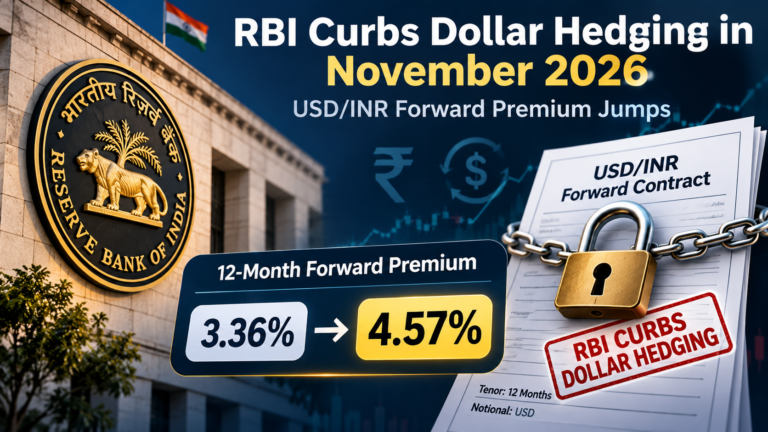
- RBI measures: part of oil companies’ dollar demand was routed away from the open market, the cost of hedging against rupee weakness was raised, and the limit for dollar purchases without underlying documentation was cut by 95% to USD 5 million.
- Direct intervention: the RBI sold dollars, and reserves fell by about USD 21.5 billion over the two weeks ended 9 October.
- Higher rates: the RBI raised its repo rate by 25 basis points to 5.50% on 7 October.
- A softer dollar: the global dollar decline later in the week added support.
RBI Governor Sanjay Malhotra said earlier in the month that “by a number of estimates, including the REER, the rupee is not overvalued; it may be undervalued,” according to Business Today.
The Risks That Remain
Oil is the main risk. WTI rose about 8% this week and India’s petroleum imports are already rising sharply. Foreign investors were also net sellers of Indian equities, including about ₹5,285 crore on 15 October. Joey Chew, HSBC’s head of Asia FX research, told Reuters that “unless oil prices collapse, USD-INR faces upward pressure over time,” while noting the pair “can be capped in the near term.” HSBC expects the rupee at 96 by the end of 2026 and 98 by the end of 2027. Some investors have also warned that frequent changes to foreign exchange rules could reduce liquidity in the currency market.
Hypothetical example: an importer buying USD 500,000 at 96.9 per dollar, near the record low, would pay about ₹4.85 crore. At Friday’s close of 94.96, the same amount costs about ₹4.75 crore, roughly ₹10 lakh less. A 2% swing like this week’s shows why companies with dollar costs use hedges rather than trying to time the market.
What It Means for Indian Traders
- RBI policy is the main driver of USD/INR right now. The rupee’s gains came mainly from intervention and rule changes, not from an improvement in trade or capital flows.
- US data moves the global dollar, but the effect on the rupee is delayed. Rupee contracts on NSE and BSE close at 5:00 PM IST, before most US data, so USD/INR reacts at the next day’s open.
- Watch oil as closely as the Fed. With WTI back above USD 100, the trade deficit and inflation are both under pressure.
- Trade only through permitted channels. Indian residents can trade currency derivatives only through authorised brokers on recognised exchanges, as permitted under FEMA.

Week Ahead: 19 to 23 October 2026
| Date | Event | Why it matters |
|---|---|---|
| Monday 19 October | China Q3 GDP and September activity data; Canada CPI | China growth affects commodity currencies and Asian sentiment |
| Tuesday 20 October | China loan prime rates; UK jobs data | PBoC expected to keep rates unchanged |
| Wednesday 21 October | UK CPI (forecast 3.4%, from 3.1%); RBI MPC minutes | UK inflation drives sterling; the minutes show how divided the RBI is on further hikes |
| Thursday 22 October | Bank of Korea and Turkish central bank decisions | Regional policy signals for emerging markets |
| Friday 23 October | Japan CPI; flash PMIs for the eurozone, UK and US; Moody’s review of France | First look at October activity; France rating risk for the euro |
Sources: Newsquawk and LiteFinance weekly calendars; RBI MPC minutes date as reported by CorpLawUpdates. Schedules can change.
The Fed’s pre-meeting blackout period begins on 17 October, so there should be few comments from Fed officials before the 27 to 28 October FOMC meeting. That leaves oil, the AI sell-off and RBI action as the main drivers for USD/INR next week.
Frequently Asked Questions
How did the US dollar perform in the week of 12 to 16 October 2026?
The Dollar Index fell about 0.6% to 101.61, its first weekly decline in more than a month against the euro and yen, as Fed officials signalled patience and Treasury yields fell.
How did the rupee perform this week?
The rupee rose about 2% to close at 94.96 per dollar on 16 October, its best week in seven months, helped by RBI measures and a weaker dollar.
What is the rupee’s record low?
The rupee’s record low is 96.96 per dollar. It traded near 96.84 on 7 October before recovering.
Will the Fed raise rates in October 2026?
Markets see it as unlikely. CME FedWatch showed about an 85% chance of no change at the 27 to 28 October meeting on 16 October, with most analysts expecting a hike in December.
What are the key events for forex traders next week?
China’s Q3 GDP on 19 October, UK CPI and the RBI MPC minutes on 21 October, and Japan CPI and flash PMIs on 23 October.
Conclusion
The week showed that inflation data alone is not enough to move the dollar higher when the Fed signals patience and risk appetite weakens. The dollar lost ground against most major currencies, with the Swiss franc and sterling leading. The rupee had its best week since March, but the gains rest on RBI intervention and policy changes rather than on lower oil prices or stronger capital inflows. With oil back above USD 100 and the Fed in its blackout period, next week’s focus for Indian traders is oil, China’s growth data and the RBI minutes.
Disclaimer
This article is for educational purposes only and does not constitute investment, trading, tax or legal advice. Market levels are approximate and drawn from published reports; they may differ between data providers. Examples are hypothetical. Currency and derivatives trading involves substantial risk of loss; Indian residents should trade only through authorised persons and recognised exchanges as permitted under FEMA, and consult a SEBI-registered adviser before making financial decisions.