


The forex market is influenced by far more than chart patterns and technical indicators. Behind every currency movement lies a complex network of economic data, monetary policy decisions, geopolitical developments, and investor sentiment. Understanding these underlying factors is essential for traders who want to make informed decisions and identify long-term opportunities.
A successful approach to fundamental analysis forex trading requires understanding key economic indicators trading principles, interpreting central bank analysis, applying effective macroeconomic forex techniques, and mastering the art of currency valuation. By combining these skills, traders can better understand why currencies move and how to position themselves for future market trends.
This comprehensive guide explains how fundamental analysis works in forex markets and how traders can use economic data and policy developments to improve trading performance.
What Is Fundamental Analysis in Forex Trading?
Fundamental analysis forex is the process of evaluating economic, financial, and political factors that influence currency values.
Unlike technical analysis, which focuses primarily on price charts and patterns, fundamental analysis forex seeks to understand the underlying reasons behind market movements.
Traders using fundamental analysis forex examine economic growth, inflation, employment, interest rates, government policies, and global economic conditions.
The goal is to determine whether a currency is likely to strengthen or weaken over time.
Because currencies reflect the health of national economies, understanding economic fundamentals provides valuable insight into long-term market trends.
Why Fundamental Analysis Matters
Currencies do not move randomly.
Exchange rates respond to changing economic conditions and investor expectations.
A strong fundamental analysis forex framework helps traders understand these relationships.
For example, stronger economic growth often attracts foreign investment, increasing demand for a country’s currency.
Similarly, rising inflation or weak employment data may weaken investor confidence and reduce currency demand.
Successful traders rely on macroeconomic forex analysis to identify these trends before they become fully reflected in market prices.
Understanding economic fundamentals helps traders make more informed decisions.
Economic Indicators Trading and Market Reactions
One of the most important aspects of economic indicators trading is understanding how economic reports influence market sentiment.
Economic indicators provide information about the health of an economy and often trigger significant currency movements.
Popular reports used in economic indicators trading include:
Gross Domestic Product (GDP)
Consumer Price Index (CPI)
Employment Reports
Retail Sales
Manufacturing Data
Consumer Confidence Surveys
Each of these reports can influence investor expectations and create trading opportunities.
Successful economic indicators trading requires understanding both the actual data and market expectations.
Often, market reactions depend more on surprises than on the data itself.
The Role of Central Bank Analysis
Among all forms of fundamental research, central bank analysis is one of the most important.
Central banks control monetary policy, set interest rates, and influence financial conditions.
Their decisions often have a direct impact on currency values.
Effective central bank analysis involves monitoring:
Interest rate decisions
Policy statements
Economic forecasts
Inflation targets
Meeting minutes
Press conferences
Because interest rates influence capital flows, central bank analysis remains a cornerstone of successful forex trading.
Many of the largest market movements occur following central bank announcements.
How Interest Rates Affect Currency Valuation
Interest rates are a critical component of currency valuation.
Higher interest rates generally attract foreign investment because investors can earn better returns on capital.
This increased demand often strengthens a currency.
Conversely, lower interest rates may reduce foreign investment and weaken currency demand.
Understanding these relationships improves both fundamental analysis forex and central bank analysis.
Many traders focus heavily on interest rate expectations because markets often move in anticipation of future policy changes rather than current conditions.
Interest rates remain one of the most powerful drivers of long-term currency trends.
Macroeconomic Forex Analysis and Economic Growth
Economic growth is another essential element of macroeconomic forex analysis.
Countries with strong economic performance often experience higher investment levels, stronger employment markets, and increased consumer spending.
These factors can support currency appreciation.
Successful macroeconomic forex analysis involves evaluating GDP growth alongside other economic indicators.
A growing economy generally attracts investment and increases demand for its currency.
However, traders must also consider inflation, debt levels, and monetary policy.
Comprehensive macroeconomic forex research provides a broader understanding of market conditions.
Currency Valuation and Purchasing Power
The concept of currency valuation helps traders determine whether a currency appears overvalued or undervalued relative to economic fundamentals.
Various methods are used to assess currency valuation, including:
Purchasing Power Parity (PPP)
Interest Rate Differentials
Trade Balance Analysis
Economic Growth Comparisons
Inflation Adjustments
Understanding currency valuation can help traders identify long-term opportunities that may not be immediately visible through technical analysis alone.
Many institutional investors rely heavily on valuation models when making currency allocation decisions.
Economic Indicators Trading and Inflation Data
Inflation is one of the most closely watched economic variables in forex markets.
Inflation reports frequently create significant trading opportunities.
As part of economic indicators trading, traders monitor inflation because it influences central bank decisions.
Rising inflation often increases the likelihood of interest rate hikes.
This relationship makes inflation data particularly important for central bank analysis.
Understanding how inflation affects policy expectations helps traders anticipate currency movements more effectively.
Inflation trends are a key component of broader macroeconomic forex research.
Central Bank Analysis and Market Expectations
Market expectations often matter more than actual policy decisions.
A strong central bank analysis framework focuses on understanding what investors expect before major announcements occur.
If a central bank delivers a surprise decision, market reactions can be dramatic.
Many successful traders use fundamental analysis forex techniques to evaluate policy expectations ahead of major events.
Monitoring speeches, economic forecasts, and policy guidance can provide valuable clues about future decisions.
Preparation is often the key to success.
Macroeconomic Forex and Global Events
Global events frequently influence forex markets.
Geopolitical conflicts, trade disputes, financial crises, and international policy changes can all affect currencies.
Effective macroeconomic forex analysis requires monitoring global developments alongside domestic economic data.
Major events often alter investor sentiment and create new market trends.
Combining global awareness with economic indicators trading improves market understanding and trade selection.
Forex markets operate within a global financial ecosystem, making international developments highly relevant.
Currency Valuation and Trade Balances
Trade balances play an important role in currency valuation.
Countries that export more goods and services than they import often experience stronger demand for their currencies.
A positive trade balance can support long-term currency strength.
Conversely, persistent trade deficits may contribute to currency weakness.
Understanding these relationships strengthens both fundamental analysis forex and macroeconomic forex strategies.
Trade data provides valuable insight into economic competitiveness and global demand.
Combining Fundamental and Technical Analysis
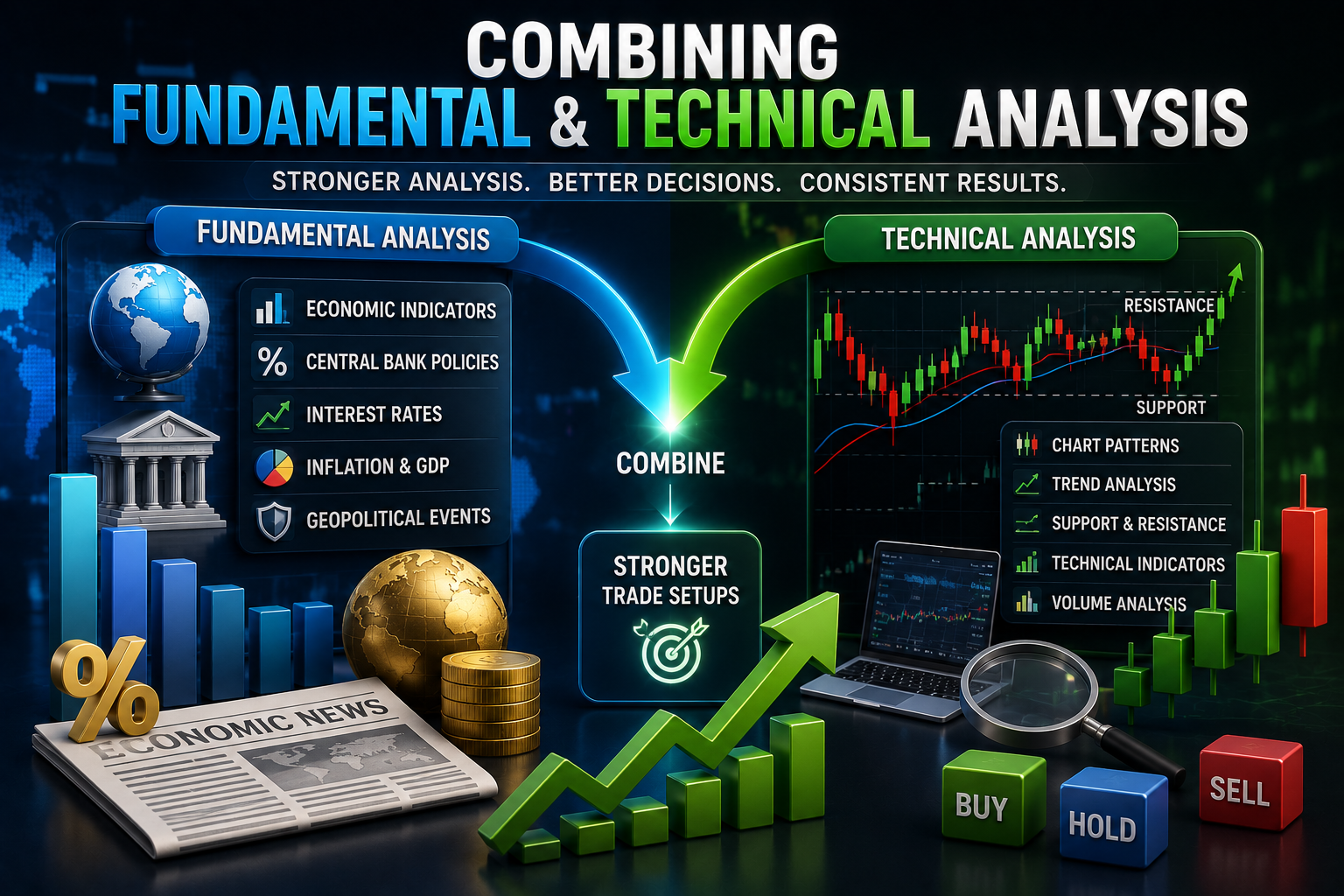
Many professional traders combine fundamental analysis forex with technical analysis.
Fundamentals help identify long-term market direction, while technical analysis assists with timing entries and exits.
This combination often produces stronger results than relying on either method alone.
For example, a trader may use currency valuation analysis to identify an undervalued currency and then use technical tools to locate favorable entry points.
Integrating multiple forms of analysis improves decision-making and risk management.
High-Volume Related Keywords for Fundamental Forex Analysis
In addition to the primary keywords, traders frequently search for:
Forex economic calendar
Interest rate trading
GDP analysis forex
Inflation trading strategy
Forex news trading
Monetary policy analysis
Economic growth trading
Currency strength analysis
Forex market fundamentals
Global economic outlook
These related keywords complement fundamental analysis forex, economic indicators trading, central bank analysis, macroeconomic forex, and currency valuation while helping traders build a broader understanding of market fundamentals.
Common Mistakes Traders Make With Fundamental Analysis
Many traders focus exclusively on economic headlines without understanding the broader context.
Others ignore central bank analysis and pay attention only to individual data releases.
Some traders misunderstand currency valuation and fail to recognize the importance of market expectations.
Many beginners also overlook the role of macroeconomic forex trends when evaluating currencies.
Successful traders remain patient and focus on the bigger picture rather than reacting to every news event.
Conclusion
Fundamental analysis remains one of the most powerful tools available to forex traders. By understanding fundamental analysis forex principles, mastering economic indicators trading, conducting effective central bank analysis, applying comprehensive macroeconomic forex research, and evaluating currency valuation, traders can gain deeper insight into market behavior and improve decision-making.
While no approach guarantees success, traders who understand the economic forces driving currency markets are often better positioned to identify opportunities, manage risk, and adapt to changing conditions. Fundamental analysis provides a strong foundation for long-term trading success.
Frequently Asked Questions
What is fundamental analysis forex?
Fundamental analysis forex is the process of evaluating economic, financial, and political factors that influence currency values.
What is economic indicators trading?
Economic indicators trading involves analyzing reports such as GDP, inflation, and employment data to identify trading opportunities.
Why is central bank analysis important?
Central bank analysis helps traders understand monetary policy decisions, interest rate expectations, and their impact on currency markets.
What is macroeconomic forex analysis?
Macroeconomic forex analysis examines broader economic trends such as growth, inflation, employment, and government policy.
What is currency valuation?
Currency valuation is the process of determining whether a currency is overvalued or undervalued based on economic fundamentals.
Which economic indicators affect forex markets the most?
GDP, inflation, employment reports, interest rates, and consumer spending data are among the most important indicators used in economic indicators trading.
Can fundamental analysis be combined with technical analysis?
Yes. Many traders combine fundamental analysis forex with technical analysis to improve market timing and overall trading performance.