Key Takeaways
- Corporate dollar hedging in India has slumped to an eight-month low after RBI’s 10 October 2026 measures against rupee speculation, according to Bloomberg and other reports on 4 November.
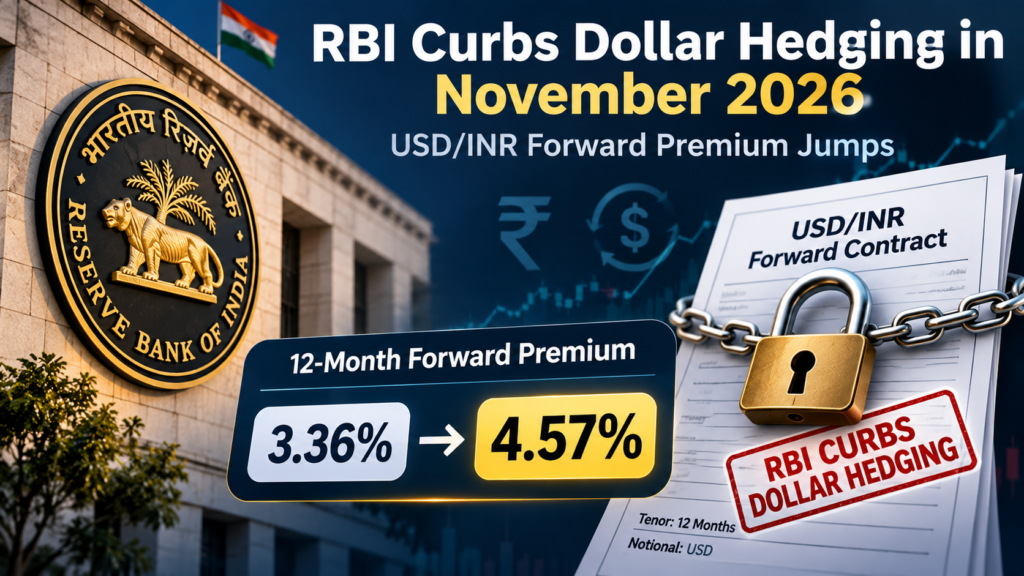
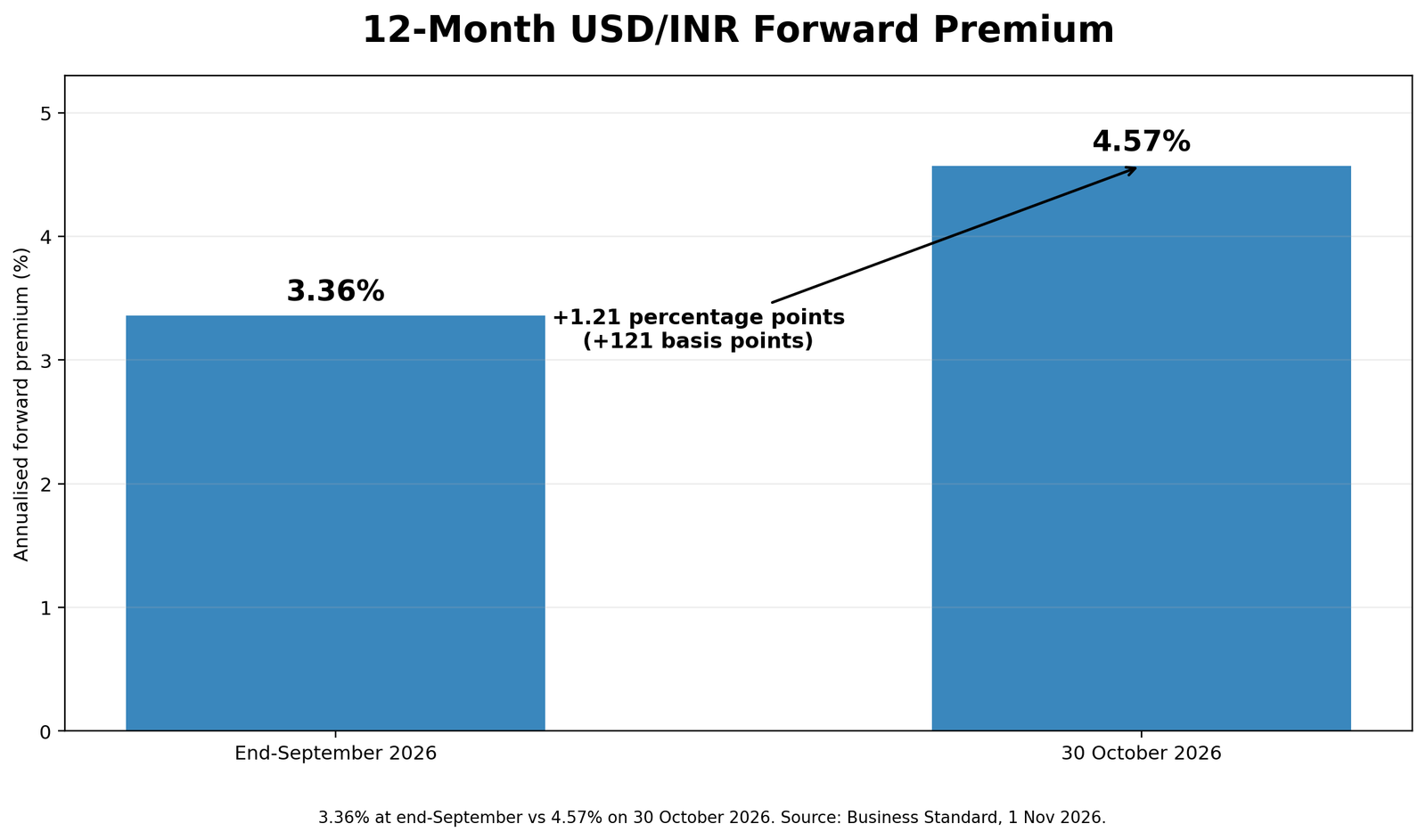
- The 12-month USD/INR forward premium rose from 3.36% at end-September to 4.57% on 30 October, making hedges costlier.
- The rupee has recovered about 2% from its low of 96.85 and closed at 94.64 on 4 November.
- Importers deferring hedges create a pool of future dollar demand, which could cap further rupee gains.
- For NSE traders, wider forward premiums show up directly in the gap between USD/INR futures and spot.
RBI’s October rules were meant to squeeze speculators out of the rupee. Four weeks on, they are also changing how genuine businesses hedge, and that matters for anyone who trades or prices USD/INR. This RBI curbs dollar hedging November 2026 USD/INR update is for retail currency traders on NSE and BSE, finance teams at importers and exporters, and students following the rupee. You will learn what the measures are, what the latest data shows, how forward premiums changed, a worked rupee example of the extra hedging cost, and what to watch over the coming weeks.
Why is dollar hedging falling in India?
Dollar hedging in India is falling because RBI’s 10 October 2026 measures made hedges costlier and stricter. Banks must now park a 20% cash reserve with RBI on large importer hedges, rebooking cancelled contracts is banned, and limits without proven exposure were cut to US$5 million. Higher forward premiums have pushed many importers to wait.
Bloomberg reported on 4 November that India’s dollar hedging has slumped as RBI cracks down on speculation. Reports from Elets BFSI and Whalesbook on the same day described corporate hedging as being at an eight-month low.
What did RBI announce on 10 October 2026?
RBI press release 2026-2027/1305 introduced two circulars on the foreign exchange market. The key measures, from the RBI press release on regulatory measures for the foreign exchange market, are:
| Measure | What changed |
|---|---|
| Rebooking ban | Banks cannot let users rebook any rupee FX derivative contract cancelled after the directions were issued. Rollovers on maturity are still allowed. |
| Lower OTC limit without underlying | Cut from US$100 million to US$5 million equivalent across all banks. |
| Lower exchange limit without underlying | Cut from US$100 million to US$5 million equivalent across all recognised exchanges together. |
| Exposure undertaking | Users must confirm the same exposure is not hedged with another bank. |
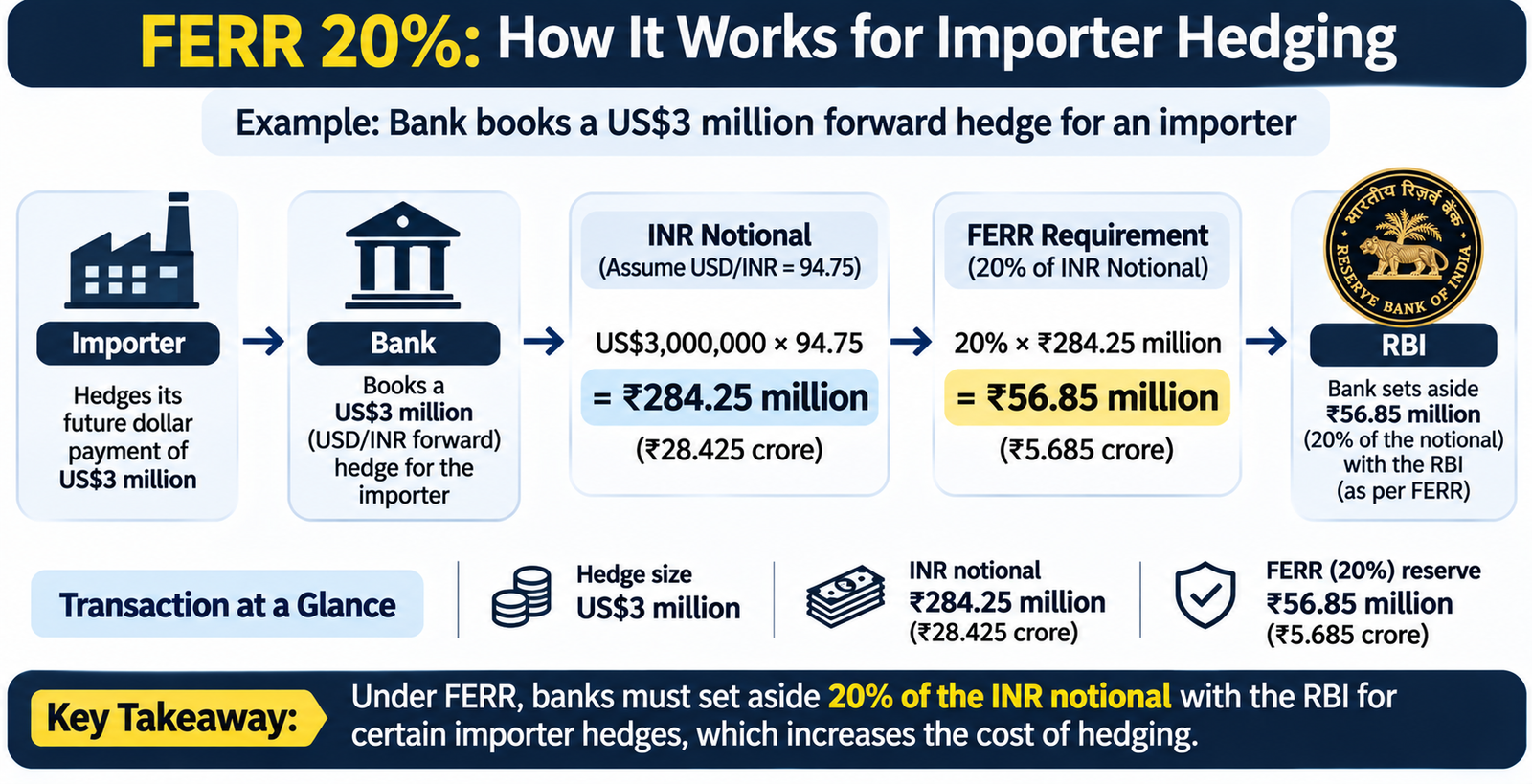
| Foreign Exchange Risk Reserve (FERR) | For rupee FX derivatives above US$2 million notional, where the user buys foreign currency against rupees to hedge current account exposure, banks must hold 20% of the rupee notional as a cash reserve with RBI. |
A forward contract is an agreement to buy or sell currency at a fixed rate on a future date. The forward premium is the extra amount over spot that a buyer of dollars pays for that future date, usually quoted as an annualised percentage. The FERR raises banks’ cost of offering these contracts, and they pass much of it to clients.
For a plain-language summary of how RBI regulates currency markets, see our guide to RBI forex rules.
What the market data shows
Forward premiums jumped
Policy Circle reported that the 12-month dollar-rupee forward premium rose from 3.36% at end-September to 4.57% on 30 October 2026, an increase of 121 basis points. It noted that the rise cannot be attributed entirely to RBI intervention.
At the short end, a Moneycontrol report carried on TradingView said near-month forward premiums had climbed to around 8% to 8.5% annualised, with the following month near 6%. Traders quoted in that report estimated an extra 9 to 13 paise a month linked to the RBI measures, and said bid-ask spreads had widened to 8 to 10 paise for some maturities. One unnamed trader told Moneycontrol: “The market has become illiquid and distorted.”
RBI’s forward book is large
RBI’s net short dollar position in the forward market hit a record US$239.2 billion at end-September 2026, up from US$200.06 billion a month earlier, Policy Circle reported. A net short forward position means RBI has committed to deliver dollars in the future, which supports the rupee today.
The rupee recovered, for now
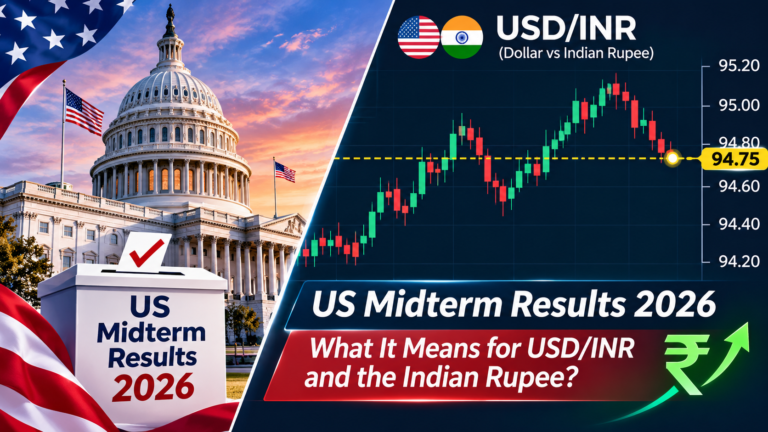
The rupee has recovered about 2% from its recent low of 96.85 per dollar, according to Policy Circle. It closed at 94.64 on 4 November against 94.74 the previous session, Reuters reported via Business Recorder, as the dollar slipped after the US midterm results.
Natixis, quoted in the same Reuters report, said RBI’s measures “avoided a disorderly collapse and bought time” but added: “None of them addresses the causes of the weakness.” A Reuters poll found a majority of analysts expect the rupee to give up recent gains over the next few months.
Worked example: what higher premiums cost an importer
Example (hypothetical): An electronics importer in Pune must pay a supplier US$2,00,000 in one month. Spot USD/INR is 94.64. Compare two annualised one-month forward premiums.
- One-month premium in paise = spot × annual premium ÷ 12
| Scenario | Annualised premium | Premium per dollar | Forward rate | Cost of US$2,00,000 |
|---|---|---|---|---|
| Before (hypothetical) | 3.5% | about 0.276 | about 94.92 | about ₹1,89,83,000 |
| After (hypothetical) | 6.0% | about 0.473 | about 95.11 | about ₹1,90,23,000 |
The higher premium adds roughly ₹39,400 to a single one-month hedge. For a company hedging US$2 million or more, the FERR also applies, and banks may price that cost in. This is why many importers are choosing to wait, hoping spot or premiums fall. You can check conversions quickly with our forex currency converter.
The risk of waiting is obvious: if the rupee weakens again, unhedged importers rush to buy dollars at once, which can accelerate the move.
What it means for Indian traders
USD/INR futures on NSE and BSE
Exchange-traded USD/INR futures price in the forward premium. A near-month future usually trades above spot by roughly the one-month premium. When premiums widen, that gap grows, which affects calendar spreads and rollover costs. Traders holding long dollar futures across expiries pay more to roll; short positions benefit. Our explainer on interest rate impact shows how rate differentials drive forward premiums.
Position limits for individuals
The exchange limit for positions without proven underlying exposure is now US$5 million equivalent across all recognised exchanges together. Most retail traders sit well below this, but confirm your status with your broker. Indian residents may trade currency derivatives only through SEBI-registered brokers on recognised Indian exchanges such as NSE, BSE and MSE, in permitted pairs. Leveraged forex on overseas platforms through LRS is not permitted, and RBI maintains an Alert List of unauthorised platforms. Our page on SEBI forex trading rules in India explains the framework.
Gold and import-linked trades
A firmer rupee lowers the rupee price of gold and crude imports. If deferred importer demand returns suddenly, the reverse could happen quickly.
How to read the situation step by step
- Track spot and near-month futures together. The gap tells you what the market charges for one month of dollar cover.
- Watch the 12-month premium. A move back towards 3.5% would signal easing pressure.
- Follow RBI weekly data. Reserves and forward book figures show how much support RBI is providing.
- Note new committees and circulars. RBI has formed a Technical Consultative Committee for Financial Markets, and any clarification on hedging rules could shift premiums.
- Size for gaps. Rupee moves can be sudden when policy changes. Our guide to forex trading during currency interventions covers how to manage this.
- Keep the dollar index in view. A rebound in DXY would test the rupee’s recovery.
What to watch next
- US jobs report (Fri 6 Nov, 7:00 p.m. IST). A strong number could lift the dollar and test rupee support.
- RBI’s next weekly statistical supplement. Look for reserve changes and any comments on intervention.
- Importer behaviour. Any sharp rise in hedging demand would show in wider near-month premiums.
- Crude oil. Lower oil prices reduce dollar demand from oil marketing companies and support the rupee.
- RBI clarifications. Any change to FERR or the rebooking ban would move forward markets immediately. Our guide on how to trade USD/INR covers practical setups for such events.
FAQs
What is the FERR introduced by RBI in October 2026?
The Foreign Exchange Risk Reserve requires banks to keep a cash reserve with RBI equal to 20% of the rupee notional of certain FX derivative contracts. It applies to rupee contracts above US$2 million notional where the user buys foreign currency against rupees to hedge current account exposure, such as import payments.
Why are USD/INR forward premiums rising?
Forward premiums rose because RBI’s measures raised banks’ cost of offering hedges, cut liquidity and reduced participation. Policy Circle reported the 12-month premium rose from 3.36% at end-September to 4.57% on 30 October 2026, though it said not all of the rise is due to RBI. Wider bid-ask spreads added to costs.
How does the hedging slump affect the rupee?
In the short term, fewer importers buying forward dollars reduces dollar demand and supports the rupee, which closed at 94.64 on 4 November. Over time, deferred hedges become pent-up demand. If the rupee weakens, importers may rush to cover at once, which could push USD/INR higher quickly.
Do RBI’s new limits affect retail currency traders?
The exchange limit for positions without underlying exposure was cut to US$5 million equivalent across all recognised exchanges. Most retail traders hold far less, so day-to-day trading is largely unaffected. However, wider forward premiums change USD/INR futures pricing and rollover costs, so traders should check how spreads and premiums have moved.
What is RBI’s forward book?
RBI’s forward book is its net position in dollar forward contracts. A net short position means RBI has agreed to sell dollars in the future, which supports the rupee now. Policy Circle reported the net short position reached a record US$239.2 billion at end-September 2026, up from about US$200 billion a month earlier.
Will the rupee keep strengthening after RBI’s measures?
No one can say for certain. Natixis said the measures bought time but did not fix the causes of rupee weakness, and a Reuters poll found most analysts expect the rupee to give up some gains in coming months. Oil prices, the dollar index and foreign flows will decide the next move.
Conclusion
In this RBI curbs dollar hedging November 2026 USD/INR picture, the rules have done what they were designed to do in the short run: fewer speculative bets, a recovery in the rupee and calmer spot trading. The cost is a thinner, pricier forward market, with the 12-month premium up to 4.57% and importers deferring cover. For USD/INR traders, that means watching the futures-spot gap, respecting gap risk around RBI and US data, and remembering that delayed hedging can return as sudden dollar demand. Before your next trade, review our guide to RBI forex rules and check rupee conversions with the forex currency converter.