Introduction
More young people in India are interested in trading than ever before. Social media is full of reels showing students “earning from forex” between classes, and many apps advertise easy sign-ups with tiny deposits. That raises a common question: can students trade forex in India legally, and if so, how?
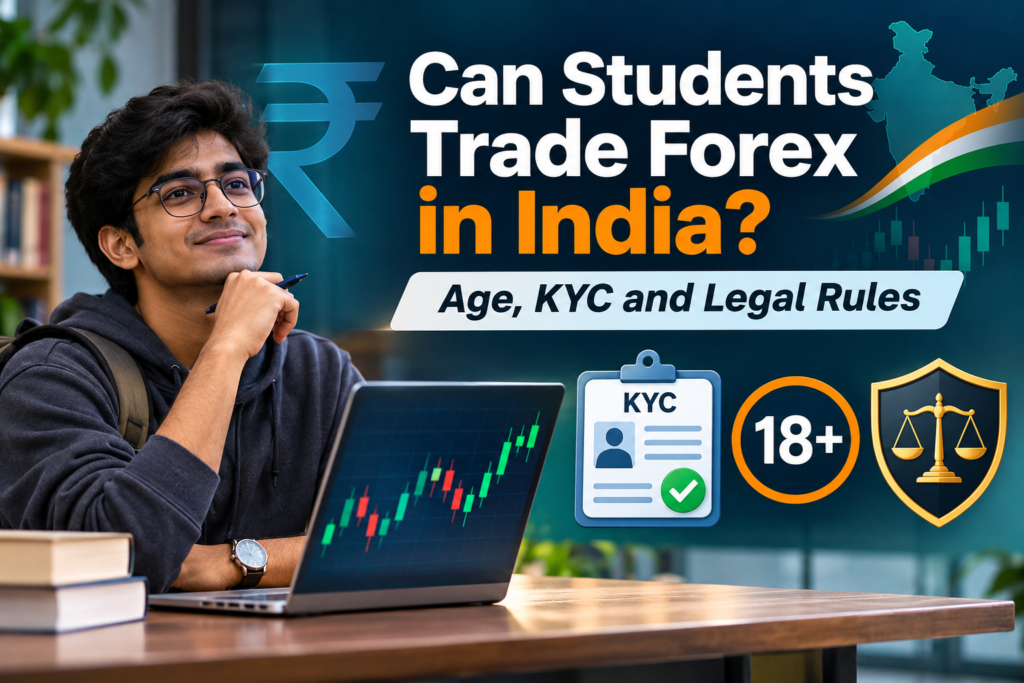
The short answer is yes, but only under certain conditions. A student who is at least 18, completes KYC and uses a SEBI-registered broker can trade exchange-traded currency derivatives on NSE or BSE. A student of any age who trades on offshore forex apps, however, is breaking Indian law and putting their money at serious risk.
This guide explains the full answer to “can students trade forex in India?”: age limits, KYC documents, income proof, the legal route, FEMA rules, tax, scams aimed at students and how to start safely.
Can Students Trade Forex in India? The Quick Answer
| Situation | Allowed? |
|---|---|
| Student aged 18 or over, trading currency futures and options on NSE or BSE through a SEBI-registered broker | Yes |
| Student under 18 trading currency derivatives | No |
| Any Indian resident, including students, trading leveraged forex or CFDs on offshore apps | No, not permitted under FEMA |
| Student using a parent’s trading account to trade | Not advisable; the account holder is responsible for all trades |
| Student lending their bank or trading account to others | No; this can expose them to serious legal trouble |
Minimum Age: Why 18 Matters
Under the Indian Contract Act, a minor (under 18) cannot enter into a binding contract. Trading derivatives involves contracts and margin obligations, so brokers do not allow minors to trade futures and options.
- Minors can hold certain investments, such as shares in a demat account operated by a guardian, but not derivatives trading accounts.
- Once a student turns 18, they can open a trading account in their own name.
So, can students trade forex in India before 18? No. Students under 18 can learn, read and paper trade, but they cannot legally trade currency derivatives.
The Legal Route: Exchange-Traded Currency Derivatives
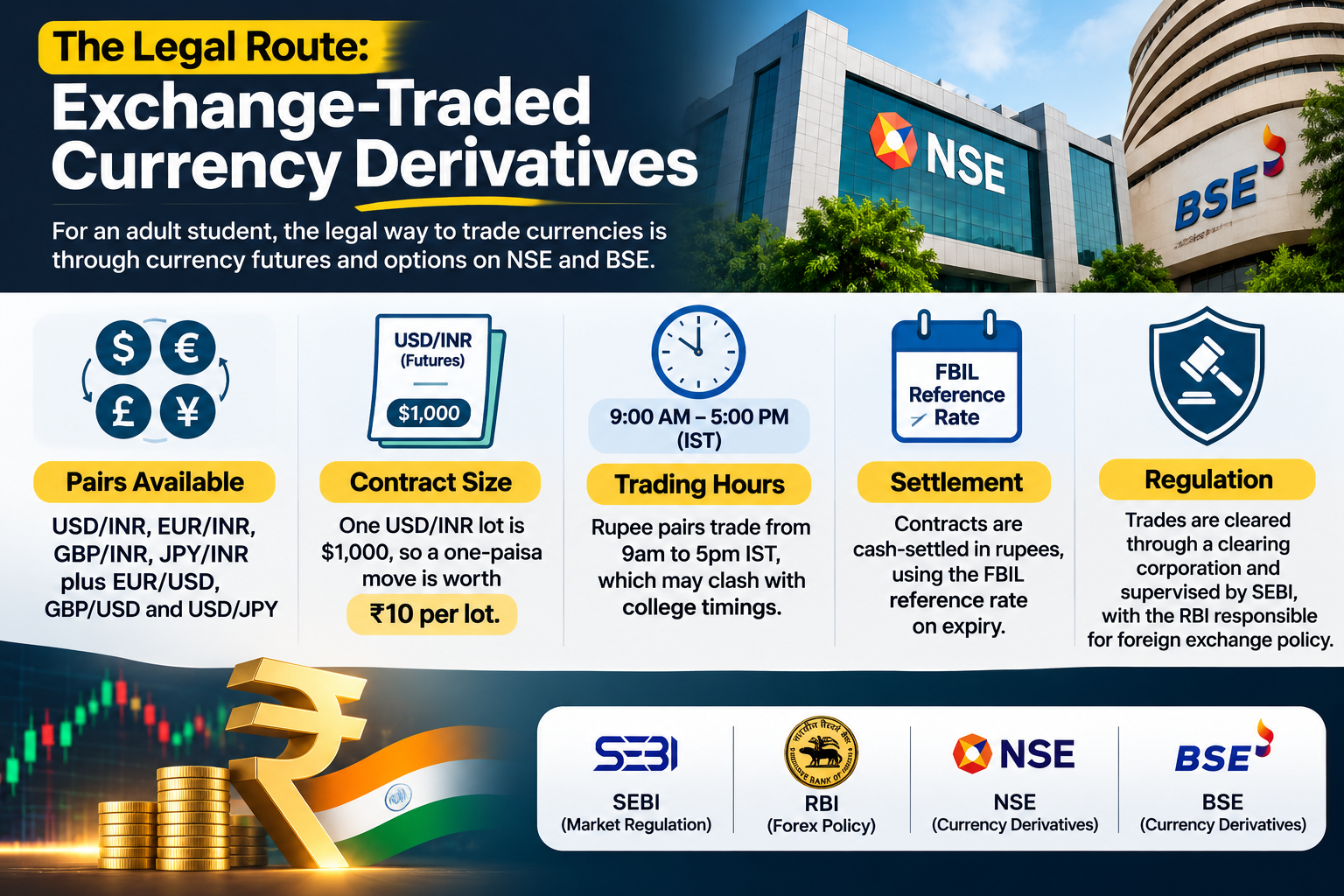
For an adult student, the legal way to trade currencies is through currency futures and options on NSE and BSE.
- Pairs available: USD/INR, EUR/INR, GBP/INR and JPY/INR, plus EUR/USD, GBP/USD and USD/JPY.
- Contract size: one USD/INR lot is $1,000, so a one-paisa move is worth ₹10 per lot.
- Trading hours: rupee pairs trade from 9am to 5pm IST, which may clash with college timings.
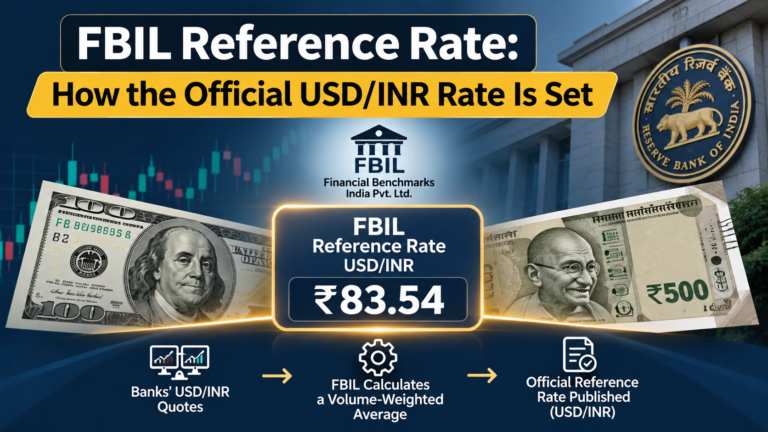
- Settlement: contracts are cash-settled in rupees, using the FBIL reference rate on expiry.
- Regulation: trades are cleared through a clearing corporation and supervised by SEBI, with the RBI responsible for foreign exchange policy.
 What About Offshore Forex Apps?
Many apps aimed at young Indians offer trading in EUR/USD, gold and dozens of other pairs with leverage of 1:500 or more, small minimum deposits and bonuses. For students wondering “can students trade forex in India on these apps?”, the answer is no.
- Under the Foreign Exchange Management Act (FEMA), Indian residents are not permitted to trade leveraged forex or CFDs through offshore platforms.
- Sending money abroad for margin trading is not permitted under the Liberalized Remittance Scheme.
- The RBI publishes an Alert List of entities not authorised to deal in forex or run forex trading platforms.
- Deposits made through UPI, cards or local agents to such platforms can be hard or impossible to recover if the platform blocks withdrawals.
KYC Documents Students Need
Once the age condition is met, the practical answer to “can students trade forex in India?” depends on KYC. To open a trading account, a student aged 18 or over typically needs:
- PAN card: mandatory for trading accounts.
- Aadhaar or other address proof: for identity and address verification.
- Bank account in the student’s own name: funds must come from and return to this account.
- Photograph and signature: usually captured online during e-KYC.
- Mobile number and email: linked to the account for alerts and contract notes.
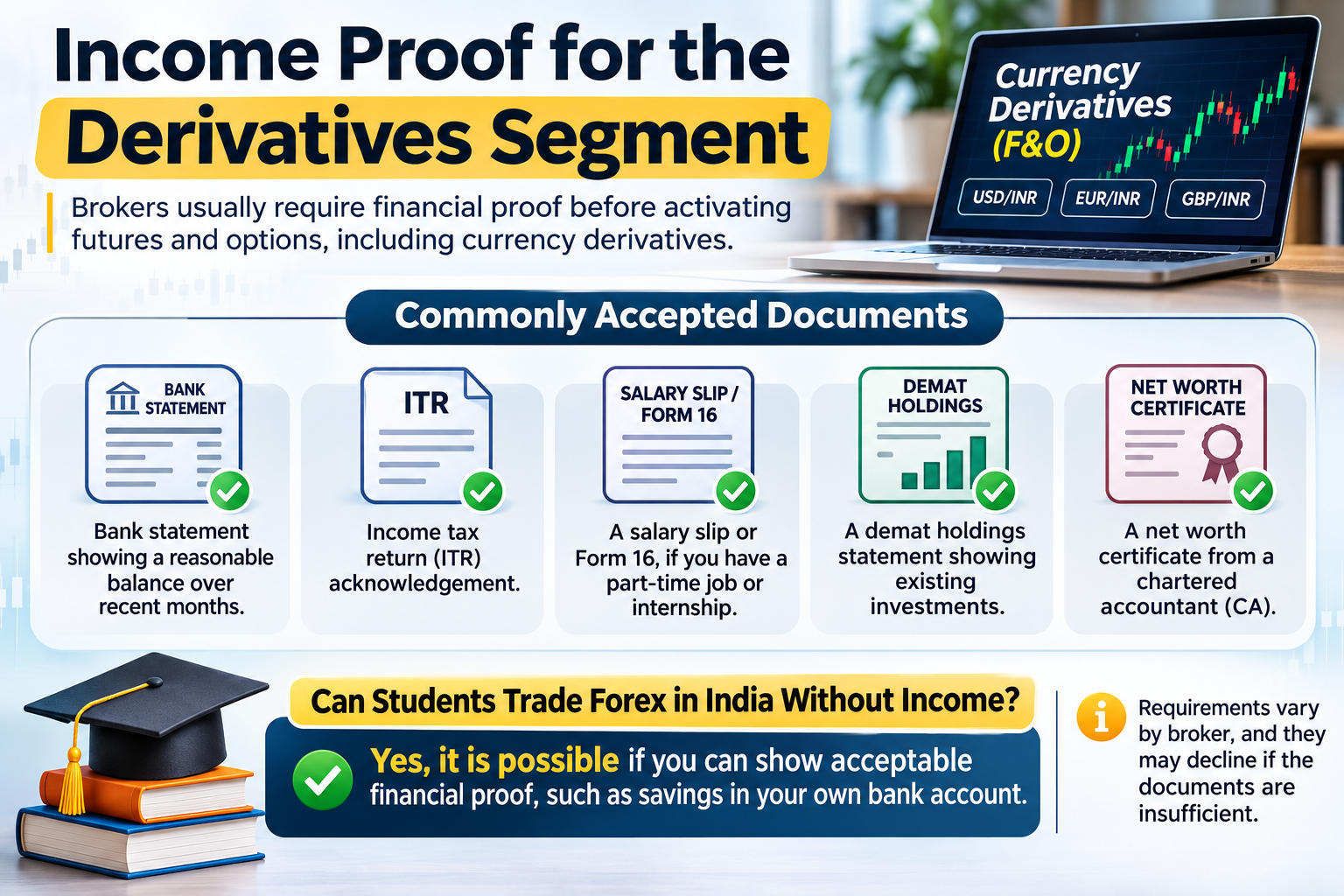
Income Proof for the Derivatives Segment
This is where many students get stuck. Brokers usually require financial proof before activating futures and options, including currency derivatives. Common accepted documents include:
- A bank statement showing a reasonable balance over recent months.
- An income tax return acknowledgement.
- A salary slip or Form 16, if the student has a part-time job or internship.
- A demat holdings statement showing existing investments.
- A net worth certificate from a chartered accountant.
Requirements vary by broker. So can students trade forex in India without income? It is possible if they can show acceptable financial proof, such as savings in their own bank account, but brokers may decline if the documents are insufficient.
Using Money from Parents
- Parents can gift money to an adult child, and the student can use it from their own bank account.
- Funds must be paid in from the account holder’s own bank account; brokers do not accept third-party payments.
- Trading on a parent’s account using their login is not advisable: the parent remains legally responsible for every trade and any tax.
- Families should agree clearly that money used for trading can be lost.
Tax Rules for Student Traders
Tax is another part of the question “can students trade forex in India?” that is easy to overlook.
- Income from exchange-traded currency derivatives is generally treated as non-speculative business income, taxed at slab rates.
- Students with trading activity may need to file an income tax return even if their total income is low, especially to carry forward losses.
- For an adult student, income is taxed in their own hands, not clubbed with a parent’s income.
- The new Income-tax Act, 2025 applies from 1 April 2026, so forms and section numbers may differ from older guides. A chartered accountant can advise.
Students Studying Abroad
Indian students who move abroad for higher studies may become non-residents under foreign exchange and tax rules, depending on their circumstances. Residency status affects which accounts and products they can use. For these students, the answer to “can students trade forex in India?” may change once they become non-residents. Students in this situation should check with their broker and a qualified adviser before trading. Funds sent abroad under the Liberalized Remittance Scheme for education should not be used for margin trading.
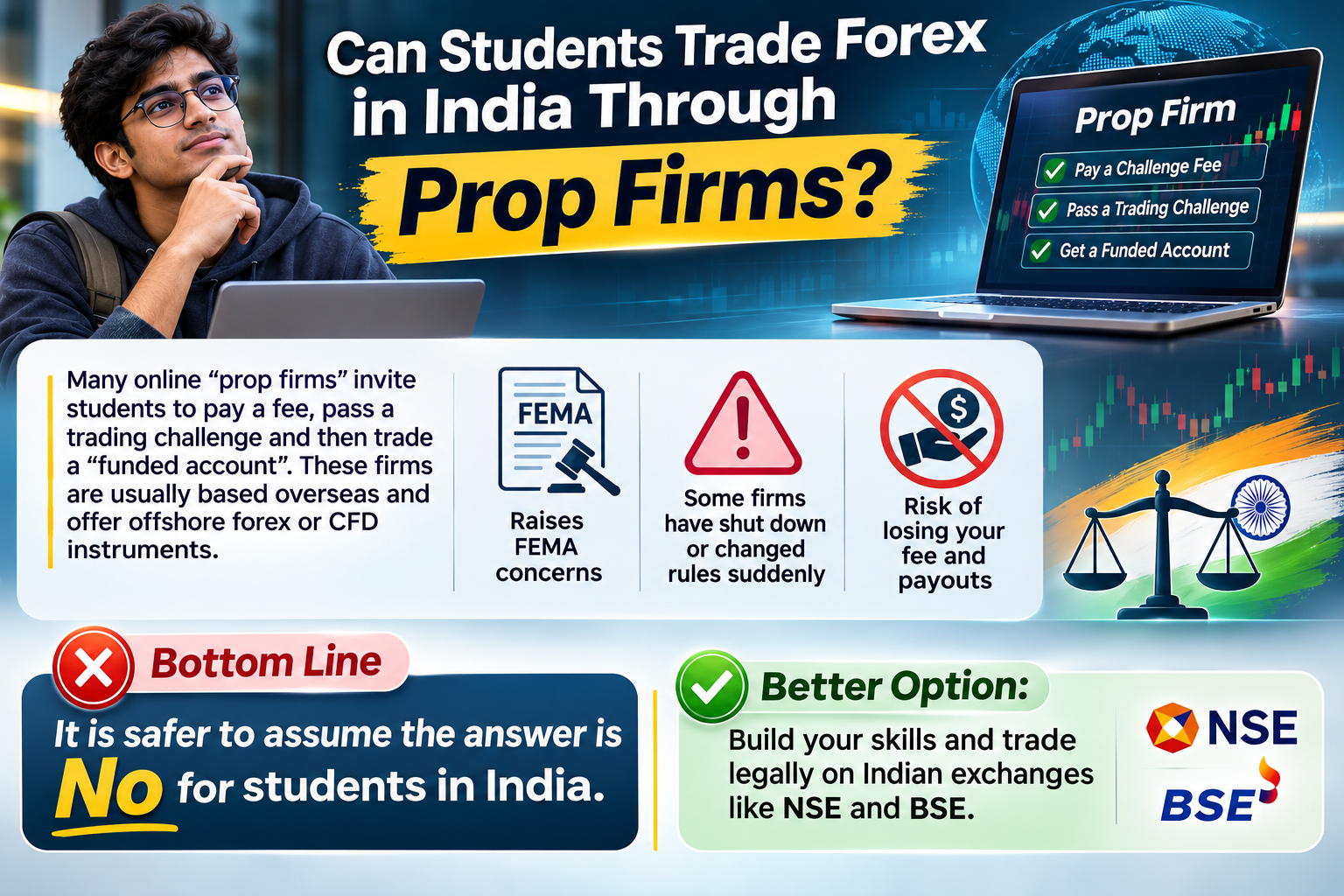
Can Students Trade Forex in India Through Prop Firms?
Many online “prop firms” invite students to pay a fee, pass a trading challenge and then trade a “funded account”. These firms are usually based overseas and offer offshore forex or CFD instruments. Paying such fees and trading these instruments from India raises FEMA concerns, and some of these firms have shut down or changed rules suddenly, leaving traders with nothing.
So can students trade forex in India through these programmes? It is safer to assume the answer is no, and to build skills on Indian exchanges instead.
Can Students Trade Forex in India Without Hurting Their Studies?
Rupee currency contracts trade from 9am to 5pm IST, which overlaps with most college timetables. Students who trade during lectures often make rushed decisions and fall behind in their studies. A better approach is to plan trades in advance with orders already placed, trade only during free periods, or focus on longer-term setups that do not need constant screen-watching. During exams, the simplest rule is not to trade at all.
Scams That Target Students
Young people are frequent targets of forex-related scams. Common warning signs:
- “Guaranteed” daily or monthly returns from signal groups on Telegram, WhatsApp or Instagram.
- Refer-and-earn schemes that pay you to bring friends into a trading app.
- Account renting: offers to pay you for using your bank account, UPI ID or trading account. These accounts can be used to move illegal money, and the account holder can face police action and frozen accounts.
- Fake prop firm or “funded account” offers that require upfront fees.
- Fake profits: platforms showing gains but blocking withdrawals.
When asking “can students trade forex in India safely?”, the most important rule is simple: never share or rent your bank or trading account, and avoid anyone promising guaranteed returns.
Is Trading a Good Idea for Students?
Possible benefits
- Learning how financial markets, interest rates and currencies work.
- Building skills useful for careers in banking, treasury or finance.
- Developing discipline, record-keeping and analytical thinking.
Real risks
- Leverage can produce losses larger than expected.
- Studies by SEBI have found that the large majority of individual traders in equity derivatives lose money, and young traders are a growing share of participants.
- Trading can distract from studies and cause stress.
- Small savings can disappear quickly.
For most students, the best approach is to learn first, practise without money and trade only small amounts once they understand the risks.
Worked Example: A Student’s First Trade
This example is illustrative and uses hypothetical prices and amounts.
Riya, a 20-year-old commerce student, has ₹15,000 of savings in her own bank account. She opens an account with a SEBI-registered broker, submits six months of bank statements as financial proof and activates currency derivatives.
- She buys 1 lot of USD/INR futures at 88.40 with a stop-loss at 88.30, risking 10 paise × ₹10 = ₹100, under 1% of her capital.
- Her target is 88.60, a potential gain of 20 paise × ₹10 = ₹200.
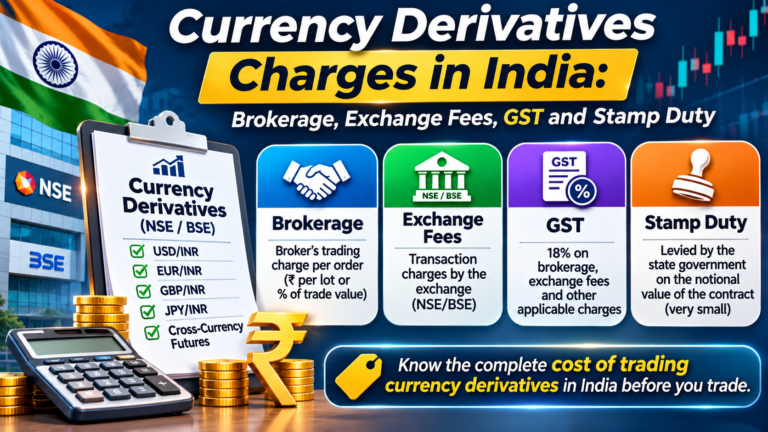
- After brokerage, exchange charges, GST and stamp duty, the net result will be slightly lower.
The amounts are small, but that is the point. A student learning this way keeps losses manageable while building real experience.
How Students Can Start Safely
- Learn the basics: currency pairs, contract sizes, margins and costs.
- Study Indian rules: FEMA, the RBI Alert List and the exchange route.
- Consider the NISM Series-I Currency Derivatives certification for structured knowledge.
- Paper trade for a few months and keep a journal.
- Open an account only after turning 18, with a SEBI-registered broker.
- Start with one lot and a strict daily loss limit.
- Keep studies first: avoid trading during lectures or exams.
FAQs
Can students trade forex in India?
Yes, if they are 18 or older, complete KYC and trade currency derivatives on NSE or BSE through a SEBI-registered broker. Offshore forex apps are not permitted for Indian residents.
What is the minimum age to trade forex in India?
- Minors cannot open derivatives trading accounts.
Can students trade forex in India without income proof?
Brokers usually require financial proof for derivatives. A bank statement showing savings in the student’s own account is often accepted, but rules vary.
Can I use my parents’ money to trade?
Yes, if it is gifted to you and paid in from your own bank account. Do not trade using someone else’s account.
Do students have to pay tax on trading profits?
Yes, trading income is taxable, and filing a return may be needed even if total income is low.
Is it safe to join forex signal groups?
Be very cautious. Groups promising guaranteed returns are a common scam.
Conclusion
So, can students trade forex in India? Yes, if they are adults, complete KYC, meet the broker’s financial proof requirements and stick to currency derivatives on NSE and BSE through SEBI-registered brokers. Students under 18 cannot trade, and no Indian resident should use offshore leveraged forex apps.
For students, the smartest path is to learn first, practise without money, start very small and protect both their savings and their studies. Never rent out your bank or trading account, and treat any promise of guaranteed income as a warning sign.