
Key points for crude oil outlook
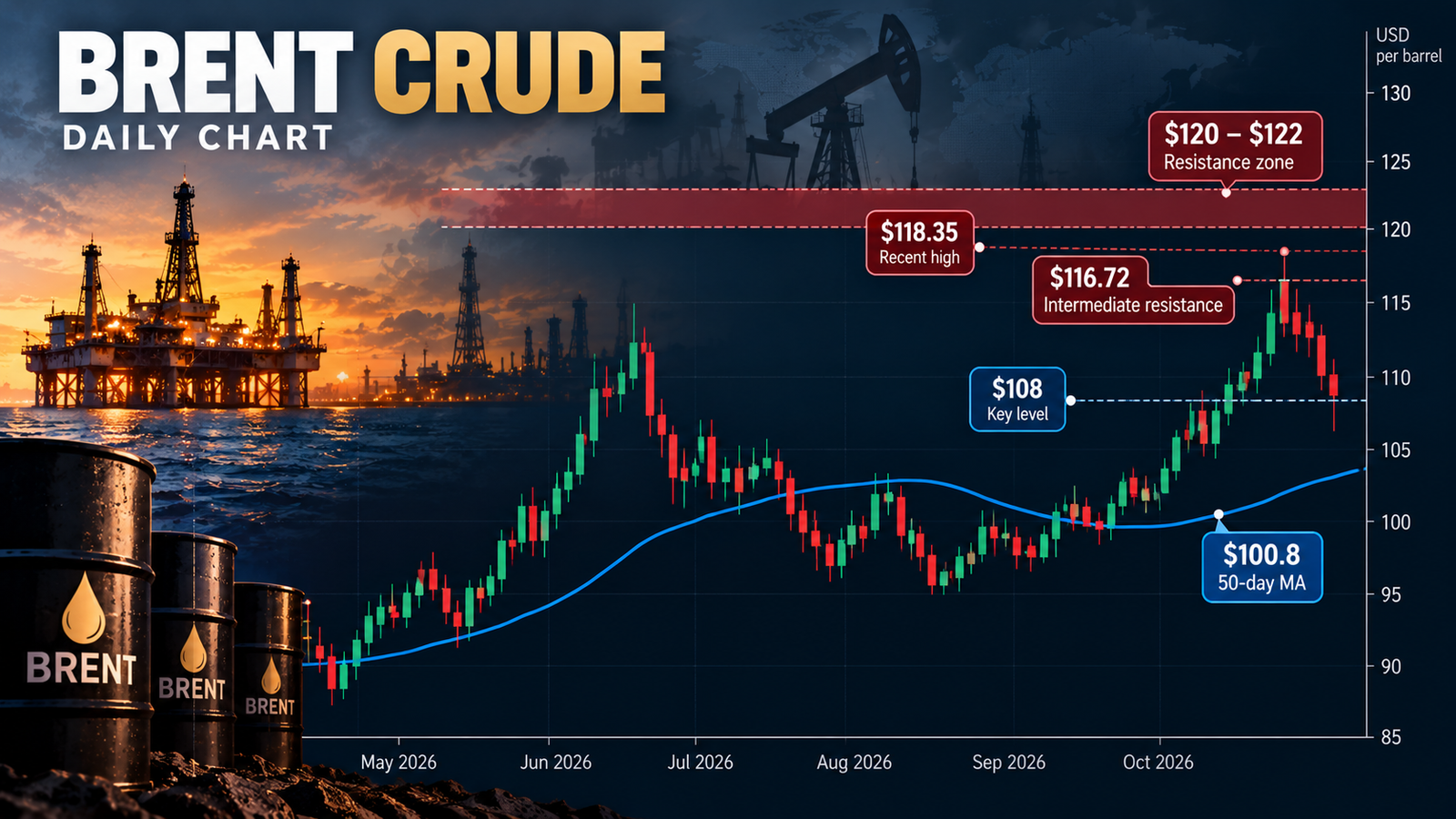
- Brent settled at $116.72 on Friday, 23 October, up about 6% on the week. That was its highest settlement since 29 April.
- WTI settled at $103.27, up about 2% on the week. Both benchmarks have risen for three straight weeks.
- The rally was driven by Houthi attacks on Saudi energy sites, an oil spill off the UAE, and reports that the US could resume strikes on Iran after the midterms.
- For India, higher oil means more dollar demand for imports, which keeps pressure on the rupee.
What happened this week
| Benchmark | Fri, 23 Oct settle | Day | Week | Context |
|---|---|---|---|---|
| Brent (ICE, Dec) | $116.72 | +3.1% | ≈ +6% | Session high $117.45; highest settle since 29 April |
| WTI (NYMEX) | $103.27 | +3.8% | ≈ +2% | Back above $100 after closing at $99.47 on Thursday |
| Brent–WTI spread | ≈ $13.5 | – | Wider | Reflects Gulf and Red Sea risk to global supply |
Brent is up about 92% in 2026 so far. It started the year near $61 and has risen roughly 9.5% over the past month. It now trades well above its 50-day average (about $100.8) and its 200-day average (about $91.2).
Why it matters: the drivers
Supply attacks in the Gulf and Red Sea. Houthi drone and missile strikes on Saudi Red Sea infrastructure, including the port of Yanbu, did not cause an immediate halt to supply. However, the spread of threats toward major eastern production hubs raised fears for export continuity. Security alerts prompted Saudi Aramco to evacuate its Dhahran headquarters. A tanker oil spill was also detected off the UAE.
Iran risk. Markets are increasingly pricing the possibility that the US and Israel could strike Iran again after the 3 November midterm elections. That adds a risk premium to prices.
Tight inventories. In its October outlook, the US Energy Information Administration expects Brent to average $105 a barrel in Q4 2026. It also expects prices to stay elevated until Middle East supply constraints ease and inventories are rebuilt. US strategic stocks are at their lowest since 1982.
Where forecasters see prices going. The EIA expects prices to ease gradually as inventories rebuild, to about $74 a barrel by Q4 2027. A Reuters poll put the 2026 Brent average at $89.05, with most analysts not expecting a supply surplus until 2027.
Key levels and outlook for next week
| Level (Brent) | Price | Why it matters |
|---|---|---|
| Resistance | $120–122 | Upper end of analyst ranges for the week |
| Resistance | ~$118.35 | 2026 closing high (31 March) |
| Current | $116.72 | Friday settlement |
| Support | $108 | Downside level analysts flag if tensions ease |
| Support | ~$100.8 | 50-day moving average |
NordFX’s base case for the week is a $108–122 range, with an upward bias while Gulf risks persist and sharp swings in both directions on geopolitical news. After a rise this large, it warns, a de-escalation headline could remove several dollars quickly.
Possible scenarios:
- If attacks spread or US–Iran tensions escalate, a test of $120 and above is likely.
- If no new disruptions emerge, prices may stabilise in a range.
- If there is a credible de-escalation, a fast pullback toward $108 is likely as the risk premium unwinds.
Impact on Indian traders: crude and the rupee
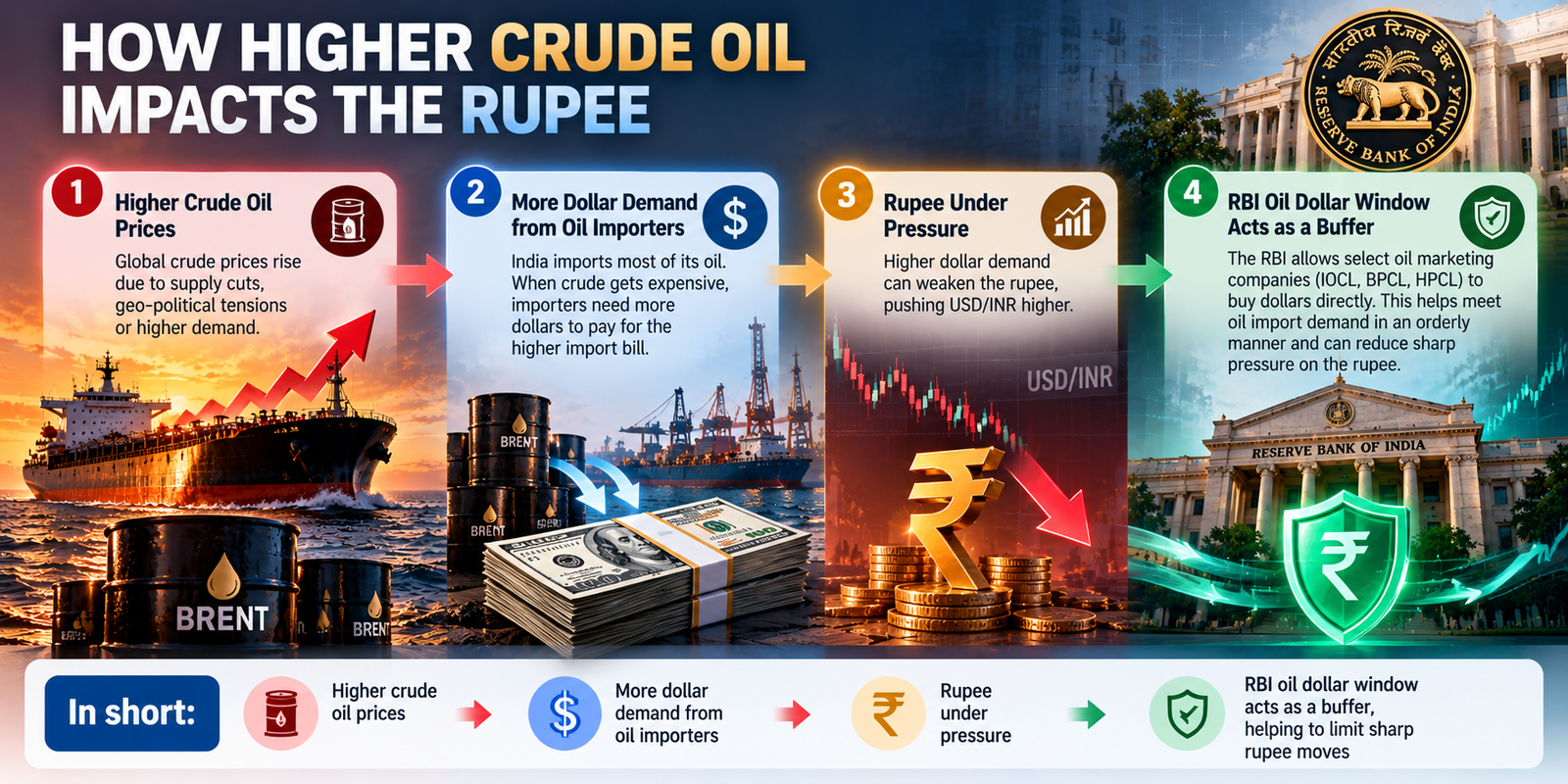
Why oil moves the rupee. India imports most of its crude oil and pays in dollars. When prices rise, oil companies need more dollars, which increases dollar demand and weakens the rupee. Higher oil also raises inflation risk, which the RBI flagged in its October minutes.
This week’s evidence. On Thursday, 22 October, the rupee fell 44 paise to 94.82 per dollar (provisional), weighed down by surging crude prices and weak domestic stocks. That reversed part of Wednesday’s gain, when the rupee had its strongest close since 4 September.
RBI support. Earlier in October, the RBI opened a special dollar window for state oil companies. This moves some of their dollar demand away from the spot market and limits the direct hit to the rupee. India’s forex reserves have also fallen for six straight weeks, to $721 billion, consistent with RBI support for the rupee.
MCX crude: MCX crude oil futures track global prices converted into rupees, so a weaker rupee adds to the rise in local prices.
Currency pairs on NSE: NSE lists USD/INR, EUR/INR, GBP/INR and JPY/INR, plus EUR/USD, GBP/USD and USD/JPY. Trading forex with unauthorised offshore platforms is not permitted under FEMA.
Oil shocks often trigger risk-off moves that hit emerging-market currencies. Our Risk-On / Risk-Off Meter can help you track the mood before you trade USD/INR.
What to watch next week
| Date (IST) | Event | Why it matters for oil |
|---|---|---|
| Daily | Gulf, Red Sea and Hormuz shipping headlines | The main source of volatility |
| Wed, 28 Oct, early IST | API weekly US inventories | An early read on US stocks |
| Wed, 28 Oct, ~20:00 | EIA weekly US inventories | Signals tightness at US hubs |
| Wed, 28 Oct, ~23:30 | FOMC decision | Hawkish guidance can lift the dollar and weigh on oil demand expectations |
| Thu, 29 Oct, ~18:00 | US Q3 GDP and September PCE | US demand and inflation backdrop |
| Sat, 31 Oct | Baker Hughes rig count | US supply response |
| TBA | OPEC+ meeting | Any change to output policy |
| Tue, 3 Nov | US midterm elections | Markets link the Iran risk timeline to the post-election period |
Track all release times on our Economic Calendar, and find more coverage in Market Analysis & News.
FAQs
What is the crude oil price this week?
Brent settled at $116.72 and WTI at $103.27 on Friday, 23 October 2026. Brent gained about 6% on the week.
Why are oil prices rising in October 2026?
Houthi attacks on Saudi energy infrastructure, an oil spill off the UAE, and reports that the US could resume strikes on Iran after the midterms have raised fears of supply disruption, on top of already tight inventories.
How do crude oil prices affect the rupee?
India imports most of its oil and pays in dollars. Higher crude prices increase dollar demand and import costs, which tends to weaken the rupee and push up inflation.