Introduction
The foreign exchange market is one of the most dynamic financial markets in the world, reacting instantly to economic announcements, central bank decisions, employment reports, inflation data, and geopolitical developments. While many traders rely solely on technical analysis, others prefer to capitalize on the rapid price movements that occur immediately after major economic releases. This approach is commonly known as forex news trading, and it has become one of the most popular methods for traders seeking short-term opportunities.
Economic announcements can create sudden momentum, sharp breakouts, and temporary price imbalances. These movements often provide attractive opportunities for disciplined traders who understand how news affects market sentiment. However, trading during high-impact events also involves increased risk because spreads widen, volatility increases, and price action can become unpredictable. Understanding how to prepare before an announcement is just as important as knowing when to enter a trade.
This guide explains how traders approach major economic events, prepare for market reactions, manage risk effectively, and develop a structured forex news trading strategy that focuses on consistency rather than emotion.
Understanding the Impact of Economic News
Every major economy regularly publishes financial reports that influence investor confidence. Interest rate decisions, employment reports, inflation statistics, manufacturing indexes, and consumer confidence data all contribute to the overall strength or weakness of a country’s currency.
Markets constantly anticipate these announcements before they are released. Analysts publish forecasts, institutions position themselves, and traders compare expected results with actual figures. When the released data differs significantly from expectations, currency pairs can experience rapid price movements within seconds.
Successful forex news trading begins long before the announcement itself. Professional traders spend time understanding market expectations rather than reacting impulsively after the numbers appear. This preparation helps them recognize whether the market is likely to continue its current direction or reverse sharply.
Why the Economic Calendar Matters
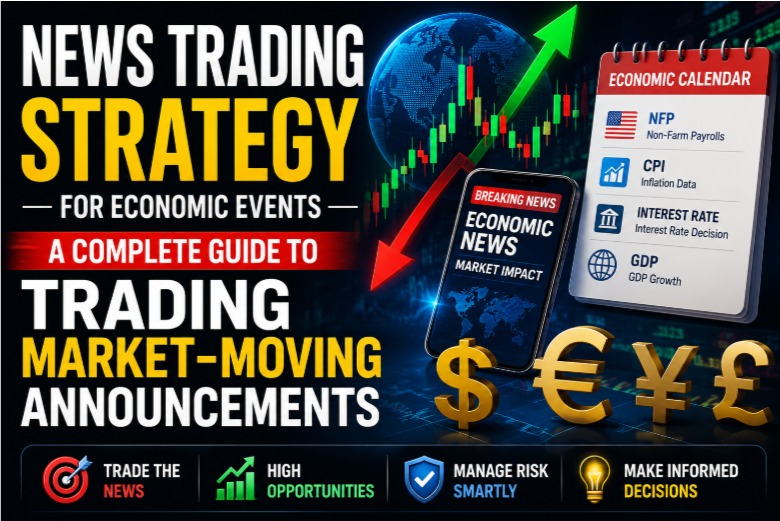
Every trader who focuses on fundamental analysis should monitor an economic calendar before entering positions. This schedule provides information about upcoming announcements, expected values, previous results, and the overall importance of each event.
Instead of opening trades blindly, experienced traders review the economic calendar every trading day to identify events capable of generating significant market activity. High-impact releases often include employment reports, inflation figures, GDP growth, retail sales, and central bank meetings.
Planning trades around scheduled events reduces unnecessary surprises. It also allows traders to avoid entering positions immediately before major announcements when spreads and market uncertainty may increase significantly.
Trading Non-Farm Payroll Reports
Among all economic releases, the United States employment report remains one of the most influential. Commonly referred to as Non-Farm Payrolls, this report measures job creation across the U.S. economy and significantly affects the value of the US Dollar.
Many traders specifically prepare for NFP trading because the report frequently creates substantial movement across major currency pairs. Strong employment growth often strengthens the dollar, while weaker-than-expected numbers may encourage selling pressure.
Although the initial reaction can be extremely fast, experienced traders rarely rush into positions without confirmation. Instead, they observe how institutional participants respond during the first few minutes before making trading decisions. Patience often helps reduce emotional mistakes during NFP trading, especially when price movements become highly erratic.
Inflation Reports and Currency Movements
Inflation has become one of the most closely watched economic indicators because it directly influences central bank policy. Consumer Price Index data provides valuable insight into inflationary pressures and future interest rate decisions.
As a result, CPI trading has gained considerable attention among forex participants. Higher inflation may increase expectations of tighter monetary policy, while lower inflation can reduce the likelihood of future rate increases.
Market reactions depend not only on the published figures but also on how they compare with analyst expectations. Traders who prepare thoroughly before CPI trading events are generally better equipped to interpret market sentiment instead of reacting emotionally after the release.
Understanding Market Volatility During News Releases
Economic announcements often generate rapid price fluctuations that differ significantly from normal market conditions. Liquidity can temporarily decrease, spreads may widen, and execution prices can vary due to fast-moving markets.
For traders specializing in volatility trading, these periods offer both opportunity and risk. Larger price swings increase profit potential but also expose traders to sudden reversals and slippage.
Rather than assuming every announcement will produce predictable trends, disciplined traders recognize that news releases can create false breakouts before establishing a sustained direction. Effective volatility trading therefore requires patience, preparation, and well-defined risk management rules.
Building an Effective News Trading Plan
A structured forex news trading strategy begins with preparation instead of prediction. Traders first identify important economic events, evaluate current market expectations, and determine whether the potential reward justifies the associated risk.
Market context also plays an essential role. If a currency pair has already experienced a strong trend before the announcement, much of the expected news may already be reflected in the price. In contrast, unexpected economic surprises often generate the largest market reactions because institutions rapidly adjust their positions.
Successful traders also define their entry, stop-loss, and profit targets before the announcement occurs. This preparation reduces emotional decision-making when markets begin moving rapidly after the news release.
Combining Technical and Fundamental Analysis
Although economic announcements drive price movement, technical analysis remains valuable for identifying support, resistance, and potential breakout levels. Many professional traders combine both approaches rather than relying exclusively on one method.
Support and resistance zones often become areas where institutional buyers and sellers respond after economic releases. Observing price behavior around these levels helps traders distinguish genuine momentum from temporary market noise.
This balanced approach improves decision-making by combining economic understanding with objective chart analysis instead of depending solely on emotions or headlines.
Risk Management During High-Impact Events

Risk management becomes even more important during major news announcements because price movement can accelerate unexpectedly. Many traders reduce their position sizes before important releases to limit potential losses.
Using appropriate stop-loss orders helps protect trading capital during periods of extreme uncertainty. However, traders should also understand that significant volatility may cause temporary price spikes before the market settles into a clearer direction.
Maintaining realistic expectations and avoiding excessive leverage contribute significantly to long-term trading success. Protecting capital remains more important than attempting to profit from every market movement.
Common Mistakes News Traders Make
One of the biggest mistakes beginners make is entering positions seconds before an announcement without understanding market expectations. While rapid price movements appear attractive, unpredictable volatility often increases the likelihood of poor execution.
Another frequent mistake involves ignoring the broader market environment. Strong economic data does not always produce stronger currencies because markets often react according to expectations rather than absolute numbers.
Many traders also overtrade after major announcements, believing every price movement presents an opportunity. Maintaining patience and following a structured trading plan generally produces better results than constantly chasing market momentum.
Developing Long-Term Consistency
Consistent performance comes from preparation, discipline, and continuous improvement rather than attempting to predict every economic announcement perfectly. Keeping a trading journal helps identify recurring strengths and weaknesses while improving future decision-making.
Reviewing completed trades allows traders to understand how different announcements influence market behavior over time. This experience gradually builds confidence and helps refine execution during future economic events.
Learning from both successful and unsuccessful trades creates a stronger foundation for sustainable growth in the forex market.
Conclusion
Economic announcements remain some of the most influential drivers of currency price movements, creating opportunities for traders who prepare carefully and manage risk effectively. Rather than reacting emotionally, successful traders study expectations, monitor the economic calendar, and develop a disciplined approach before entering the market.
A well-planned forex news trading strategy combines preparation, technical analysis, and sound risk management to navigate rapidly changing market conditions. Whether focusing on NFP trading, CPI trading, or periods of volatility trading, maintaining discipline and following a structured process allows traders to improve consistency over the long term. With patience, education, and proper execution, forex news trading can become a valuable component of a comprehensive trading approach.