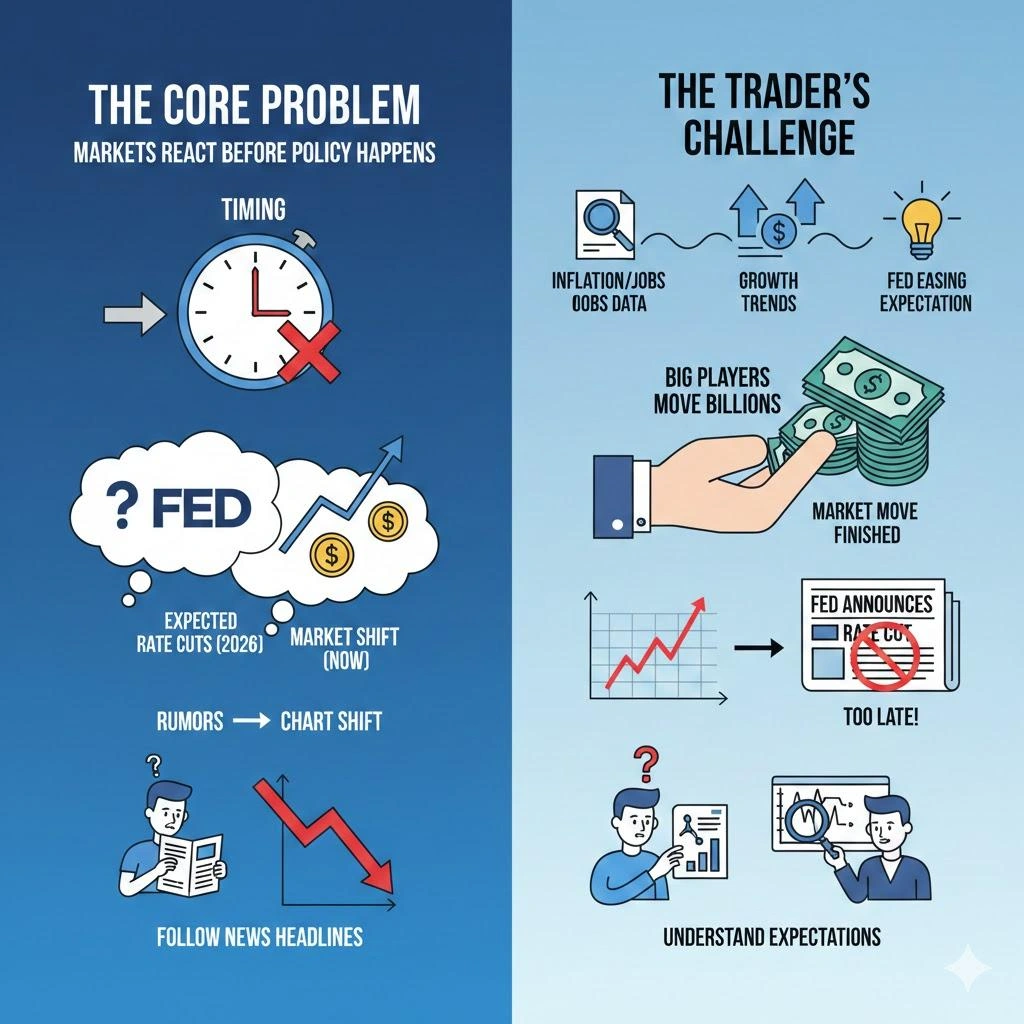

The Indian commodity market just witnessed the biggest correction of the year with the MCX Silver Crash February 17 2026. Everyone is talking about it, trying to understand the reason behind such a move and how it will influence the market. After silver hit the high records, it quickly took a U-turn and is now consolidating; this all shows how fast things can turn when currency shifts, global mood, and big bets all collide at once.
The MCX Silver Crash February 17 2026 isn’t just a dip in price tag; it’s major sign of how the markets are built, the danger of using too much leverage, and the global forces that are driving the prices. Traders really need to identify this to get a grip on the trading.
Quick Summary
| Factor | Impact on Silver |
| Price Level | Around ₹2.68 lakh/kg |
| Monthly Decline | ~23% in February |
| Key Trigger | Dollar strength + profit booking |
| Currency Influence | Rupee volatility pressure |
| Market Sentiment | Risk-off + liquidation |
Key Highlights
- MCX Silver Crash February 17 2026 saw prices fall near the ₹2.4–₹2.7 lakh/kg range.
- Silver prices fell by 23% in a single month.
- A strong US dollar combined with a lack of active wires kept the global mood weak during the crash.
- Profit booking after record highs accelerated the decline.
- ETF prices linked to precious metals also fell up to 4%.
Silver prices on MCX closed around ₹2.39 lakh/kg in previous sessions amid heavy selling pressure, reflecting a major correction from earlier highs.
What Triggered the MCX Silver Crash February 17 2026?
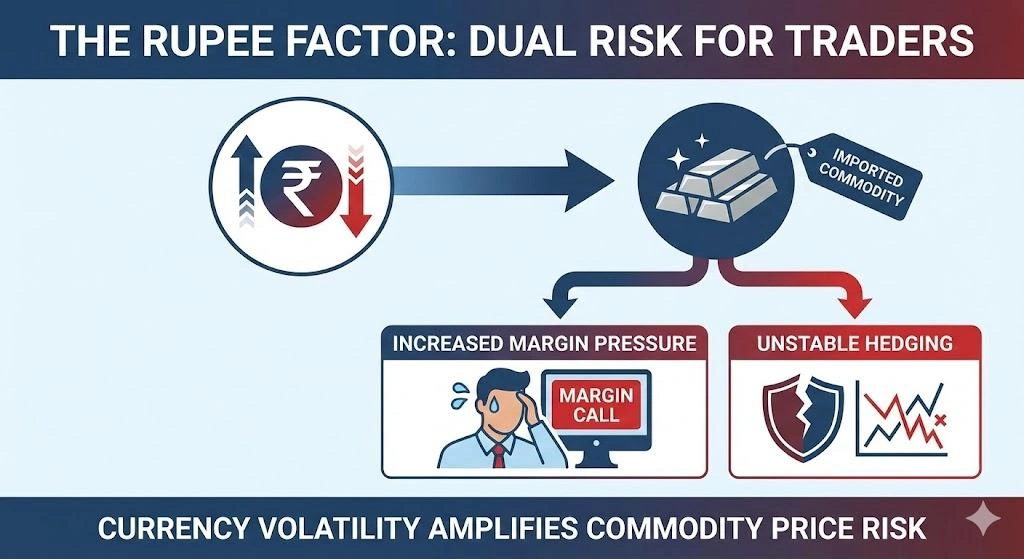
Understanding the MCX Silver Crash February 17 2026 requires looking beyond domestic factors. Several macro drivers aligned simultaneously.
1. Strong Dollar Pressure
Precious metals typically move inversely to the US dollar. A stronger dollar reduces the appeal of metals priced in dollars globally.
Recent market reports show that a firm dollar significantly limited gains in gold and silver, contributing to the decline.
For Indian traders, this effect gets amplified because:
- Silver is imported
- Dollar strength increases landed cost
- Currency volatility affects futures positioning
2. Massive Profit Booking After Historic Rally
Silver had previously surged to record highs earlier in 2026, creating leveraged long positions across the market.
Once momentum slowed, traders rushed to lock in profits.
This resulted in:
- Stop-loss cascades
- Margin calls
- Forced liquidation
Historical data shows silver fell over ₹1.07 lakh in a single session earlier during the correction phase, highlighting extreme volatility.
The MCX Silver Crash February 17 2026 reflects this unwinding phase.
3. Thin Global Liquidity Conditions
Asian markets being closed for holidays reduced liquidity, making price moves sharper than usual.
Lower liquidity often creates:
- Larger price gaps
- Faster volatility spikes
- Algorithm-driven moves
This amplified the MCX Silver Crash February 17 2026 decline.
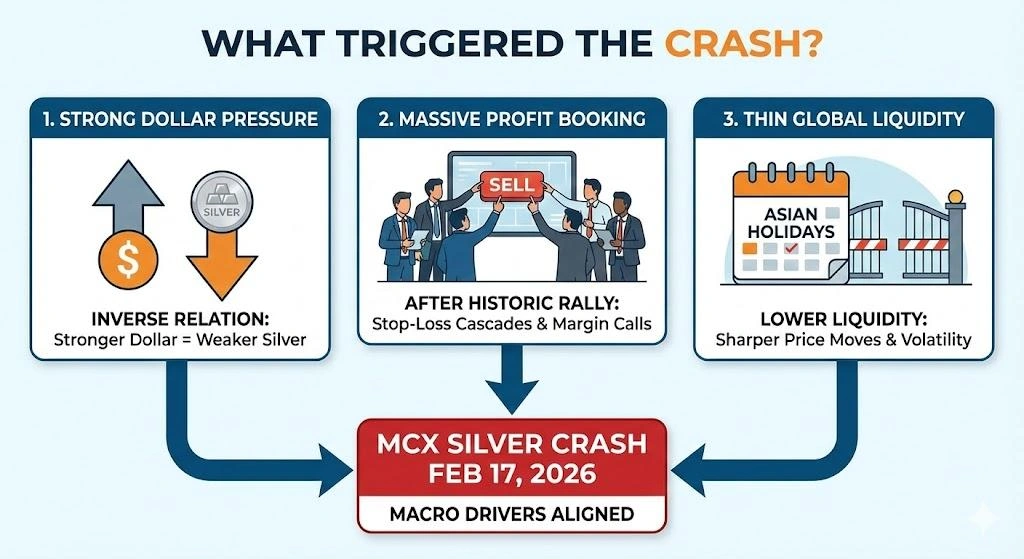
The Rupee Factor: Why Currency Pressure Matters
In this crash we forget one major figure that can also cause it, the rupee.
Earlier, due to the weak rupee, the silver price rose because it increased the import price.
But when sentiment reverses:
- Currency volatility increases margin pressure
- Import costs fluctuate
- Hedging becomes unstable
This exposes traders to dual risk:
Commodity price risk + currency risk
Numerical Breakdown of February Silver Movement
Let’s see how the Silver crash happened with some numericals.
February Price Movement
- Early February: ~₹3.50 lakh/kg
- Mid-February: ~₹2.68 lakh/kg
- Monthly decline: ~23%
- Single session fall earlier: Over ₹26,000/kg
- Two-session cumulative decline earlier: ~33%
The silver is down from its peak in January to ₹2.68 lakh levels, proving that leveraged commodities can move faster than your average stock or currency.
Why Silver Fell More Than Gold
During the silver crash on February 17 2026, many traders asked, “Why did silver take a much bigger hit than gold?”
This is because silver is built differently than gold.
Silver Has Higher Volatility
Because silver has:
- A much smaller market size
- More aggressive speculative training
- A heavy reliance on industrial demand
Dual Nature of Silver
Silver behaves as both:
- Precious metal (safe haven)
- Industrial metal (growth sensitive)
When global economic tension occurs, industrial metal usually drops much faster than gold.
Impact on Traders and Investors
The 2026 silver crash has some major ripple effects.
For Short-Term Traders
Volatility increases the opportunity for trades, but the risk also increases.
- Margins are more expensive
- Price swings have grown much wider
- Slippage risk has increased
For Long-Term Investors
Corrections often create:
- Much better entry prices
- Less hype in the current price
- More realistic and fair valuations
Key Technical Signals Traders Are Watching
During the Silver crash, several key support levels became important for silver.
Important zones include:
- ₹2.50 lakh — psychological support
- ₹2.40 lakh — liquidation zone
- ₹3.00 lakh — resistance
When these support levels broke, rapid selling started in the market as traders panicked and booked the profit, causing the price to fall further.
Global Commodity Sentiment: Bigger Picture
Silver doesn’t move randomly; it’s influenced by global movements like
- Interest rate expectations
- Inflation rate
- Central Bank decisions
- Global tension
These factors all have a huge role behind the commodities movements.
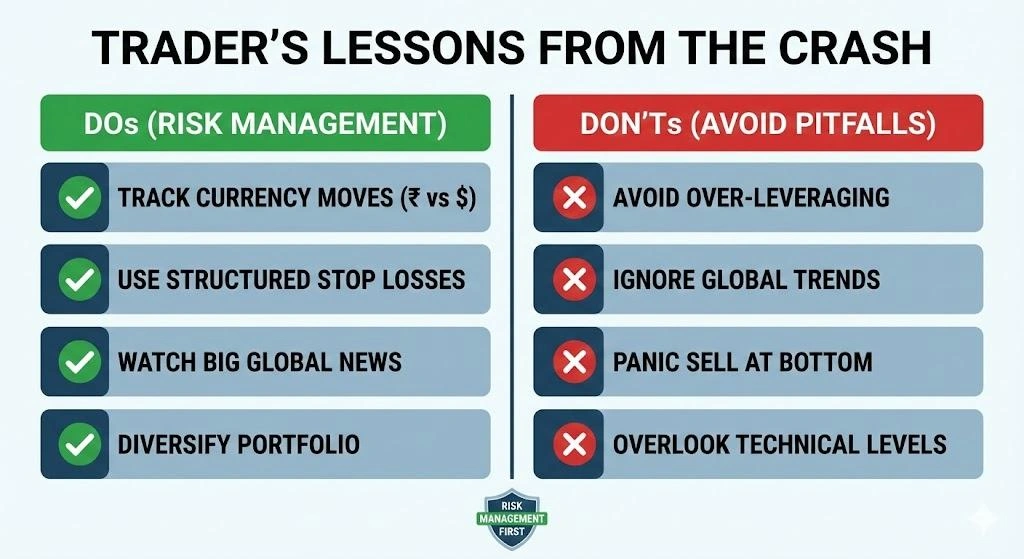
What Traders Should Learn From MCX Silver Crash February 17 2026
The crash teaches us a lot of lessons.
Risk Management Insights
- Avoid over-leveraging.
- Track the currency moves
- Use structured stop losses
- Watch big global news
Strategy Adjustments
Smart traders focus on:
- Adjust that trade size according to the swings
- Diversity their portfolio to protect the capital
- Check multiple charts for confirmation.
Will Silver Recover After the Crash?
It’s quite normal to see a small correction in silver after sharp price jumps.
Recovery depends on:
- The dollar’s next move
- Interest rate reports
- Demand from industries
- Investors’ confidence
We can see a strong recovery in silver once the global market settles.
Conclusion
The MCX Silver Crash February 17 2026, shows how sensitive the commodity market is to global activities; even a slight pressure on currency, global trends, and panic among traders can cause a huge price jump. While the drop caused plenty of uncertainty, it also gave us important structural insights into how currency shifts and global cash flow really move metal prices. If you’re looking for further updates on global trends and local market news, then connect with Insightful Trade. They provide expert analysis and live market data, which are really useful in making trade decisions.
FAQs: MCX Silver Crash February 17 2026
1. Why did MCX silver crash on February 17, 2026?
The drop in silver price was due to the rising US dollar, traders booking early profits, low cash flow, and pressure on the rupee.
2. How much did silver fall in February 2026?
The silver price was at its all-time high just in January, but now within a month it has fallen around 23%.
3. Does rupee movement affect silver prices?
Well, since India imports its silver, any change in the rupee’s value or sudden price jump can definitely be felt in local prices immediately.
4. Is this a buying opportunity?
This totally depends on your risk management and your long-term view. Just keep in mind that the market is still very jumpy right now.
Author: Kumkum Chandak
Experience: 3+ Years in Trading Research & Market Content Strategy
Kumkum Chandak is a trading content strategist and market research writer who specializes in simplifying technical analysis, trading tools, and strategy-driven educational content. Her work is optimized for EEAT, accuracy, and user intent, ensuring every article delivers practical insights for traders of all levels.
Risk Disclaimer:
All content is strictly educational and not financial advice. Trading involves substantial risk. Always perform your own analysis or consult a professional advisor.
Last Updated: 17 February 2026