 Introduction
The concept of liquidity zones trading may not seem easy at first, but once you observe the market in its true rhythm, it will be all too clear. You have already experienced liquidity in action whenever you ventured into a trade only to see the price spike, hit your stop loss, and move in the direction you first entered the trade. Liquidity zones trading is concerned with determining zones where there are heavy orders and stop losses that can enable the institutional traders to get the impetus to shift the price.
Rather than go after breakouts, this strategy will enable you to know why the market pursues highs and lows, how the ideas of liquidity sweeps develop, and how intelligent traders can apply the imbalance trading strategy to enter the market with accuracy. Likewise, in plain words, liquidity zone trading will assist you in not trading randomly but with a purpose.
What Is Liquidity Zone Trading in Simple Terms?
Liquidity zone trading is concerned with the identification of locations in the chart where there are many buy and sell requests. The institutional traders are attracted to these areas due to the liquidity that these areas offer for entering into large positions.
In the majority of cases, the liquidity areas are
- Equal highs and equal lows are where equal stop losses are positioned.
- Range highs and range lows
- Old high of the day and previous day’s low.
- Highs/lows of London and New York sessions.
Why Do Institutions Target Liquidity Zones?
Liquidity zones trading is applied in institutions since these areas are filled with liquidity buy and sell orders. Big players require liquidity so as to make massive trades without causing too much of a stir in the market.
They focus on liquidity areas since:
- Stop losses are close to both highs and lows.
- Obvious levels are entered by breakout traders.
- The pending orders are piled in the same areas.
It is the reason that price usually cleanses these areas and then actually moves.
How Do Liquidity Sweeps Work in Trading?
In liquidity zones trading, a liquidity sweep occurs when the price enters into a clear level to take away the stop losses first.
It usually works like this:
- Price hits a liquidity zone.
- Stops are activated at the level of high or at the level of low.
- Price reverses quickly
This is the reason why liquidity sweeps tend to resemble bogus breakouts.
What Are the Most Common Liquidity Zones Traders Should Watch?
| Liquidity zone type | Description |
| Equal Highs | Buy-side liquidity (stops above highs) |
| Equal Lows | Sell-side liquidity (stops below lows) |
| Previous Day High | Key institutional reference |
| Previous Day Low | Common stop-loss cluster |
| Asian Range High/Low | Frequent London sweep target |
How Does the Imbalance Trading Strategy Connect With Liquidity?
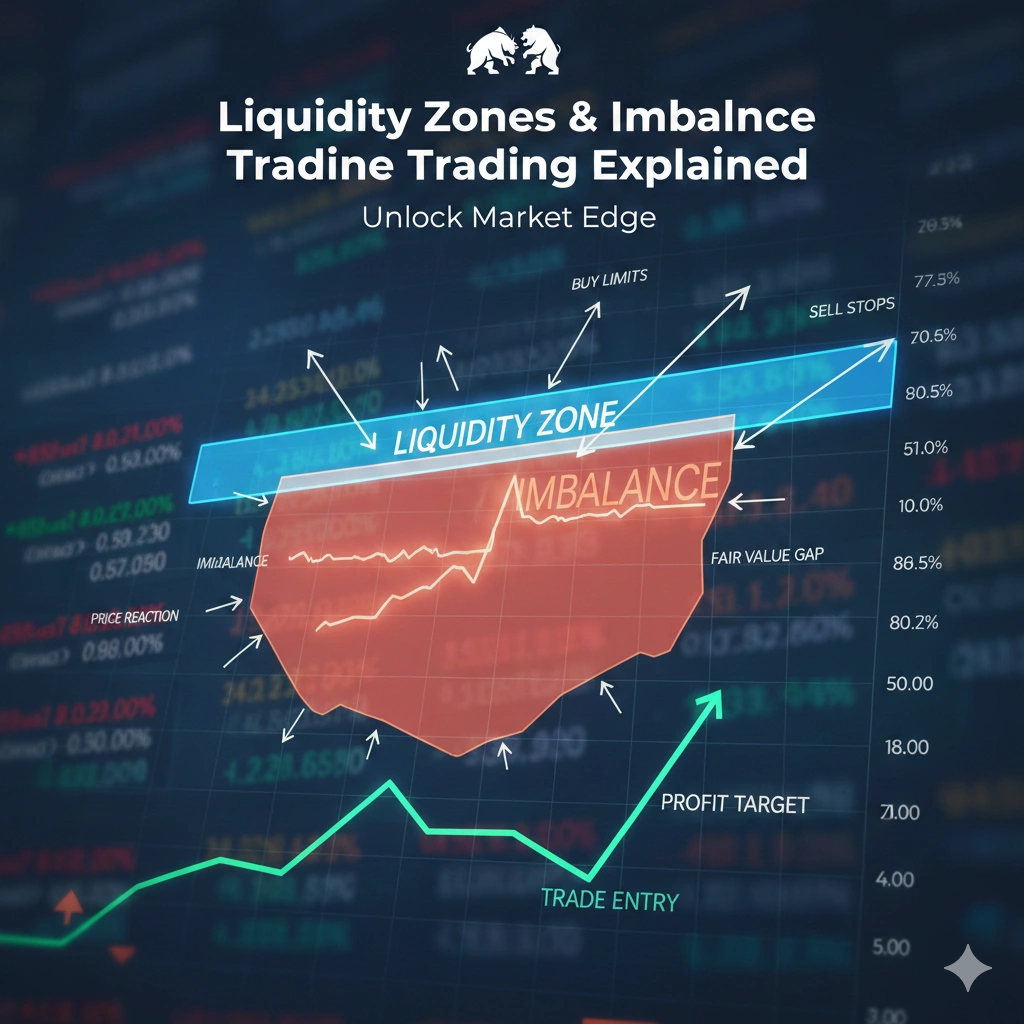
The imbalance trading strategy is involved in the liquidity zone trading immediately after the liquidity is attained. Price moves at such high velocity in a liquidity sweep that it leaves areas of inefficiency that are not fairly traded by buyers and sellers.
Such spheres are usually referred to as
- Fair Value Gaps (FVG)
- Price imbalances
- Inefficiencies
What Is the Formula Behind Liquidity and Imbalance?
In liquidity zones trading, the price is traded on a simple flow:
Liquidity Sweep—Structure Shift—Imbalance Entry—Expansion.
Price takes liquidity, reverses itself, and drags itself into an unbalanced position and then proceeds along a powerful inclination.
How Can Beginners Identify Liquidity Zones Step by Step?
Step 1: The first effort is to mark equal highs and lows.
Identify evident double tops or doubled bottoms; they tend to contain stop losses.
Step 2: Find Highs and Lows of the Sessions.
In London, Asian highs and lows are usually used as targets of liquidity.
Step 3: Wait till Liquidity Sweep.
Be patient. Always enter into liquidity.
Step 4: Look for Imbalance
The sweep should be followed by entering on a retracement into imbalance with confirmation.
Real EURUSD Example: How Does Liquidity Zones Trading Work?
The following is a basic liquidity zones trading perspective of the EURUSD in the London session:
- Asian sessions make equal highs (buy-side liquidity).
- The peak of the London session shoots on the highs, and stops (liquidity sweep) are activated.
- Price turns back and enters the imbalance zone.
- Confirmation, after which a shot is taken.
Result 0-10 pips: 3550 pips (1:4 R:R) Risk 10 pips: 3550 pips (1:4 R:R)
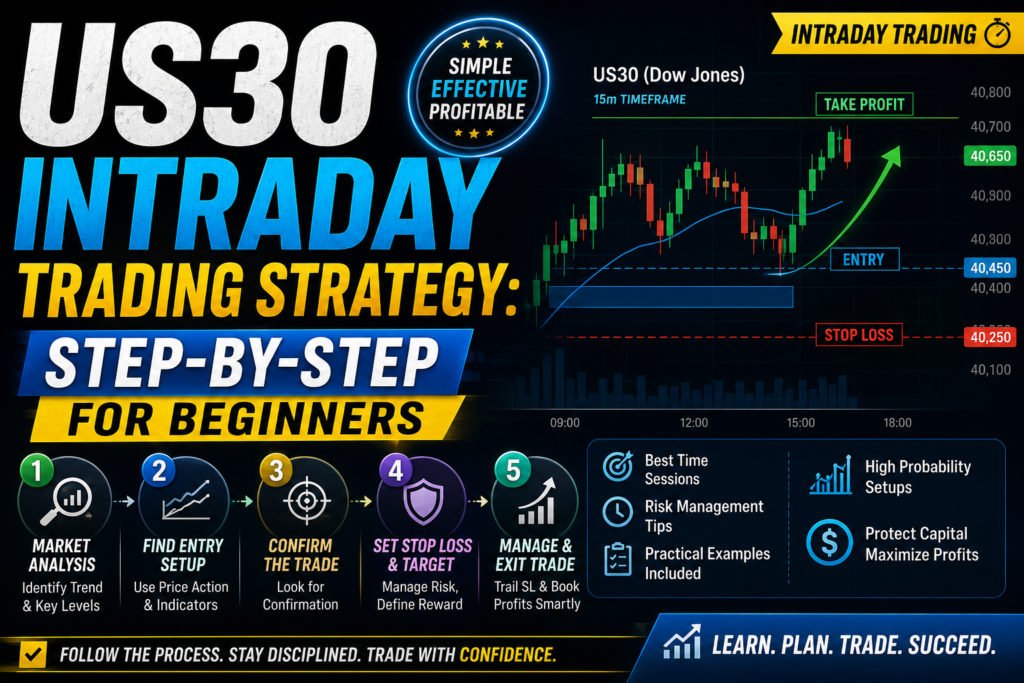
US30 Example: How Do Liquidity Sweeps Appear on Indices?
What does liquidity zones trading look like on the US30 in the New York session?
- The past day’s high is used as a liquidity target.
- The NY session pushes aggressively above said level.
- Rejection candles at the moment.
- The changes in the market structure on the 5-minute chart.
- The sweep is entered at the imbalance.
What Timeframes Work Best for Liquidity Zones Trading?
The correct choice of the timeframe is crucial in the liquidity zones trading. Some charts are best used in various parts of your strategy:
| Purpose | Timeframe |
| Liquidity Mapping | H1 / H4 |
| Entry Confirmation | M5 / M15 |
| Scalping | M1–M3 |
| Swing Trading | H1–H4 |
How Do Lot Size and Pip Value Affect Liquidity Trades?
Lot size and pip value are very important in liquidity zone trading, as they have a direct relationship with your risk and reward. Although you may have an ideal liquidity sweep or an imbalance, the wrong lot size could turn a winning setup into a losing trade.
The following is a shortcut to EURUSD:
| Lot size | Pip value (EURUSD) |
| 0.01 | $0.10 |
| 0.10 | $1.00 |
| 1.00 | $10.00 |

What Are the Biggest Mistakes Traders Make With Liquidity Zones?
- Entering before the sweep- It has been the experience of most to jump in too soon, and they are stopped out.
- Suppose all highs are liquidity – Not all highs and lows contain important orders; it is only clear zones that are important.
- Ignoring higher timeframe bias – It is counterproductive to trade against the larger trend, and it gives you less chance to win.
- Overtrade all imbalances—not all imbalances are worth trading: patience prospers.
- No risk management—The most competent arrangement would not be successful without adequate stop loss and position sizing.
What Are Pro Tips for Mastering Liquidity Sweep Concepts?
Never rush into business.
Never jump into a business before the price shows the sweep; it is the impatience that causes false entries.
Session timing trade
London and New York are the best in terms of liquidity or volatility.
Add liquidity and imbalance.
An imbalance trading strategy is better than a sweep because it is more precise at entry.
Record the trading journal.
Screenshots of setups assist in revising patterns and refining as time passes.
How Does Liquidity Zones Trading Align With Smart Money Concepts?
In fact, Smart Money Concepts (SMC) is based on liquidity zone trading. The rest of SMC makes little sense without knowledge of the position of liquidity.
The main pillars of SMC are
- Liquidity—Determining where stop losses and pending orders concentrate.
- Market Structure—Understanding highs, lows, and changes of the trend.
- Imbalances—Making use of price inefficiencies to make accurate entries.
- Premium/Discount Pricing—Searching areas where institutions will tend to purchase or sell.
FAQs
What is liquidity zones trading?
It is a technique that concentrates on zones where the stop losses and huge orders are concentrated.
Is liquidity sweep trading profitable?
Right, together with the confirmation of structure and imbalance.
Can beginners trade liquidity zones?
Yes, but begin with higher timeframes and demo first.
What is the best session for liquidity trading?
London and New York sessions.
Is an imbalance trading strategy mandatory?
Not compulsory, but quite suggested with regard to the accuracy of entries.
Conclusion
By basic definition, liquidity zone trading will make you see the market through the eyes of institutions. Rather than going on an educated guess about the direction of price, you search for where liquidity is, how sweeps occur, and the manner in which an imbalance is built. You can have better entries and improved risk management by combining liquidity zones with the imbalance trading strategy and observing liquidity sweeps.
These concepts demonstrate why prices move and not how they move, whether you trade EURUSD, US30, or crypto. Knowing how to read liquidity zones will give you a clear advantage, and you can predict where prices will move as strategic trades instead of it being a random event.
Ready to master liquidity zones trading the smart way? Join InsightfulTrade and learn how professionals spot liquidity, time entries better, and trade with clarity—not guesswork. Start your structured trading journey today.
Author: Arihant Jain
Trading Experience: 5+ Years
Arihant Jain is a financial markets analyst and trading educator with expertise in Forex, indices, crypto, and risk-managed trading systems. His insights are based on real trading experience, data-driven analysis, and a transparent understanding of the market. All content is reviewed for accuracy and aligns with Google’s EEAT guidelines.
Risk Disclaimer:
Trading involves substantial risk. All information is for educational purposes only and should not be taken as financial advice. Always do your own research.
Last Updated: 16 December 2025