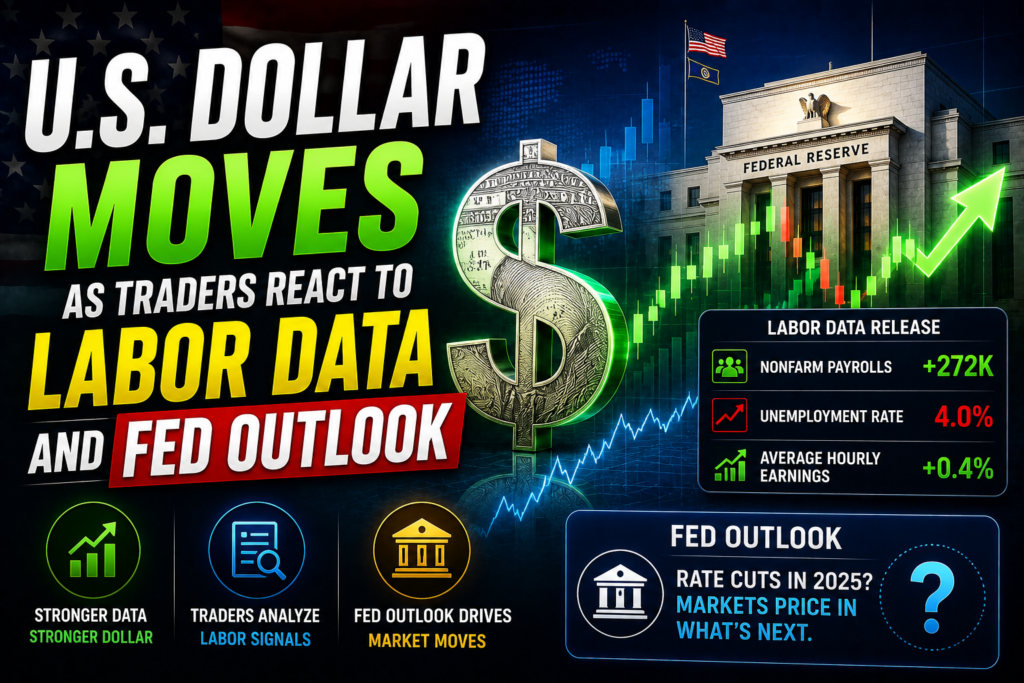

All eyes are on the US dollar today, and if you have been watching charts, you have probably noticed that things are getting a little hectic. As everyone is trying to make sense of the latest U.S. labor data and what the Fed might do next. The numbers are giving a bit of mixed signals; while the new jobs are being added, paychecks aren’t growing as fast as they should.
Instead of one clear, confident direction, the dollar is bouncing back and forth as traders second-guess themselves. Right now, it’s not about a sure thing; it’s more of a nervous reaction to every new piece of news that hits the screen. In short, in the US dollar forex market today, price action reflects uncertainty rather than conviction.
Global Forex Market Today: Currency Market Reacts to US Data
The global forex market today has seen increased volatility as the currency market reacts to US data, particularly labor market releases. Employment figures remain one of the most influential drivers of short-term price movement in the US dollar forex market today.
Key labor data elements traders are watching closely include:
- Non-farm payroll growth
- Unemployment rate trends
- Average hourly earnings (wage inflation)
- Labor force participation
Every one of these numbers is a vital piece of the person for the Federal Reserve. The moment a report catches the market off guard, the dollar index reacts instantly, creating a ripple effect that hits the euro, yen, and pound almost immediately.
What Is Driving USD Movement in the Forex Market Today?
If you’re asking yourself, what is actually pushing the dollar around right now? You’re alone. The answer lies in a combination of economic data, Fed messaging, and broader risk sentiment.
In the US dollar forex market today, the primary drivers include
- US employment data impact on dollar strength or weakness
- Shifting expectations for interest rate cuts or delays
- Treasury yield fluctuations
- Risk-on vs. risk-off sentiment in global markets
It really helps to understand how those job numbers work: Strong jobs mean a healthy economy, which usually keeps the dollar strong. Weak jobs mean that the Fed will lower interest rates to help out, which usually leads to a sell-off for the dollar.
Traders Reassess Fed Outlook as Rate Expectations Shift
As new data continues to emerge, traders reassess the Fed outlook almost daily. The Federal Reserve outlook forex traders follow is increasingly data-dependent, with policymakers emphasizing patience and flexibility. Key factors shaping Fed rate expectations and forex trends include:
- Inflation progress toward the Fed’s target
- Labor market resilience or cooling
- Financial conditions and credit availability
- Global economic risks
In the US dollar forex market today, even small changes in rate expectations can trigger outsized moves. This is a major reason forex market volatility today remains elevated, particularly around data releases and Fed commentary.
Macro News Impacting Forex Markets and Dollar Volatility
Beyond labor data, a wide range of macro news impacting forex markets is influencing the US dollar forex market today. These broader factors often amplify or counteract domestic economic signals.
Important macro drivers include:
- Geopolitical tensions affecting risk sentiment
- Slowing or accelerating global growth
- Central bank policy divergence
- Equity and bond market performance
When things get scary or uncertain, people tend to treat dollars like a safe haven. They park their money there until the storm passes, which pushes the price up. On the flip side, when everyone is feeling optimistic about the world, they usually move their cash out of the dollar and find bigger profits in riskier places. This constant back-and-forth is a huge part why the dollar index is moving the way it is today.
Why US Dollar Is Volatile Today
Many traders are asking why the US dollar is volatile today, and the answer is rooted in uncertainty rather than weakness or strength alone.
The US dollar forex market today is volatile because:
- Labor data sends mixed economic signals
- The Fed avoids giving clear forward guidance
- Markets rapidly adjust rate expectations
- Traders react aggressively to headlines
This environment creates frequent short-term price swings, especially in highly liquid USD pairs.
Should Traders Expect Dollar Volatility to Continue?
A big question on everyone’s mind is: should we expect the dollar to stay volatile? Honestly, considering the current situation, wild swings are going to be the new normal for the US dollar for a while.
Reasons volatility may persist include:
- Continued dependence on incoming data
- Uncertainty around the timing of Fed rate cuts
- Ongoing macro and geopolitical risks
- Shifting global growth expectations
If you’re an active trader, all this movement is actually where the best opportunities are. But if you’re a longer-term participant, it’s a loud reminder to keep your risk management tighter than ever.

Best Forex Pairs to Watch Today
With so much happening in the US dollar market right now, you must be wondering which chart actually deserves your attention. Well the best pair to watch during those times are the ones that are highly sensitive to every bit of US data and fed news.
Top pairs to monitor include:
- EUR/USD – reacts strongly to US data and Fed outlook shifts
- USD/JPY – influenced by yield differentials and risk sentiment
- GBP/USD – volatile amid UK economic uncertainty
- AUD/USD – reflects global growth and risk appetite
These pairs usually lead in the market, making them the best choices if you’re looking for quick moves or intraday opportunities.
How Fed Policy Impacts Forex Trading Strategies
Understanding how the Fed’s every move ripples through the market is absolutely key right now. Think of interest rates as the magnet for money; wherever the interest rates are high, that’s where the big global cash flows want to go.
In the US dollar forex market today:
- Hawkish Fed signals typically support the dollar
- Dovish expectations tend to weaken the dollar
- Data-driven uncertainty increases short-term volatility
If you stay in sync with the Fed’s vibe, you’ll be much better at navigating those sudden market shifts.
Conclusion: Navigating the US Dollar Forex Market Today
To wrap things up: the US dollar forex market is on quite a ride today. Between those labor data surprises and shifting Federal Reserve expectations, the market is definitely on high-alert mode. Every time a fresh piece of data hits the screen, you can see traders quickly moving their money around and rethinking the risks.
Since things are going to remain this jumpy for a while, staying informed is more important. If you are looking for deeper insights and really want to understand what’s driving the charts today, head to our InsightfulTrade page. We’ve designed it to help you cut through the chaos and make confident, logical decisions no matter how fast the market moves.
Frequently Asked Questions (FAQs)
1. What is happening in the US dollar forex market today?
The US dollar forex market today is reacting to recent US labor data and shifting Federal Reserve expectations, leading to increased volatility across major currency pairs.
2. Why is the US dollar volatile today?
The dollar is volatile due to mixed employment data, uncertainty around future interest rate cuts, and traders reassessing the Federal Reserve outlook.
3. How does labor data affect the forex market?
Labor data influences expectations for economic growth and inflation. Strong employment figures typically support the dollar, while weaker data can pressure it lower.
4. How does US employment data impact the dollar?
Positive employment data strengthens the dollar by reinforcing expectations of higher interest rates, while soft data increases speculation of Fed easing.
Author: Kumkum Chandak
Experience: 3+ Years in Trading Research & Market Content Strategy
Kumkum Chandak is a trading content strategist and market research writer who specializes in simplifying technical analysis, trading tools, and strategy-driven educational content. Her work is optimized for EEAT, accuracy, and user intent, ensuring every article delivers practical insights for traders of all levels.
Risk Disclaimer:
All content is strictly educational and not financial advice. Trading involves substantial risk. Always perform your own analysis or consult a professional advisor.
Last Updated: 8 January 2026