Introduction
Volume profile trading may be their tool of trade, should you ever wonder how professional traders always seem to know where the market will go. In contrast to the normal charts, where you simply watch a price change over time, the volume profiles make you understand that there are specific points of trading volume that occur at various price levels that assist in helping you identify the areas of support and resistance. Being able to conceptualize terms, such as HVN/LVN explanations and the volume levels index trading, will put you ahead in either forex or indices, whether it is EURUSD or US30.
To put it in plain words, it is like a map of the favorite hangout places of the market, the high-volume places, and the places that are not to be visited, the low-volume places. Through this, you will be able to make smarter entry, exit, and risk decisions, and instead of guesswork, it will become informed trading.

What is volume profile trading?
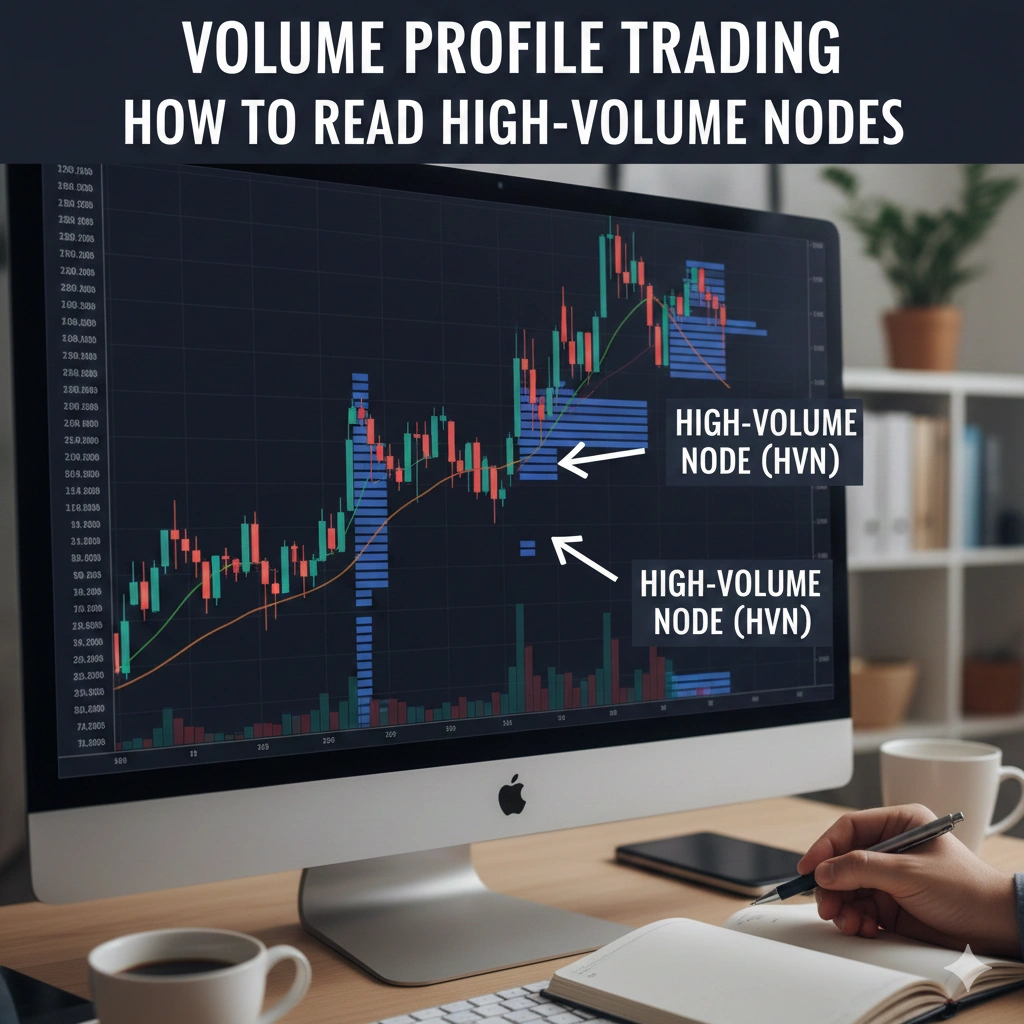
Volume profile trading indicates the trading at various price levels, where the highest trading is observed. Compared to normal charts, it shows HVN and LVN areas, and as such, you can view the locations where the market hangs out (HVN) and the locations where it moves very swiftly (LVN).
Volume level index trading is trading where traders confirm the trend and breakouts of the spot. This tool can be used to enter, exit, and place stop-loss orders more intelligently, regardless of whether it is EURUSD or US30.
Key Takeaways:
- Has high and low trading zones.
- Helps locate breakout areas, support, and resistance areas.
- Scalping works, day trading works, and swing trading works.
How Does HVN/LVN Work in Trading?
In volume profile trading, there are significant HVN and LVN:
- HVN (High Volume Node): The market consolidation areas of popularity.
- LVN (Low Volume Node): The price does not touch these zones; it is ideal when looking to identify a breakout.
Example (EURUSD 1H):
- HVN: 1.0950 – 1.0970
- LVN: 1.1005 – 1.1010
Trading Tip: HVN—range movement, LVN—trending opportunity.
Why is Volume Profile Important for Traders?
It assists in volume profile trading:
- Know market feeling: HVN/LVN displays the power of buyers or sellers.
- Enhance entries/exits: Do not enter into low-volume situations in which the price can turn.
- Deal with risk: Smart stop-loss placement in HVN/LVN.
The majority of the time, you must never use volume profile alone; it should be used in conjunction with price action and trend analysis.

How to Read a Volume Profile Chart?
- Point of Control (POC): Price at which the volume is the greatest.
- HVNs: Consolidation clusters of the market.
- LVNs: Low-volume areas where price is fast-moving.
- Value Area: 70 percent of the trading is around POC.
Sample Table: EURUSD Volume Levels.
| Level | Price zone | Type | Significance | Strategy use |
| 1 | 1.0950-1.0970 | HVN | Consolidation zone | Range trading |
| 2 | 1.1005-1.1010 | LVN | Rejection zone | Breakout trading |
| 3 | 1.0920-1.0935 | HVN | Support | Stop-loss placement |
| 4 | 1.1020-1.1030 | LVN | Resistance | Target area |
How Can Volume Levels Index Trading Help in Decision Making?
Volume index trading in volume profile trading aids you in having a better judgment of price strength.
It helps with:
- Trend strength: HVN has high volume, which indicates direction.
- Market activity: Accumulation or distribution can be seen in the case of repeated volume.
- Breakouts: LVN breaks are more reliable in terms of volume.
Example:
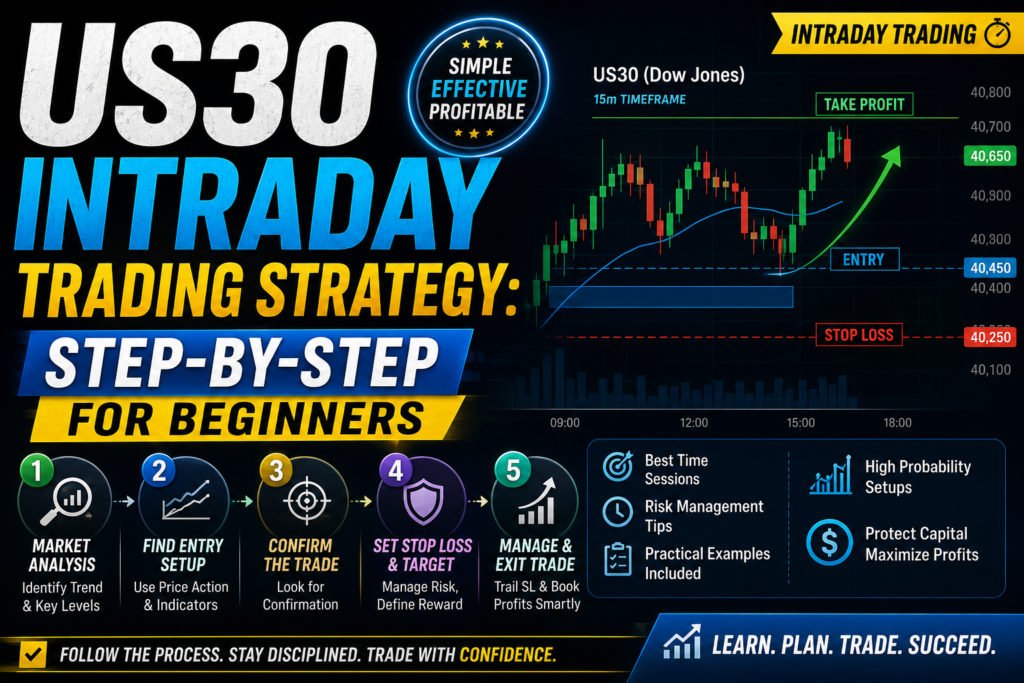
US30, a key HVN, had strong volume, resulting in a 120-point movement.
What are the best timeframes for volume profile trading?
In volume profile trading, the optimum time is based on your way of trading.
- Scalpers: 5-minute fast HVN/LVN, 15-minute fast HVN/LVN.
- Day traders: 1H-4H charts to monitor the volume in the day.
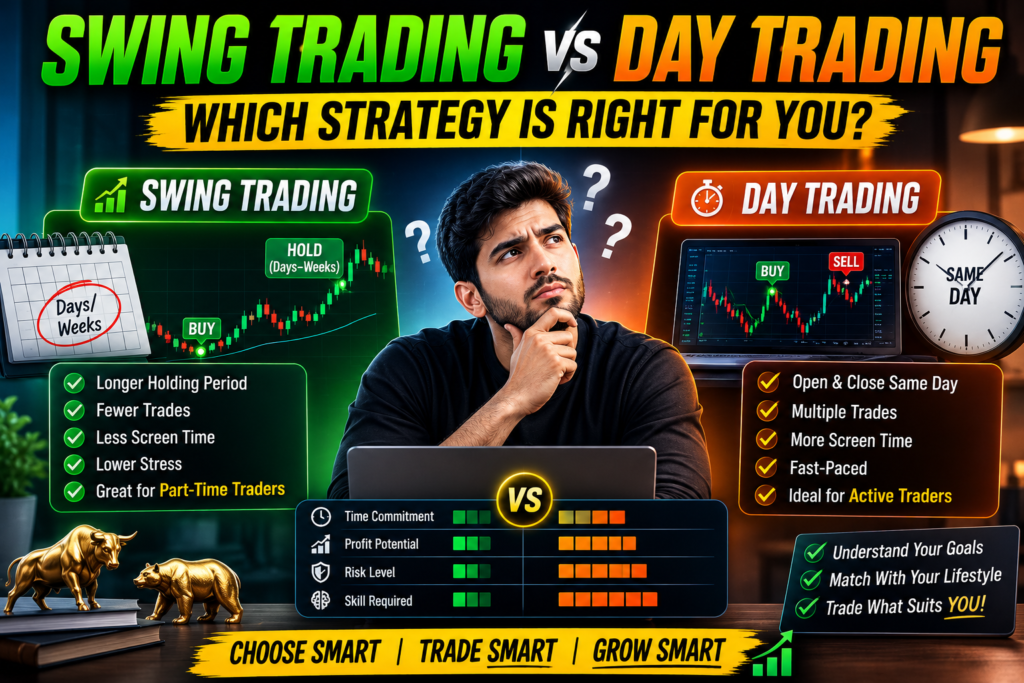
- Swing traders: Big volume area charts and trend charts.
Pro Tip: It is always important to pair low time frame setups with higher timeframe HVN/LVN zones to eliminate possible false signals.
How to Combine Volume Profile with Price Action?
- HVN clusters: HVNs are commonly an indication of pullbacks or zones of consolidation in trending markets.
- Candlestick confirmation: Find pin bars, engulfing candles, or doji around HVN/LVN.
- LVN entries: Clean breakout or entry trigger zones are LVN.
Example:
EURUSD retreats to an LVN of around 1.1005—bullish engulfing, volume, and bullish long entry.
Can Volume Profile Predict Market Reversals?
Yes, in volume profile trading, it is easier to observe market reversals through HVN, LVN, and POC changes.
- Reversal signals: Price is rejecting an LVN that is of good volume.
- Continuation signals: An LVN and POC shift is broken by price, which attests to the strength of the trend.
Reversal vs. Continuation: Table of examples.
| Signal Type | Price Action at HVN/LVN | Trade Strategy |
| Reversal | Rejects LVN | Counter-trend trade |
| Continuation | Breaks LVN + POC shifts | Follow the trend |

How Do You Calculate Position Size Using Volume Profile?
The amount of position size used in a volume profile trade depends on the distance between your stop-loss and key HVN or LVN levels and the level of risk that you are prepared to assume.
Example Formula:
Position Size (lots)
Account Risk/(Stop Loss (pips)/Pip Value)
Numerical Example:
Account Risk: $100
Stop Loss 50 pips (placed above HVN/LVN)
Pip Value (EURUSD, 1 lot): $10
Position Size = 100 ÷ (50 × 10) = 0.2 lot
What Are Common Mistakes in Volume Profile Trading?
- Disregarding market environment: When trading an HVN, it is not usually successful when trading against a strong trend.
- Over-complexity of LVN levels: There are too many LVNs, and the main attention should be paid to the key areas.
- Failing to monitor risks: Risk monitoring is a key to the success of any HVN/LVN setup.
Pro Tip: To be consistent, volume profile trading, trend analysis, and sound risk management have to be combined.
Can Volume Profile Be Used for Swing Trading?
Yes, volume profile trading is quite effective among swing traders, as it will point out the important price zones.
Swing traders benefit from
- The determination of the significant HVNs: These serve as support and resistance areas.
- Utilizing LVNs: Ideal locations of breakout and momentum actions.
- Monitoring changes in value areas: Assists in identifying possible reversals in the trend at early stages.
Example:
The US30 swing trade entails entry of 33,800 LVN and an HVN of 34,200, so that a 400-point move is achieved.
How to Spot HVN and LVN Without a Charting Tool?
It is still possible to determine HVN and LVN using price behavior in volume profile trading:
- Consolidation zones: HVN is usually characterized by sideways price movement.
- Quick price changes: Sharp changes are typically indicative of an LVN.
Pro Tip: It is best to use strong price action and experience.
FAQs
- Is Volume Profile suitable for beginners?
Yes, but begin with bigger time periods and get to know about HVN and LVN first. - Can it be used in crypto trading?
Absolutely. Volume profile applies in any market where volume is traded. - What is the difference between HVN and POC?
POC is the price at which there was the greatest amount of volume, and HVN consists of zones of high-volume clusters. - How often should I update my volume profile?
Intraday traders: per session. Swing traders: week/day charts. - Does volume profile guarantee profitable trades?
No indicator is certain of gaining profits; combine it with risk management, trend analysis, and an appropriate strategy.
Conclusion
Volume profile trading involves, at the end of the day, knowing where the market is actually alive. After having a clear explanation of HVN and LVN, trading becomes more logical and less emotional. Through the index trading of volume levels, you can easily identify strong points of support as well as resistance, and also breakout areas and regions. Big or small, day trading or swing trading, volume profile can assist you to make smarter entries, improve on exits, and clean up on risk. Practice it, and blend price action with it, and you will find it a very powerful tool.
Master Volume Profile Trading with InsightfulTrade—learn where smart money trades, identify high-probability zones, and trade with confidence using proven, data-backed strategies today.
Author: Arihant Jain
Trading Experience: 5+ Years
Arihant Jain is a financial markets analyst and trading educator with expertise in Forex, indices, crypto, and risk-managed trading systems. His insights are based on real trading experience, data-driven analysis, and transparent market understanding. All content is reviewed for accuracy and aligns with Google’s EEAT guidelines.
Risk Disclaimer:
Trading involves substantial risk. All information is for educational purposes only and should not be taken as financial advice. Always do your own research.
Last Updated: 21 December 2025