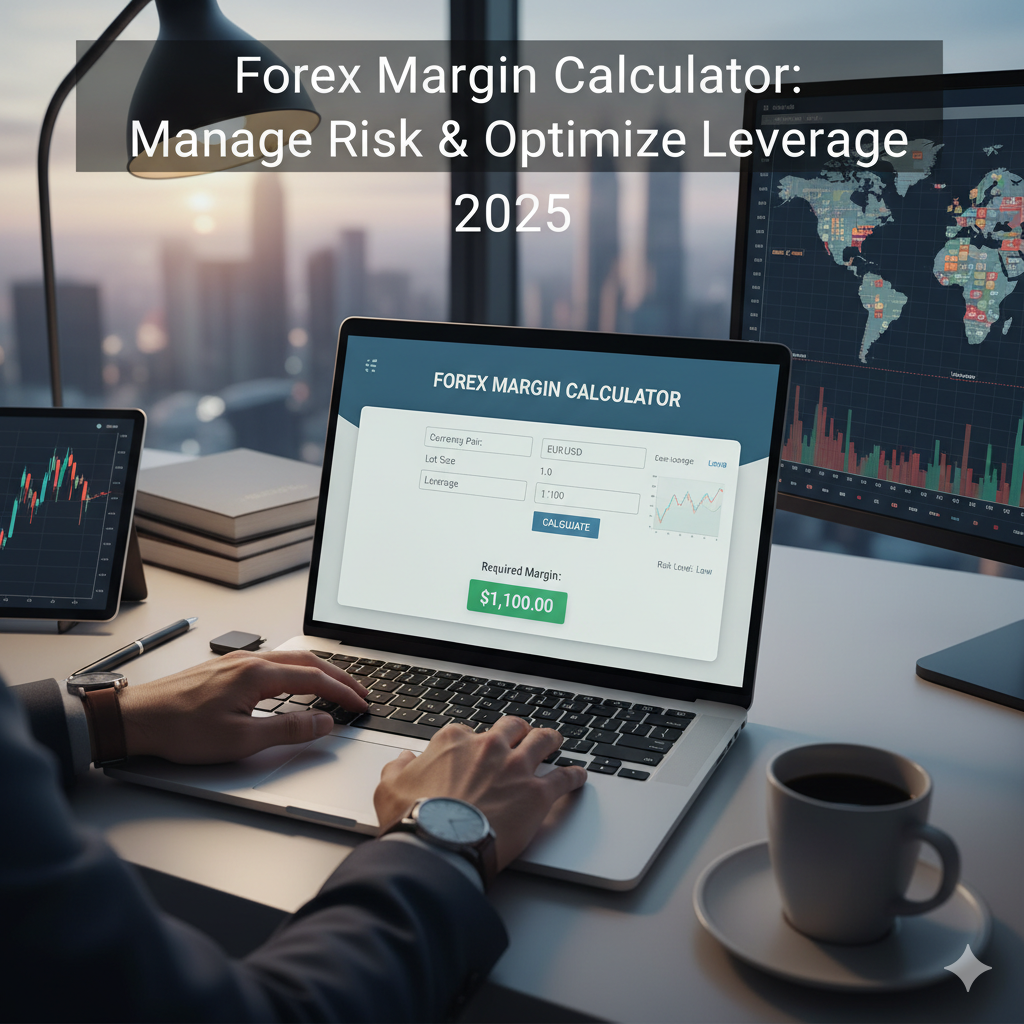

Have you ever wondered why there are traders who appear to make regular earnings, and some fail to do so? It is reduced to a trade expectancy calculation. This simple and effective metric allows you to estimate your edge, expectancy trading, and increase your system’s profitability. In this guide, we are going to dissect the process of computing expectancy, why it is important, and how it will change your long-term trading strategy.
Quick summary
| Concept | Meaning | Why it matters |
| Trade Expectancy | Avg profit/loss per trade | Shows system profitability |
| Win rate | % of winning trades | Part of expectancy trading |
| Average win | Typical profits | Balances losses |
| Average loss | Typical loss | Affects profitability |
What Is Trade Expectancy Calculation?
Trade expectancy calculation informs you of the average gain or loss you can expect to make or lose in an average trade. It is important to expect trade and know how your system will make profits. The formula is simple:
Expectancy = (Win Rate x Average Win) – (Loss Rate x Average Loss).
A positive figure indicates that your system will be able to make profits in the long run; a negative figure is a danger sign.
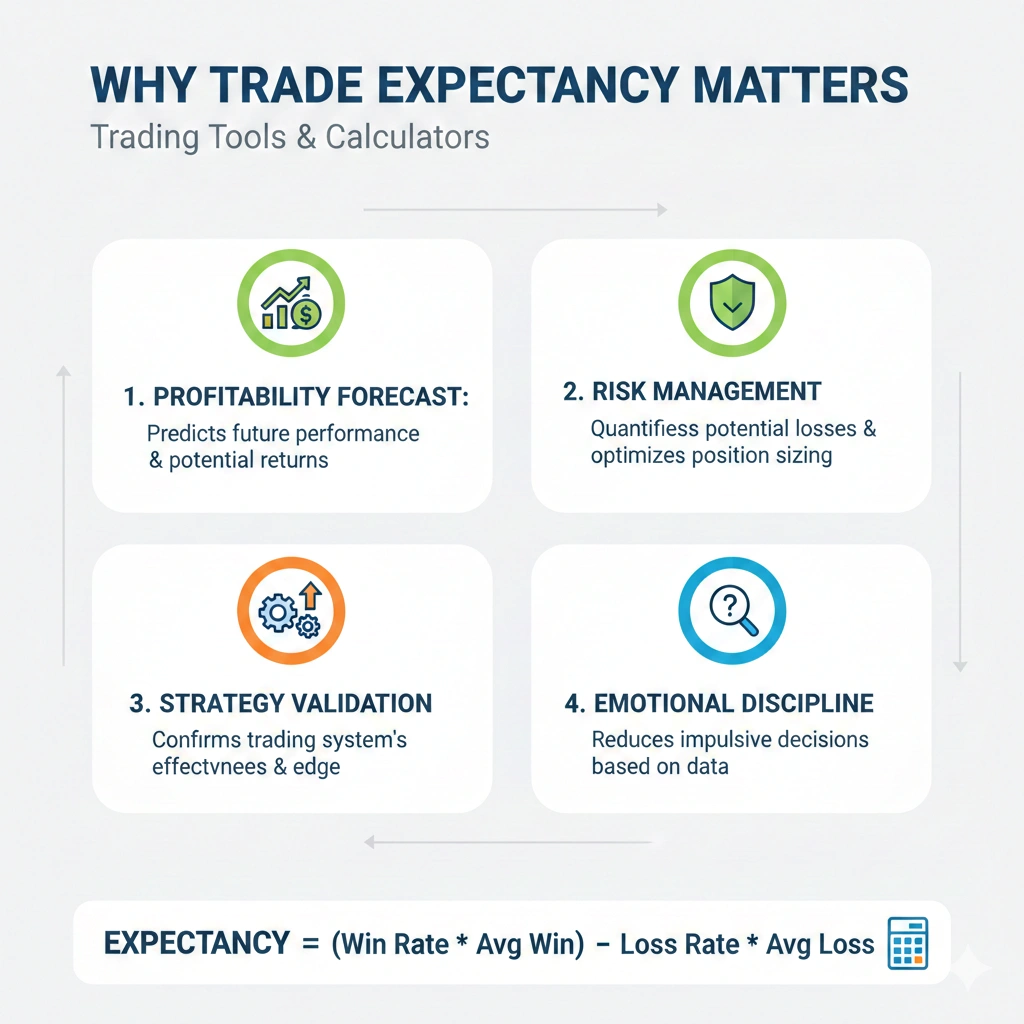
Why Trade Expectancy Calculation Matters in Trading Tools & Calculators
Trade expectancy calculation is not only about win rates, but it demonstrates the actual system profitability of your strategy by taking the win rate and the amount won, divided by the loss rate and amount lost. It is the essence of the expectancy trade and aids traders in making more informed, fact-based choices.
Think of it this way:
- Win rate indicates the frequency of winning.
- Expectancy trade indicates the level of earnings in the long run.
- Calculation of trade expectancy calculates the calculators in trading sites and disciplines your risk management.
Step‑by‑Step: How to Do the Trade Expectancy Calculation
- Win Rate (% of Winning Trades)
Winning trades/total trades. Example: 60 wins out of 100 trades = 60%.
- Average Win ($ or %)
Profit made on winning trades/number of wins.
- Average Loss ($ or %)
The aggregate loss incurred in losing trades/the number of losing trades.
- Apply the Formula
Expectancy = (Win rate times average win)/(Loss rate times average loss).
Example:
- Win Rate = 60% (0.60)
- Avg Win = $120
- Loss Rate = 40% (0.40)
- Avg Loss = $80
Expectancy = (0.60 × 120) − (0.40 × 80) = 72 − 32 = $40
This indicates that you make an average of 40 dollars on each trade; that is, your system is positively expected, and your system’s profitability is high.
What a Positive Expectancy Value Means
When your trade expectancy calculation yields a value greater than zero, then you have a genuine advantage in expectancy trade as far as the strategy is concerned.
In simple terms:
- Positive expectancy = Optimal long-term system.
- Negative expectancy = Probable system loss.
- Zero Expectancy = Break-even system.
This figure is a direct indicator of the profitability of your strategy, whether you are configured to achieve regular returns or you need to modify your strategy.
Common Mistakes in Expectancy Calculation
Experienced traders can err in the calculation of trade expectancy.
- Targeting Win Rate Only: High wins do not mean that the system becomes profitable.
- Neglect of Costs, Slippage: Fees and spreads drop real expectancy.
- Too Small a Sample Size: A minimum of 100 trades is required to give stable expectancy trade results.
These errors would be disregarded and would make your strategy appear to be better than it is.
Real‑world Trends: What Data Shows About Algorithmic & Expectancy‑Based Systems
- In the market, 60-80 percent of equity trading is algorithmic.
- Better returns with well-designed systems: Hedge funds get 812 average returns with smart algorithms.
- Retail adoption on the rise: Automated strategies are now used by about 45 percent of retail traders.
These trends indicate that it is not only a chance that system profitability depends on the expectancy trade and the correct calculation of trade expectancy.
How Expectancy Trading Improves System Profitability
- Informed Decision‑Making
Under expectancy trade, you do not make decisions based on guesses and intuition.
- Better Risk Management
Being aware of your average losses enables you to implement more intelligent risk control and save your capital.
- Strategy Optimization
Expectancy brings into focus when your trades, entry, or exit should be adjusted to enhance the profitability of your system.
- Confidence Under Pressure
Although some trades may be unsuccessful, a positive expectancy system will allow you to rely on the math and remain consistent.

Expert Tip: The Real Edge Isn’t Just a Win Rate
Win rate is not a guarantee of profits. A win rate system of 90 percent can be beaten by a 50 percent win rate, provided that your reward-to-risk system is good.
That is the strength of expectancy trading: doing math and not using feelings. Well spent, it increases your profitability in the long term.
Integrating Trade Expectancy Calculation With Other Metrics
Do not just stop at trade expectancy calculation. Combine it with:
- Profit Factor- total gross profits/total gross losses, overall profits and losses, respectively.
- Sharpe ratio – measures adjusted returns based on risk so as to view whether profits are worth the risk.
- Drawdown Limits – monitors the most severe downward movement in your account and evaluates your plan as sustainable.
By combining these measures, you can know the actual profitability and long-term expectancy trading advantage of your strategy.
FAQs
1. What is the trade expectancy calculation?
A technical technique of determining the expected profitability per trade across time to quantify the feasibility of a strategy over the long run.
2. Why should traders use expectancy trading tools?
They assist in the objective measurement of system profitability to understand whether a strategy will pull in or not in the long term.
3. Does a high win rate guarantee profitability?
No, a high win rate does not necessarily mean that it is profitable unless it is accompanied by good reward-to-risk ratios and positive expectancy.
4. How many trades are needed for a reliable expectancy trading result?
As a rule, the number of trades of 100+ is sufficient to enable the accurate calculation of the expectancy.
5. Are online trade expectancy calculators reliable?
Yes, they can compute the expectancy correctly and assist in comparison, particularly when the transaction costs and the risk are taken into consideration. Even advanced analytics are presented in modern calculators, such as AI-powered tools.
Conclusion
The clue to the smart expectancy trade and long-term profitability is the trade expectancy calculation. It indicates the presence of an actual advantage in your strategy; it is not just about winning rates. Math, risk, and reward allow you to make sure you are making correct trading decisions and optimizing your system. This metric is consistently used to transform good strategies into profitable strategies in the long run and make your trading smarter and more trustworthy.
Trade with more confidence today! InsightfulTrade Trade Expectancy Calculation is used to quantify your competitive advantage, synthesize strategies, and gain better profitability of your system in the long term. Begin analysis today!
Author: Arihant Jain
Trading Experience: 5+ Years
Arihant Jain is a financial markets analyst and trading educator with expertise in Forex, indices, crypto, and risk-managed trading systems. His insights are based on real trading experience, data-driven analysis, and transparent market understanding. All content is reviewed for accuracy and aligns with Google’s EEAT guidelines.
Risk Disclaimer:
Trading involves substantial risk. All information is for educational purposes only and should not be taken as financial advice. Always do your own research.
Last Updated: 18 February 2026