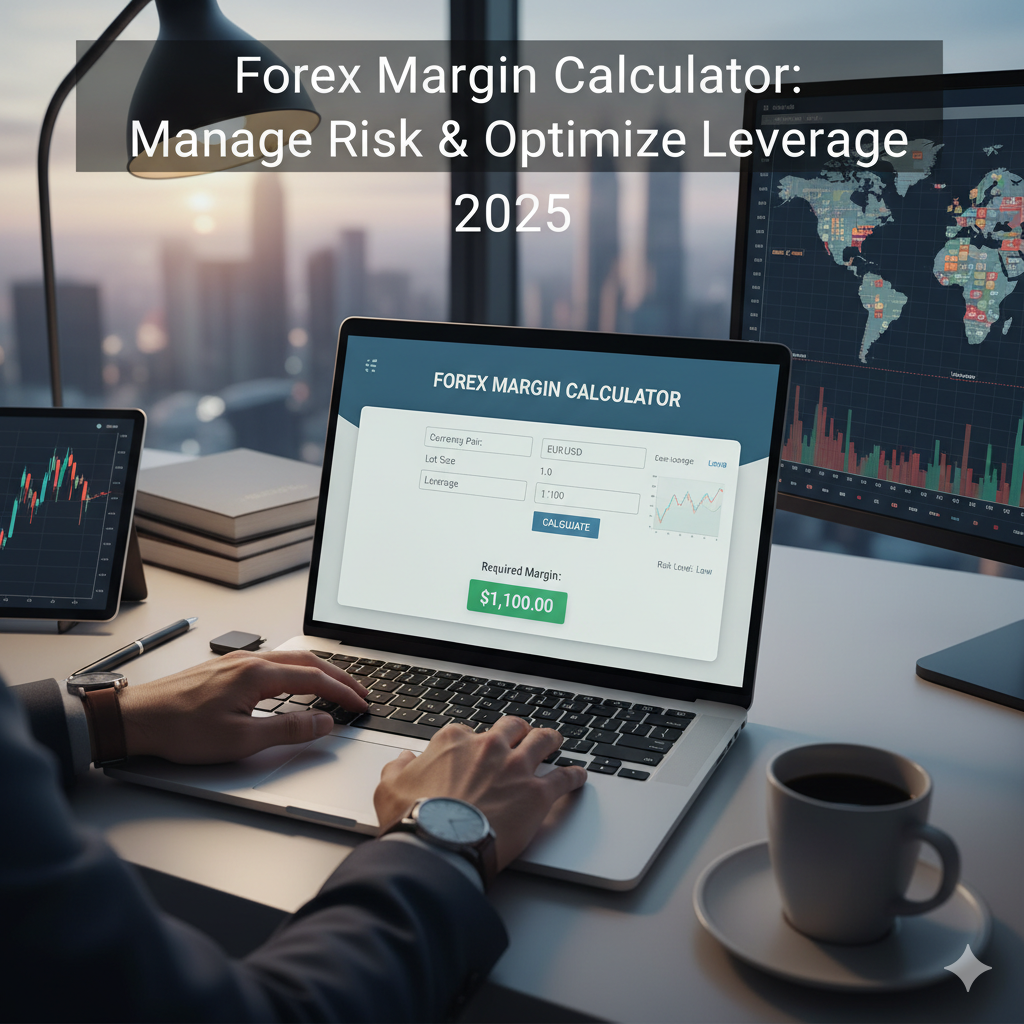
Hey there! Ever wondered how those small price gaps in trading—called spreads—can slowly cut into your profits? If you’re getting into intraday trading or just want to manage your trading costs better, you’re in the right place. Today, we’ll break down what a spread cost calculator is, why spreads matter, and how understanding them can help improve your trading results.
Let’s look at it step by step with a simple explanation. By the end of this blog, you’ll be able to calculate your spread cost, understand how spreads affect your profits, and discover practical ways to handle spread impact, especially when trading intraday.
What Is Spread in Trading?
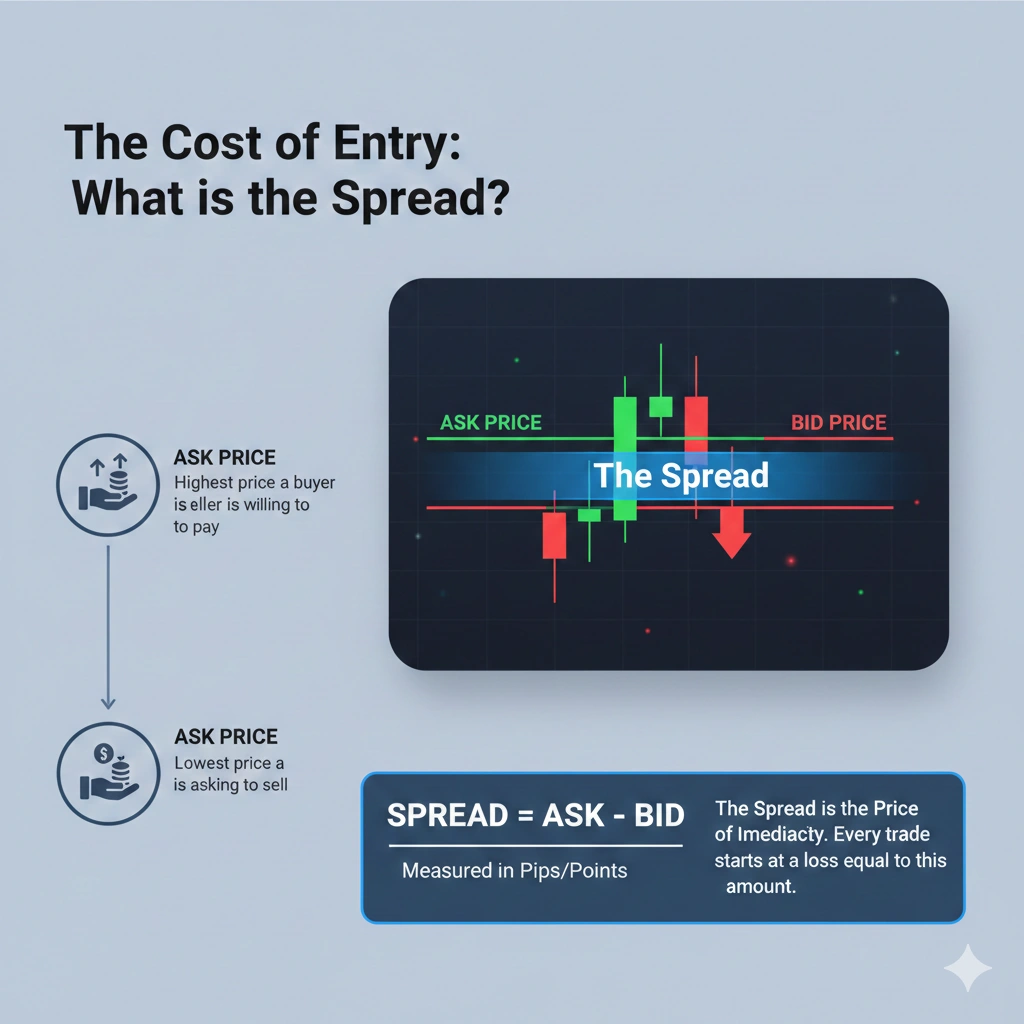
First off, you need to understand what is spread? Well whenever you buy or sell an asset, there’s a small difference between the price someone’s willing to buy at (the bid) and the price someone’s asking to sell (the ask) which is called the spread.
The spread is measured in the terms of pips or points in whatever financial instrument you are trading whether it’s forex, stocks, or commodities. It is a tiny difference, but spreads are the actual cost you pay every single trade. Sometimes this cost is fixed, and other times it changes with market conditions—that’s why you’ll hear about fixed versus variable spreads.
Though your broker or your demat account might show different values of spreads. Some offer ECN or raw spreads plus commissions, while others bundle everything together. The key takeaway? The spread is your immediate “cost of entry” into any position.
How to Calculate Spread Cost
Basic Spread Formulas You Should Know
Calculating the spread cost isn’t as complicated as it sounds. The simplest way to think about it is
Spread = Ask Price − Bid Price
This is the difference you see on your trading platform, usually in pips. To get it in percentage terms, you can use
Spread Percentage = (Ask − Bid) / Ask) × 100%
Here what’s interesting is that you get the spread value in pips, but to understand how much it costs in your currency depends on your lot size and the value of each pip.
How a Spread Cost Calculator Works
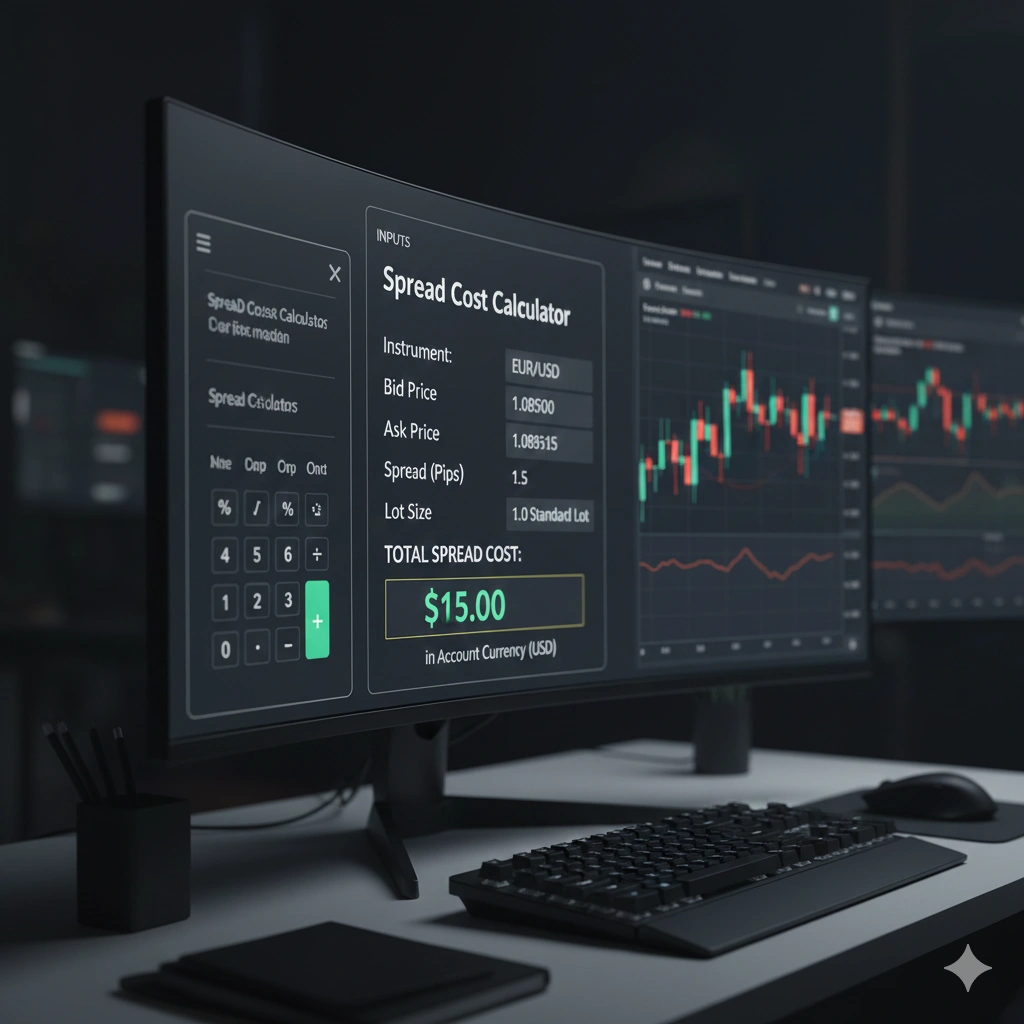
A spread cost calculator is a convenient tool that takes your trading details—like which instrument you’re trading, bid and ask prices, lot size, and even your account currency—and instantly tells you exactly how much that spread will cost you in real money.
So whether you’re trading EUR/USD or gold (XAUUSD), entering 0.1 lots or 1 lot, a spread cost calculator shows the exact cost of spread in your account currency. This is the perfect way to calculate the impact of spread on your trades before you place them.
Real-Life Examples
Say the spread for EUR/USD is 2 pips. If you are trading 1 standard lot, that could mean the cost of spread would be $20 just to enter a trade. And if you’re a trader taking 10 trades a day the cost would be $200, this cost compounds quickly cutting into your profits.
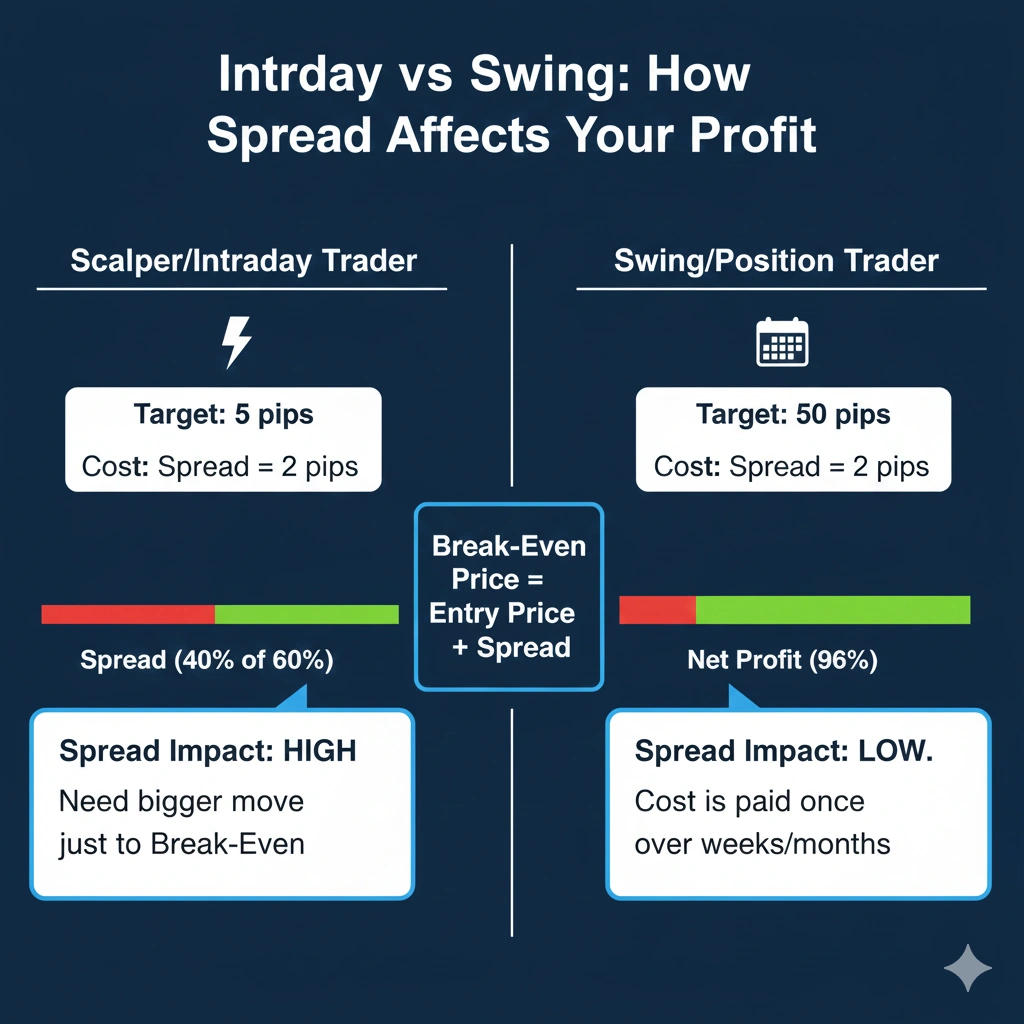
In this case, swing traders hold the trade for more days but they will have to pay the same spread only once, with profit from larger price movements. That’s why understanding spread will help you make strategies for your trade.
How Spreads Affect Profit and Break-even
Here’s an important point: the spread isn’t just an additional fee. They actually mean every trade starts at a loss equal to the spread amount. The price has to move beyond the spread just to break even. That’s why if you are an intraday trader, you should keep your spreads tighter.
If your spread is wide, you need larger moves just to cover that initial cost. This complicates your risk-to-reward ratio and can impact your profits, especially if you are trying to trade immediately with a small target.
Spread Impact on Different Trading Styles
Let’s see how spread impacts different trading styles. So, if you’re a scalper or a high-frequency trader, spreads will make your work hard. Because a scalper targets small moves that even 1 spread would highly impact your profit for the day — whether your strategy works or not.
And if you’re a swing or position trader who holds a trade for weeks or months, for you the spread cost might not matter much per trade since you aim for much bigger price moves. But still, it’s never zero and can add up over many trades, so it’s worth keeping an eye on.
Also note that spreads are a part of the trading cost. Commissions and slippage are also included together with spreads and are broken down into the total cost per trade.
Spread Impact on Intraday Trading
Intraday trading requires quick and accurate decisions. Which can lead to a heavy impact of the spread on the entry price, your stop-loss, and your profit targets. Markets with tight spreads and strong liquidity, like major forex pairs during busy trading sessions, are typically the top choice for intraday traders.
Spreads increases during major news releases or less liquid times of the day, which can cause a sudden increase in your trading value and risk. Having the correct knowledge about spreads will help you decide the best times to trade—or to wait with patience.
Strategies to Reduce Spread Impact
Want to keep those spreads from eating up your profits? Here are some simple tips:
- Trade during peak liquidity hours, like the London-New York overlap, when spreads are tighter.
- Avoid trading during any news release or when the market is less liquid to avoid higher spread costs.
- If you’re a scalper, then choose brokers and accounts that offer tight spreads.
- Use limit orders so that you make entry into your trade at a desired price and avoid extra spread costs.
- It’s important to keep your lot size and profit accordingly so that it makes the trade worthwhile, even after cutting the spread cost.
Using a Spread Cost Calculator in Your Trading Plan
It will be a game-changer for you to incorporate a spread cost calculator into your daily routine. Use it to test different lot sizes and instruments to make sure that your expected profit is more than your spread cost. Create a checklist that includes maximum allowable spread as a filter before executing trades.
You can also compare brokers or instruments by looking at their typical spreads and using a spread cost calculator, helping you find the best trading setups. This approach helps you avoid surprises and keeps your trading costs predictable.
FAQs on Spreads and Intraday Trading
Q1. What is a good spread for intraday forex trading?
Generally, a spread of less than 2 pips works well for intraday traders, but this varies by instrument and broker.
Q2. How do I know if a spread is too high for my strategy?
If the spread takes away too much of your profit or you need a big price move just to break even, the spread is probably too high for you.
Q3. Do zero-spread accounts mean there’s no spread cost?
Not really. Zero-spread accounts usually add a commission or other fees, so always check the total cost of trading.
Q4. How often do I need to check spreads during the trading day?
Regularly, especially near the market, it opens and closes around news events.
Q5. Can a spread cost calculator help me avoid overtrading?
Yes, well-spread costs can demotivate you from continuing your trading for the day, as they can lower your profits.
Conclusion
In the end, you might have understood how important it is for you to know what the spread cost is and how it impacts your trading profits, especially if you’re an intraday trader who relies on tight margins. With proper use of a spread cost calculator, you’ll see the real cost behind these small price differences and how it’s actually extra charges guiding you to make smarter decisions about lot size, trading times, and instruments. Keep checking the spread cost for the trade to protect your profits and enhance your trading strategy’s efficiency.
Let’s see how InsightfulTrade will guide you in this. Well, they have an expert team who is dedicated to providing the best guidance to empower traders like you with the best guides, tools, and calculators to master these crucial and complex concepts of trading. They easily explain spreads and guide you in using the spread cost calculator, helping you optimize your trades with confidence.
Visit InsightfulTrade now and explore our comprehensive spread cost calculator and expert trading resources to take control of your intraday trading success!
Author: Kumkum Chandak
Experience: 3+ Years in Trading Research & Market Content Strategy
Kumkum Chandak is a trading content strategist and market research writer who specializes in simplifying technical analysis, trading tools, and strategy-driven educational content. Her work is optimized for EEAT, accuracy, and user intent, ensuring every article delivers practical insights for traders of all levels.
Risk Disclaimer:
All content is strictly educational and not financial advice. Trading involves substantial risk. Always perform your own analysis or consult a professional advisor.
Last Updated: 27 November 2025