

Quick Summary
Execution delays in retail trading refer to the time gap between placing an order and receiving confirmation. Even a 100–300 millisecond delay can change your fill price during volatile markets, leading to slippage and reduced performance.
Execution delays in retail trading are very common, but traders don’t fully understand them. It’s easy to think that a bit of seconds lag isn’t a big deal, but even a millisecond delay can cause worse trade fills, higher slippage, and unnecessary risks, especially when the market is moving fast. Therefore, you need to understand their functionality to prevent them. In this blog, you’ll learn what the major causes of execution delay are, how they impact your performance, and what you can do to reduce risk and improve your trading to stay ahead.
Key Insights at a Glance
| Factor | Cause | Impact on Execution |
| Internet Speed | Local connectivity delays | Slower order transmission |
| Broker Servers | Routing inefficiencies | Execution lag |
| Platform Performance | Software processing time | Order delay |
| Market Volatility | Rapid price changes | Slippage risk |
| Liquidity | Thin order books | Fill uncertainty |
| Device Performance | Hardware limitations | Execution inconsistency |
Why Execution Delays in Retail Trading Matter
Most traders’ main focus is always on entry price, indicators, and risk-reward ratios, assuming execution happens instantly. While in reality the factors that can affect your trading performance are built into the trading process.
When a trader clicks “buy” or “sell,” several steps occur:
- It travels from your device to your broker’s server
- The broker processes and validates your request
- The order is routed to the bank or exchange
- The confirmation was sent to you on your screen
Anywhere in these steps, lag can happen. These platform delays are most visible during:
- Fast-moving market
- Big news events
- Low cash flow
- Server jam
Even a split second of difference can shift your entry price significantly.
Example: If EUR/USD moves 0.8 pips in 200 milliseconds during a news release and your broker execution time is 250 ms, your entry can shift by nearly 1 pip. Over 50 trades, that difference adds up significantly.
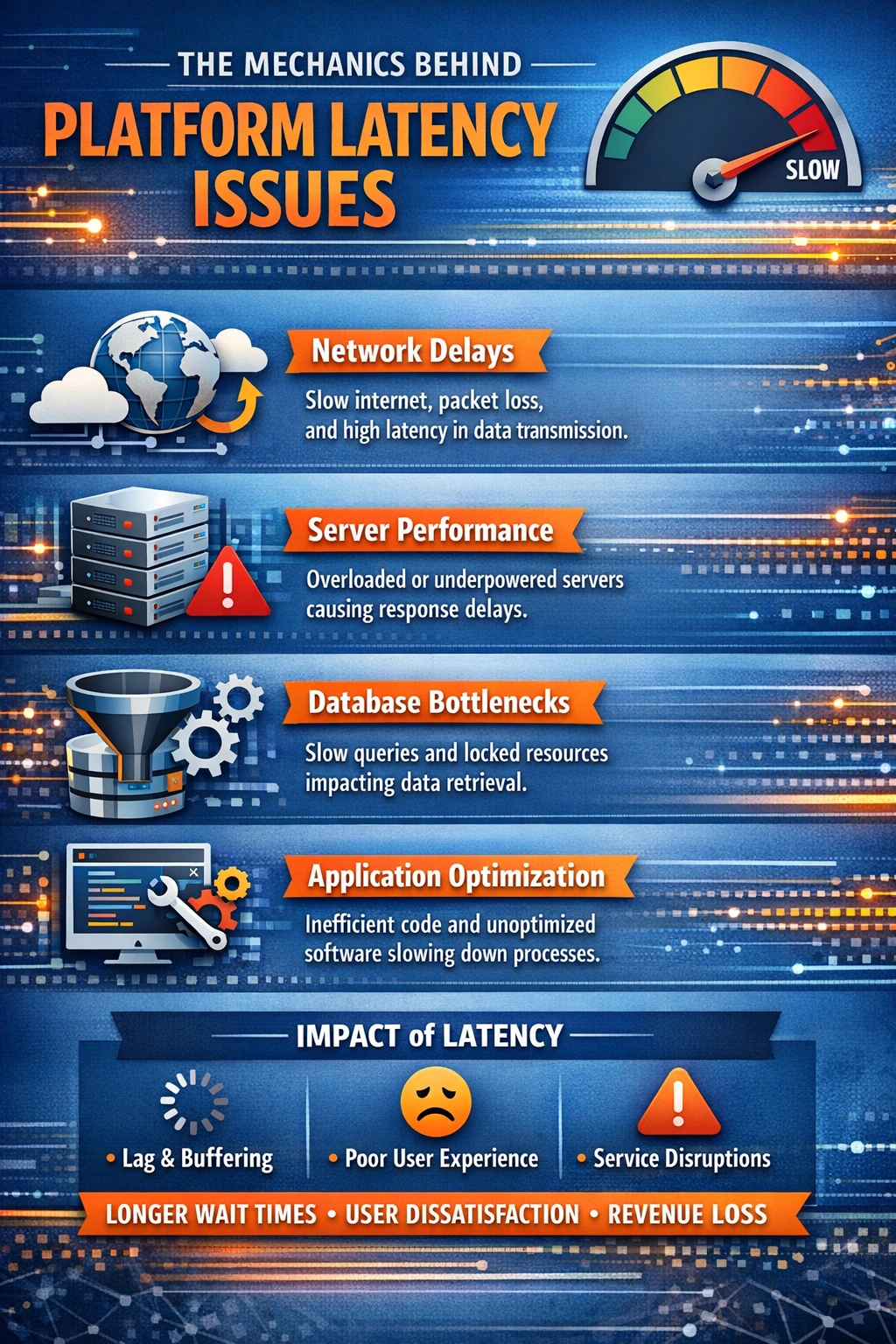
The Mechanics Behind Platform Latency Issues
Latency is a short lag that is a device mistake that can delay your trading process.
In trading, lag sources include:
1. Internet Connectivity
Your own Wi-Fi connection can be a major cause of execution delays in retail trading. If it’s weak, it can slow speed or delay data visualisation.
2. Broker Infrastructure
Many times brokers’ servers experience high traffic, fast moves, and processing slowdowns, which are shared by thousands of other people.
3. Trading Platform Performance
Often the platform inside the app itself can cause lagging. Like inefficient software, huge charting tools, or old outdated tools can slow down the order processing.
4. Device Hardware
If your trading app is old, then it can be a bit slower, which can add to your execution delays.
Slippage and Execution Delays
The difference between your buying price and the price you actually wanted is slippage. Things that can make slippage much more likely are
- The price can shift while your trade is moving
- Available liquidity can disappear instantly
- The order book levels shift
Platform lag increase makes the slippage even worse during:
- Fast price movements
- Breakouts
- News releases
Retail vs Institutional Execution
Big banks and funds often use:
- Servers near or connected to an exchange
- Private, high-speed hardware
- Super fast routing software
While regular traders use
- Their homes’ Wi-Fi connection
- Basic broker platforms
- Regular phones or laptops
These things make a huge difference, and maybe that’s why execution delays in retail trading are more common. Retail execution speed often ranges between 100 and 400 milliseconds. Institutional traders using co-located servers may operate under 10 milliseconds. That gap explains why professional fills are usually tighter.
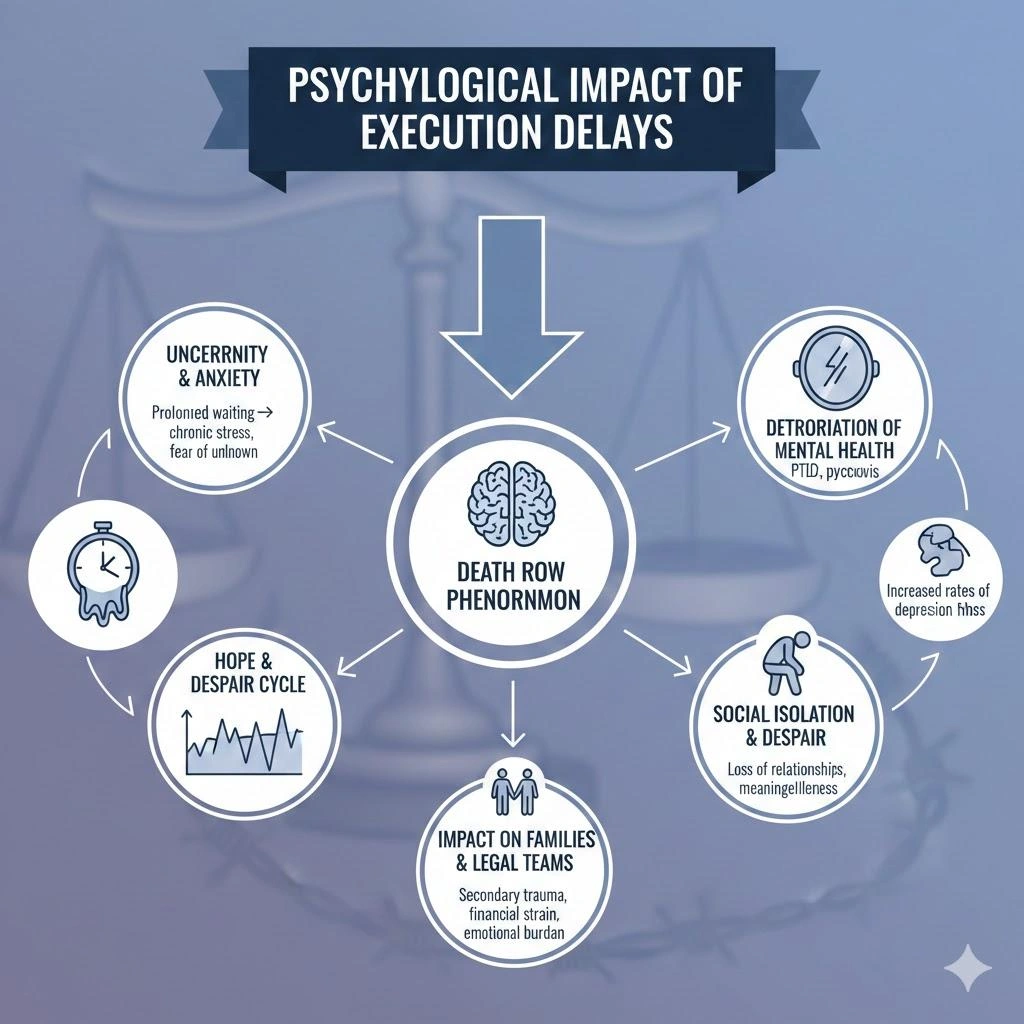
Psychological Impact of Execution Delays
Many times when traders are not able to get their desired trade, it messes with their mindset.
Common reactions include:
- Hesitation while placing order
- Overtrading to earn money
- Lose confidence in the strategies
- Emotionally weak, unstable
Lagging doesn’t just impact your trade, but it also puts a doubt in your mind about your choices.
Volatility Amplifies Execution Problems
In slow markets, small delays may not matter significantly.
In fast markets:
- Fast price change
- The gap between buy and sell increases.
- Cash flow shifts quickly
That’s when execution delays in retail trading slowly start eating into your profits.
Position Size and Latency Interaction
Big trades are more sensitive to how deep the market is. If in this lag exists
- Market orders may fill across multiple price levels
- The order might not fill completely.
- The slippage might increase.
Always make sure to match your trade size with the present market speed to keep your risk in check.
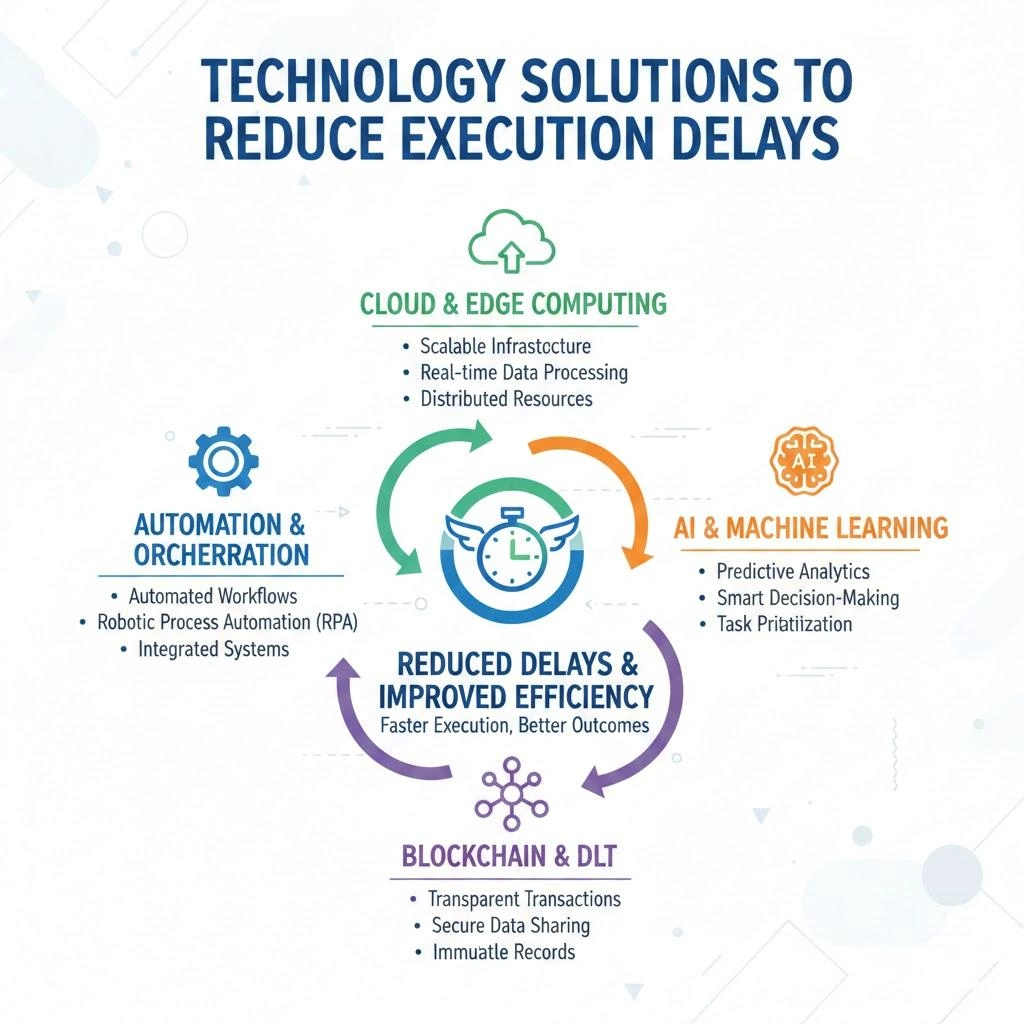
Technology Solutions to Reduce Execution Delays
It’s not completely possible to avoid lagging from trading. But you can take measures toward prevention.
1. Stable Internet Connection
- Wired connections often outperform Wi-Fi
- Low-latency routing improves speed
2. Reliable Broker Selection
Execution quality varies across brokers.
Factors to evaluate:
- Server location
- Execution speed statistics
- Order routing transparency
3. Platform Optimization
- Close unused applications
- Use updated software
- Reduce chart overload
4. Hardware Improvements
Faster devices process orders more efficiently.
5. VPS Explaination
Using a VPS (Virtual Private Server)
A VPS places your trading platform closer to the broker’s server, reducing physical distance and lowering latency. This is especially useful for scalpers and high-frequency traders.
Why Tracking Execution Data Improves Results
Keep track of your trading app:
- Check where lags happen the most.
- Compare between different brokers
- Record the times it takes to execute a trade
- Increase your position size slowly
To avoid lagging in your platforms, this inspection is important.
Risk Management and Latency Awareness
Because it’s an unpredictable situation, you need to include it in your risk management.
Practical adjustments include:
- Widen your stop-loss when the market is jumpy
- Stick to normal leverage levels
- Stay away from market if your network is poor
- Check how your broker system work during demo sessions
Make a plan that already consists of solutions for lag.
The Role of Trading Discipline
It’s not simple to completely control these delays.
But how you manage can help:
- Stop chasing around fast moves
- Accept if you miss a trade
- Stick to high-quality setups
- Record your trade data every time
It’s easy to manage execution delays in retail trading when you stay realistic.
Conclusion: Execution Delays in Retail Trading
Execution delays are a simple part of trading that you can avoid, as they happen due to slow internet, broker system failure, or your own device, and they hit hardest when the market is moving fast or the cash flow is low. If you can prevent such mistakes, you can easily avoid trade delays. But traders who keep track of their execution and adjust the size and order types have a smooth journey ahead. To learn more about trading and how you can trade without any such worries, connect with Insightful Trade; they have experts who can guide you and help you in your training journey.
FAQs: Execution Delays in Retail Trading
1. What are execution delays in retail trading?
The time difference between you placing the order and it getting confirmed. It can be due to slow internet or broker’s system failure.
2. How do platform latency issues affect profitability?
The lag in trading can cause slippage, lose a perfect entry, or give you a bad price entry. Over time these mistakes can eat away at your profits.
3. Are there tools to measure execution performance?
Definitely, you can use tools made to track slippage, your broker’s executing speed, and other performance metrics.
4. Do Indian traders face higher latency?
Yes, as most of our servers are based in places like London or New York, the physical distance can create a bit of lag, though a good setup and routing can help.
5. Is latency completely avoidable?
No, it’s not entirely avoidable, but you can reduce the chances by using the best technology and a good network system.
Author: Kumkum Chandak
Experience: 3+ Years in Trading Research & Market Content Strategy
Kumkum Chandak is a trading content strategist and market research writer who specializes in simplifying technical analysis, trading tools, and strategy-driven educational content. Her work is optimized for EEAT, accuracy, and user intent, ensuring every article delivers practical insights for traders of all levels.
Risk Disclaimer:
All content is strictly educational and not financial advice. Trading involves substantial risk. Always perform your own analysis or consult a professional advisor.
Last Updated: 18 February 2026

