1. Introduction
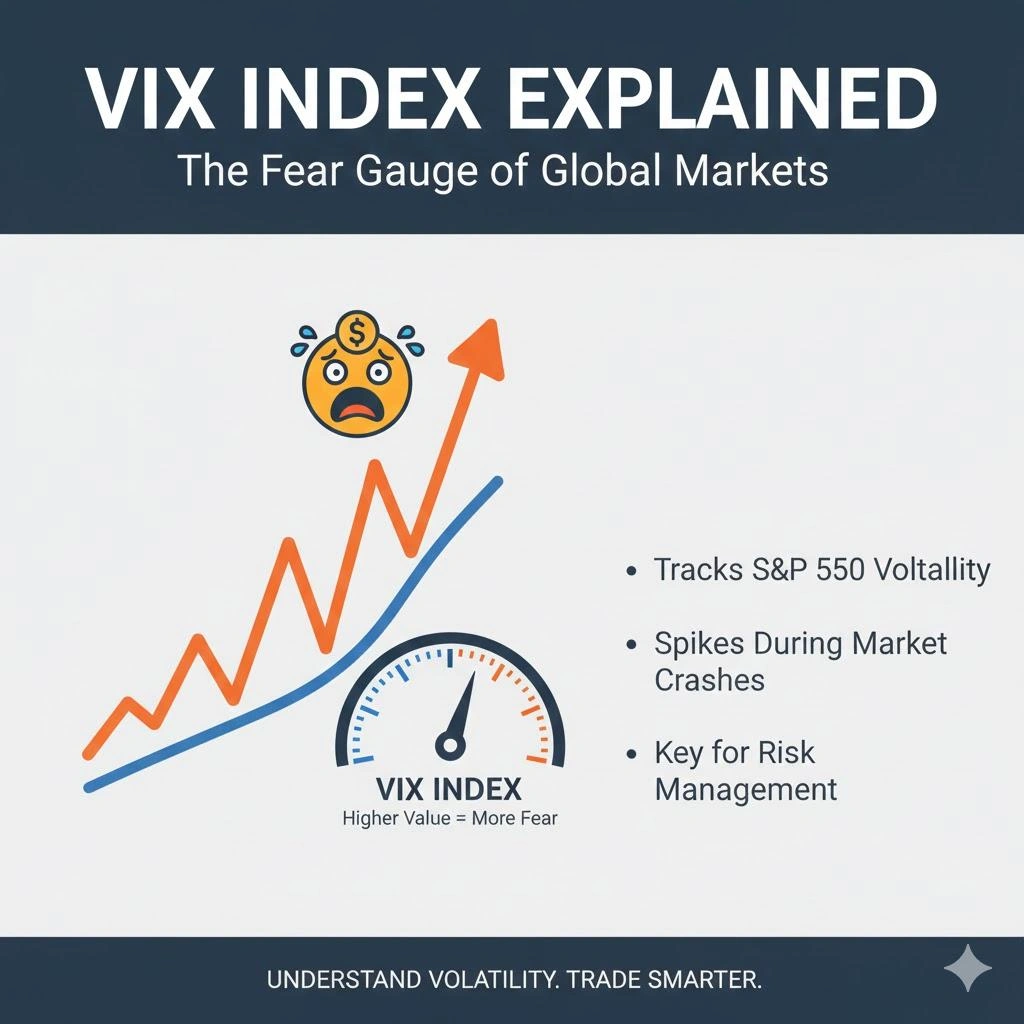
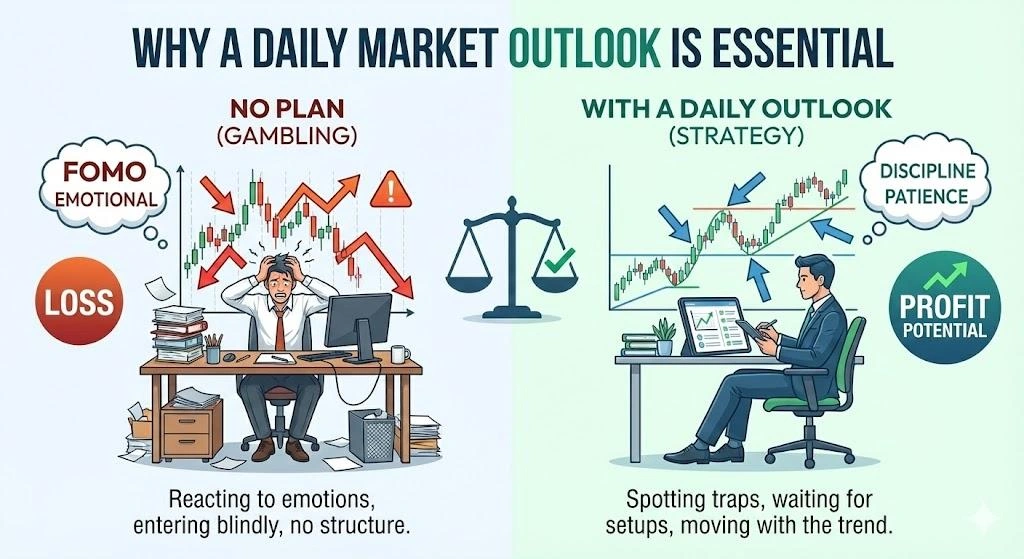
In trading, if you’re entering with no proper planning, then it means you’re gambling. And gambling will not guarantee you success. Every day there are so many opportunities in the market, but to grab them you need a structured daily market outlook, without preparation you will end up getting emotional and make mistakes.
A good market outlook is not about predicting the future, but about preparing for it in advance. In this blog, we analyze US30, NAS100, and Gold from an intraday perspective, helping traders understand where price is likely to react and why those areas matter.
2. Why a Daily Market Outlook Is Essential
The trading market doesn’t move randomly. To trade successfully you need to understand what drives a market: its liquidity and big institutions. And most of the times traders reacting to emotions and in FOMO make bad entries. That’s when a daily market outlook will work as your safety net.
A strong outlook helps traders:
- Try to spot the trap, know where the price might stop, reverse, or accelerate
- Avoid trading in FOMO, wait for the proper set up
- Make sure your short-term trades are moving with the bigger trend
- Build a routine to stay disciplined every single day
Instead of wishing for the market to move in your desired direction, wait for the price to reach your preferred level and then react.
3. Market Context: What’s Driving Price Today
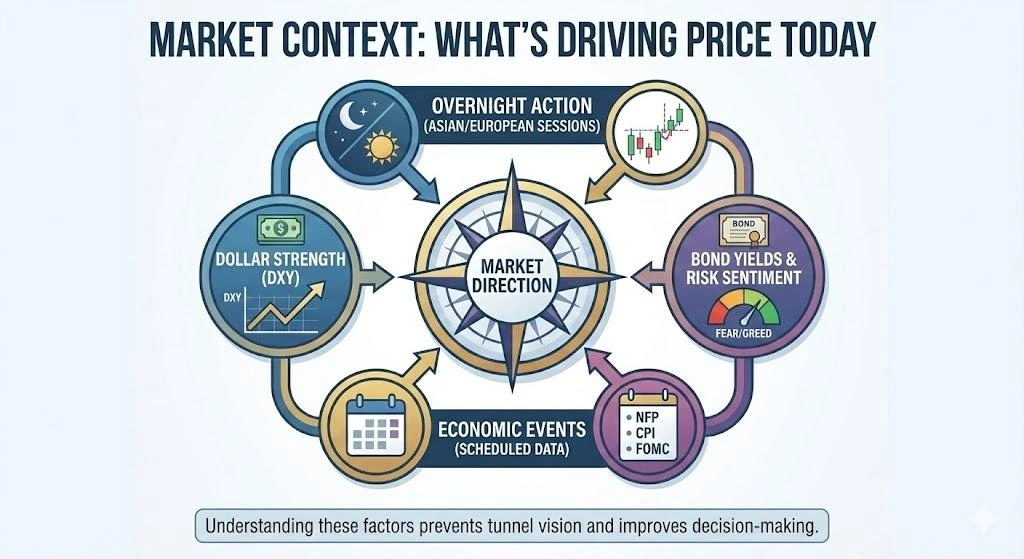
Everything is connected in the market, so before analyzing individual instruments, try to understand the broader market environment. Indices and gold don’t move on their own, they act like a puppet and respond to Dollar, market news and interest rates..
Key factors shaping today’s market environment include:
- Overnight price action, check what happened in Asia and Europe while you were sleeping, cause they often set the target for next day
- Dollar is the strength or weakness of the market, and it directly impacts gold and indirectly affects U.S. indices.
- Bond yields and risk sentiment, especially during the New York session.
- Scheduled economic events that may increase volatility.
Incorporating context into your daily market outlook prevents tunnel vision and improves decision-making.
4. US30 (Dow Jones) – Intraday Market Levels and Behavior
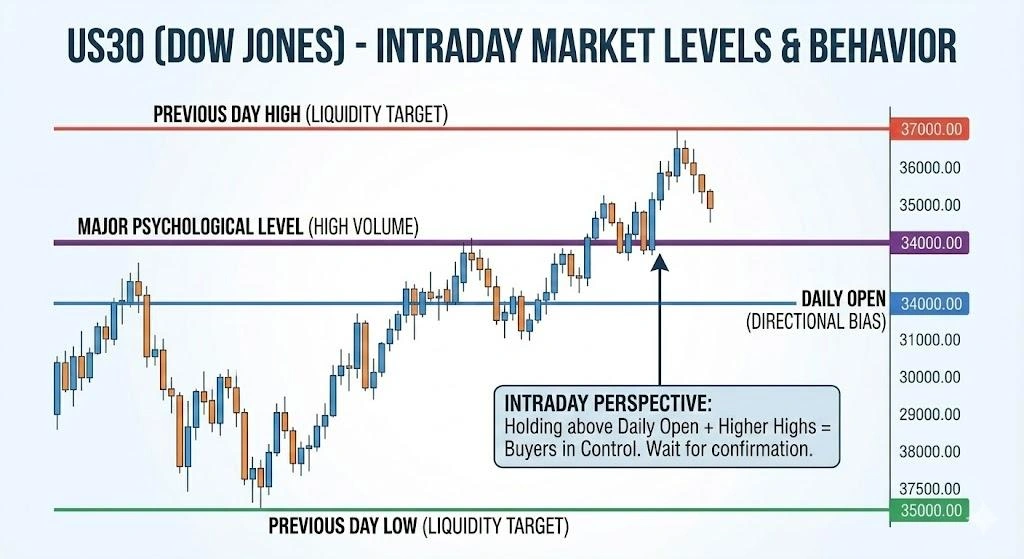
US30 is known for its clean reactions at institutional levels and strong momentum during New York hours. It often respects key price zones more clearly than many other instruments.
Key Levels to Watch on US30
- Previous day high and low, which often act as liquidity targets.
- Daily open and weekly open, providing directional bias.
- Major psychological levels where volume tends to increase.
- High-volume zones formed during prior sessions.
Intraday Trading Perspective
When US30 holds above the open prices and starts moving higher highs, that means the buyers are in charge. But be careful if it fails to hold key support zones, then bottom hits fast. This type of US index analysis will help you in waiting patiently for the right entry, rather than entering impulsively.
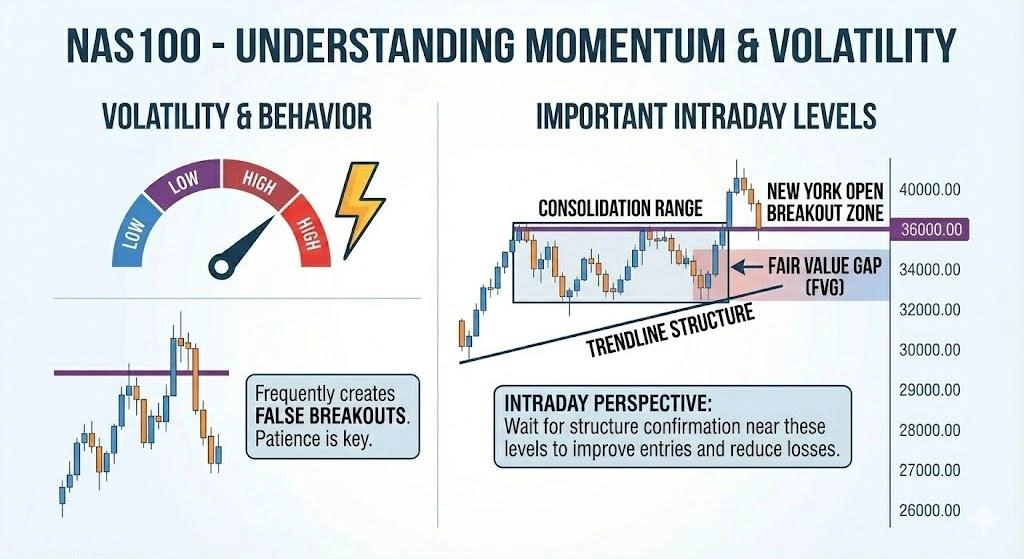
5. NAS100 – Understanding Momentum and Volatility
NAS100 typically moves faster than US30 and reacts strongly to sentiment shifts, especially around technology stocks. Because of its volatility, it rewards patience and precision.
Important NAS100 Intraday Levels
- Prior session highs and lows that act as reaction zones.
- Consolidation ranges that often break during New York open.
- Fair value gaps and imbalance zones created during impulsive moves.
- Trendline structures visible on higher timeframes.
How NAS100 Moves Intraday
NAS100 frequently creates false breakouts before committing to a direction. Traders who wait for structure confirmation near intraday market levels tend to achieve better entries and reduce unnecessary losses.
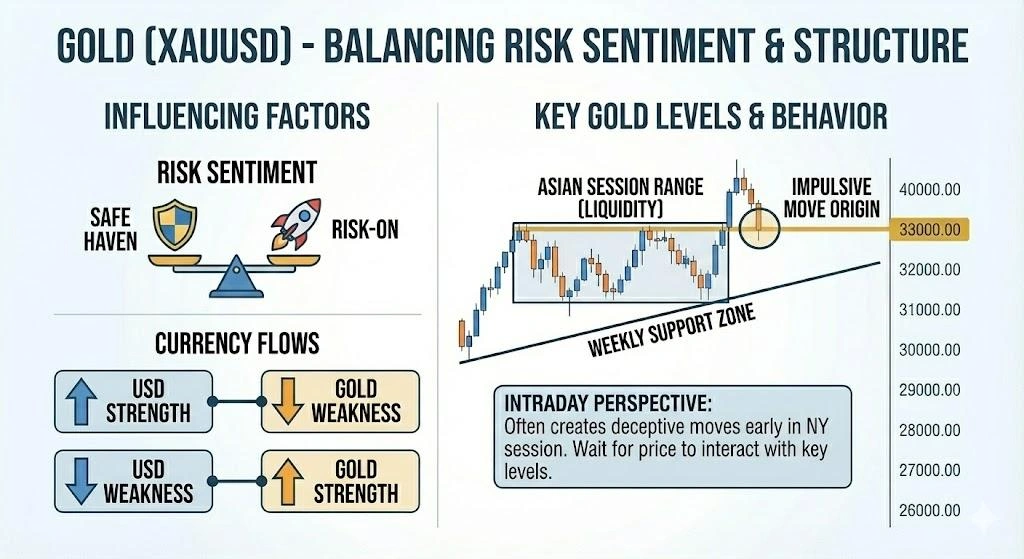
6. Gold (XAUUSD) – Balancing Risk Sentiment and Structure
Gold behaves differently from indices because it is influenced by both risk sentiment and currency flows. It often reacts sharply to dollar movements and bond yields.
Key Gold Levels to Monitor
- Asian session high and low, which often define intraday liquidity.
- Weekly support and resistance zones.
- Trendlines and moving averages that attract institutional interest.
- Previous impulsive move origins where reactions are likely.
Gold Intraday Behavior
Gold often creates deceptive moves early in the New York session before choosing a clear direction. Waiting for price to interact with key levels improves accuracy and aligns with professional trading behavior.
7. Time-Based Market Behavior
Knowing when to trade is just as important as knowing where to trade.
Session Characteristics
- Asian Session: Typically low volatility and range-bound behavior.
- London Session: Directional bias often forms.
- New York Session: Highest liquidity, volume, and volatility.
The London–New York overlap is especially important for executing intraday setups identified in a daily market outlook.
8. Risk Management in Intraday Trading
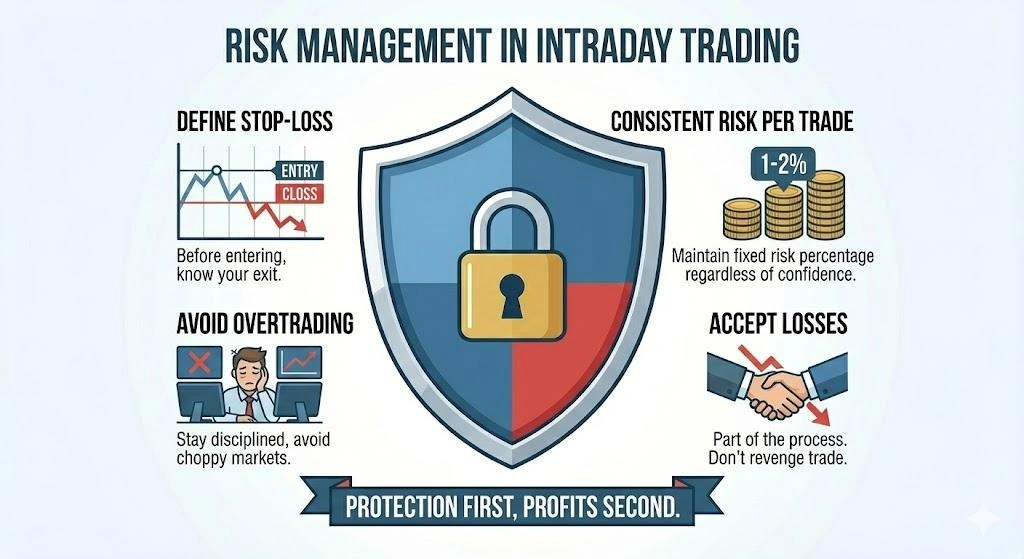
Even the best analysis fails without proper risk management. A disciplined trader focuses on protection first and profits second.
Key risk principles include:
- Defining stop-loss levels before entering a trade.
- Maintaining consistent risk per trade regardless of confidence.
- Avoiding overtrading during choppy or low-volume conditions.
- Accepting losses as part of the trading process.
Strong risk management keeps traders in the game long enough to benefit from good analysis.
9. Common Mistakes Traders Make During the Day
The real struggle most of the traders face is not because of lack of knowledge, but because of poor execution like:
- Entering trades away from key levels.
- Trading during low-liquidity periods.
- Overreacting to short-term volatility.
- Ignoring the broader US indices analysis context.
Awareness of these mistakes helps traders avoid repeating them.
10. How to Build a Consistent Daily Market Outlook
Creating a daily market outlook should follow a repeatable routine rather than guesswork.
A simple process includes:
- Marking previous session highs, lows, and key opens.
- Identifying higher timeframe trend direction.
- Defining intraday bias scenarios.
- Waiting for confirmation before execution.
- Reviewing trades after market close.
Consistency in preparation leads to consistency in execution.
Conclusion
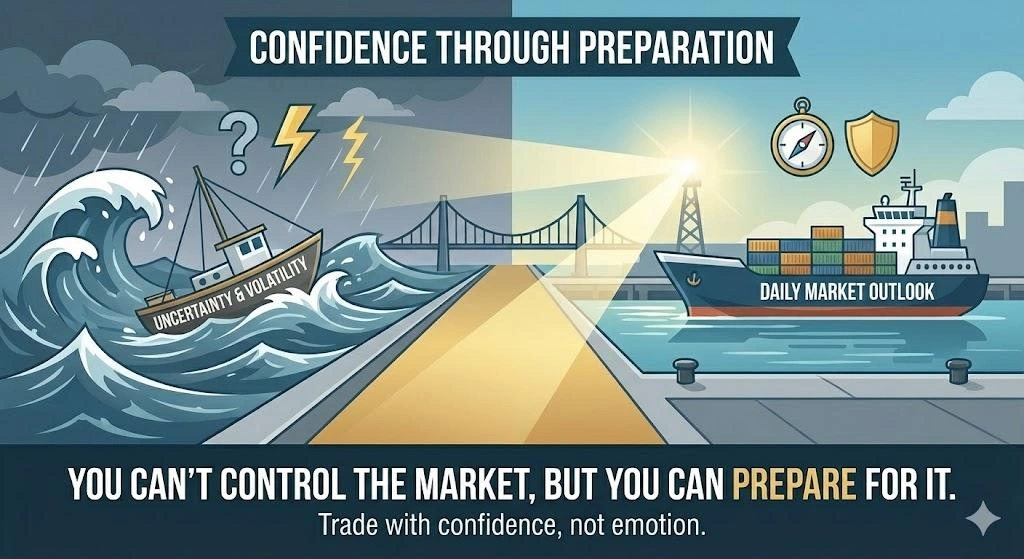
When the market is confusing and volatile, a well-structured daily market outlook makes it easy for trading. When you don’t know what you’re doing you feel scared, but when you have a plan and follow the instructions and do proper risk management then you can approach US30, NAS100, and Gold with confidence rather than emotion. Markets will go up and down; you can’t control it but you can prepare for it.
If you want guidance or help in preparing strategies for the market, visit InsightfulTrade’s website. Here there are expert and experienced traders who can help you with your trading journey.
FAQs
- What is a daily market outlook?
It is a structured plan outlining key levels, bias, and potential price behavior for the trading day. - Which session is best for intraday trading?
The London–New York overlap offers the best balance of liquidity and volatility. - Are intraday market levels reliable every day?
They are most effective when combined with structure, timing, and confirmation. - Why analyze both US30 and NAS100?
They reflect different market behaviors and help confirm broader sentiment. - Is gold suitable for beginners?
Gold can be traded by beginners, but patience and discipline are essential due to its volatility.
Author: Kumkum Chandak
Experience: 3+ Years in Trading Research & Market Content Strategy
Kumkum Chandak is a trading content strategist and market research writer who specializes in simplifying technical analysis, trading tools, and strategy-driven educational content. Her work is optimized for EEAT, accuracy, and user intent, ensuring every article delivers practical insights for traders of all levels.
Risk Disclaimer:
All content is strictly educational and not financial advice. Trading involves substantial risk. Always perform your own analysis or consult a professional advisor.
Last Updated: 9 December 2025