
Have you noticed the pattern if you ever trade crude oil?
Prices go quiet, and all of a sudden, they explode in seconds
Talking about this data, it has a powerful influence on oil prices, and the reason is that it reflects the real-time supply and demand conditions.
With the U.S. markets returning from the MLK Day holiday, the usual inventory schedule has changed. Today, in this blog, we are going to break down what crude oil inventory data impact means and how you can smartly use inventory numbers. and why the market reacts so aggressively. Let’s quickly get into it.
What Is Crude Oil Inventory Data?
The reported levels of crude oil stocks, which are held by government reserves, commercial firms, and storage facilities, are known as crude oil inventory data. This crude oil inventory data impact provides a snapshot of supply and demand dynamics by telling you how much oil is “on hand” in the market.
You know, why does it matter? It matters because one of the most traded commodities in the world is crude oil.
- Influence energy stocks and ETFs
- Affects fuel prices for consumers
- Directly impacts crude oil prices
- Reveals the supply-demand balance
As an example:
Inventories are rising sharply; this shows that supply is exceeding demand, which results in downward pressure on oil prices. While falling levels of inventory suggest you have supply constraints or strong consumption.
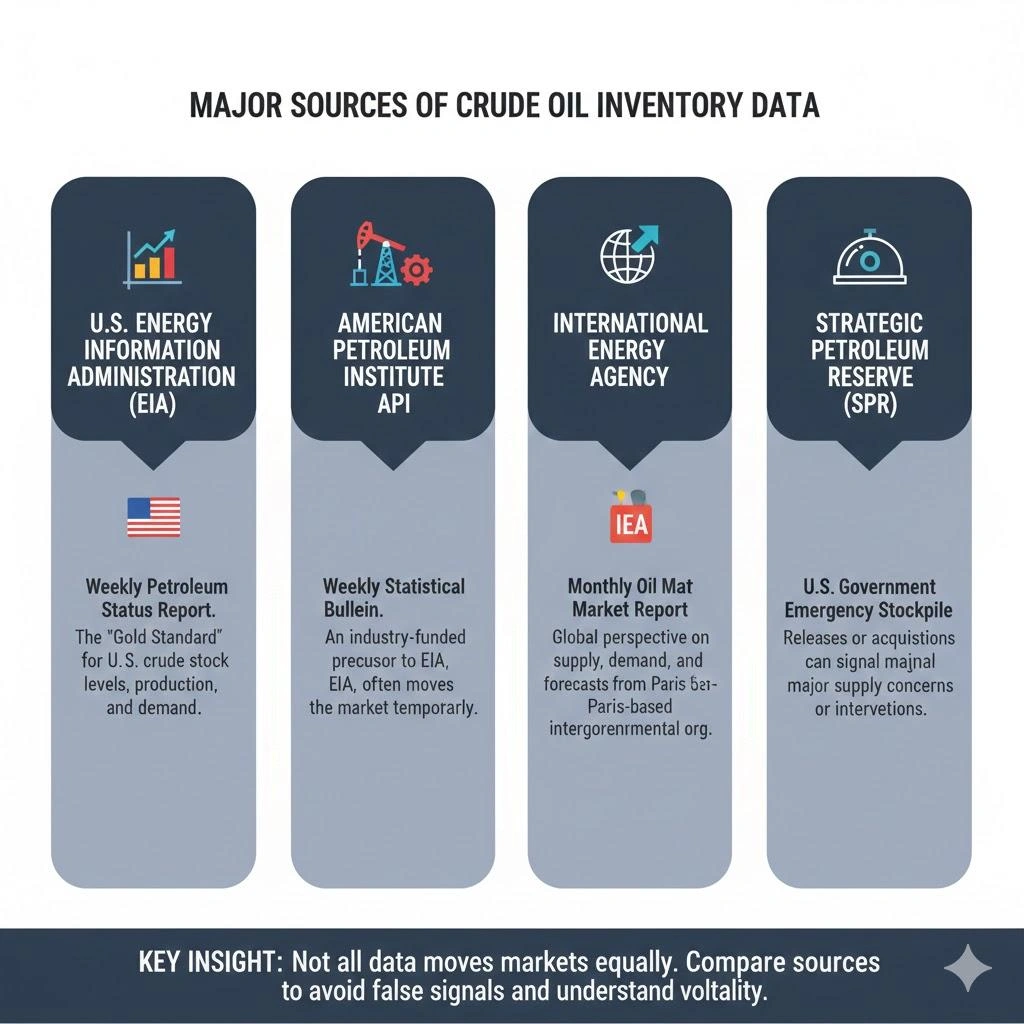
What Are the Major Sources of Crude Oil Inventory Data?
Sources matter very much, just like the numbers. Being an experienced trader, you can find out from all sources which source moves the market. So here are some of the trusted sources of crude oil inventory data impact:
- U.S. Energy Information Administration
- American Petroleum Institute
- International Energy Agency
- Strategic Petroleum Reserve
Not all inventory data needs to move the market equally. But it can help you to avoid false signals, trade with more confidence, and better understand volatility that turns your confusing statistics into actionable insight.
Note: Due to the holiday, the API data will be released on Wednesday at 4:30 PM ET, serving as a precursor to tomorrow’s EIA report.
How to Interpret Crude Oil Inventory Data Like a Professional Trader
Let’s break it down step-by-step:
- Why is the “Expected vs Actual” number so important?
- What does a crude oil inventory “build” or “draw” really mean?
- Why should you compare inventory data over multiple weeks?
- How do refinery utilization rates change the interpretation?
- How do imports and exports influence inventory data?
- How to measure the strength of the market reaction
- How inventory data affects correlated markets
Best Way to Trade Crude Oil Inventory Data Safely
Crude oil inventory data impact creates massive short-term volatility that makes it both risky and exciting for you. Basically, if you want to find the best way to trade crude oil inventory data safely, here are some ways:
- Firstly, understand the reports
- Avoid trading during the initial release
- Use wider stops and manage risk
- Trade the reaction, not the data
- Combine with technical analysis.
Bearish Inventory Data Impact: The Hidden Clues
Your learned skills enable you to avoid traps while you forecast your opponent’s moves and pick betting options which lead to successful results.
- Initial market reaction (sharp sell-off)
- Stop-loss triggers (liquidity flush)
- Directional continuation
- Temporary pullbacks
- Hidden signal to watch in Bearish setups
Bullish Inventory Data Impact: What Actually Happens?
Looking for a bullish scenario:
When inventories draw down significantly, it means crude oil inventory data is more bullish than you expect. If you understand this flow, it can give you a major edge, especially in short-term trading.
- Immediate market reaction (price spike)
- Liquidity grabs and stop hunts
- Pullback and market consolidation
- Trend confirmation (breakout above resistance)
- Directional move
- Common pitfalls for traders
- Price spikes upward
The warning sign is that the price can’t hold above key levels after a bullish draw.
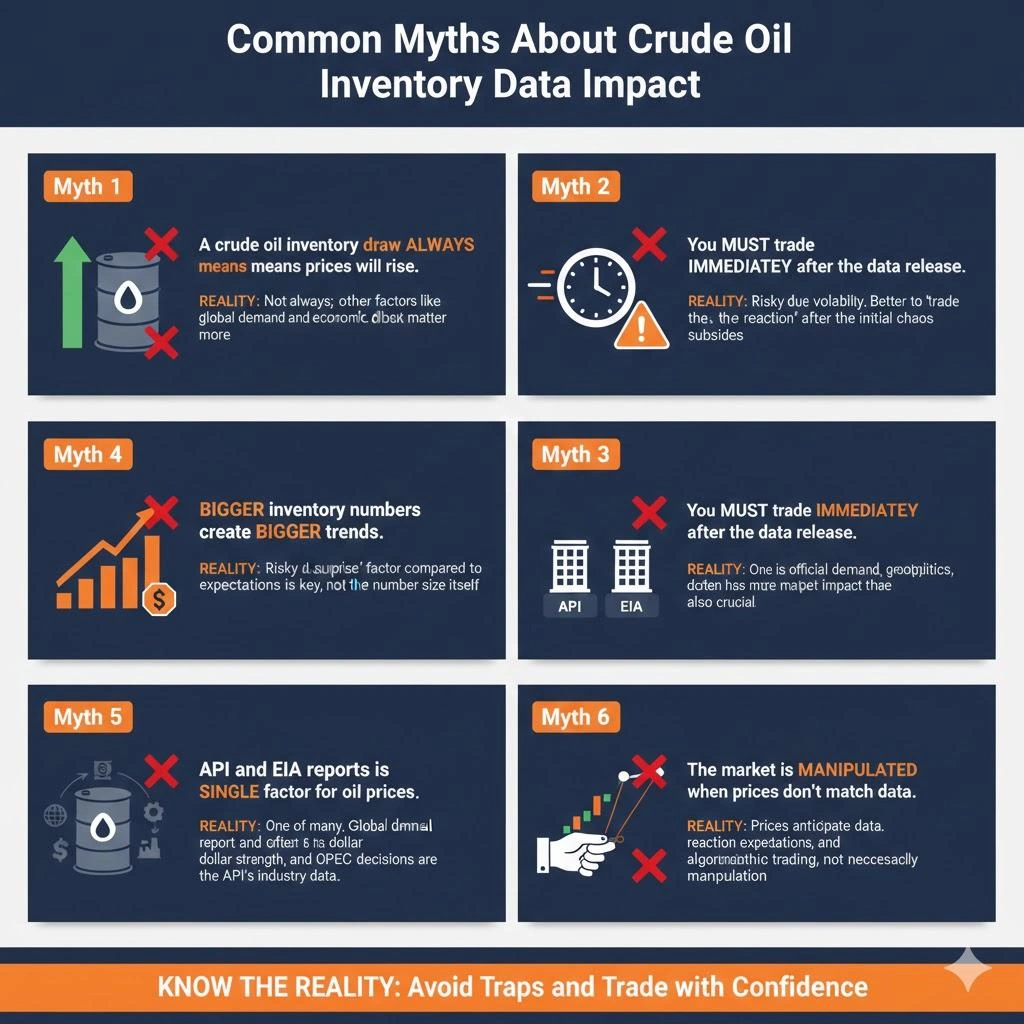
Common Myths About Crude Oil Inventory Data Impact
Coming to the myths, crude oil inventory data is also one of the most understood. Because of these myths, many traders like you enter late, panic easily, and get trapped during volatility. Let’s make it clear:
Myth 1: A crude oil inventory draw always means prices will rise
Myth 2: Bigger inventory numbers create bigger trends
Myth 3: You must trade immediately after the data release
Myth 4: Inventory data stands as the single factor which determines how much crude oil costs
Myth 5: API and EIA reports are equally reliable
Myth 6: Market is manipulated through price movements that do not match the current data.
Crude Oil Inventory Data Impact Long-Term Trends
It doesn’t impact long-term trends directly. Let’s see how:
- Triggers immediate market volatility
- Influences short-term trend direction
- Creates fake moves
- Draws signal demand trends
- Weekly structure
Long-term trends depend on:
- Global demand growth
- US shale oil production
- OPEC decision
- Dollar strength
- Monetary policy
Practical Takeaways for Traders and Investors
Understanding inventory impact is all about reading how the market anticipates the number before they even drop. Here are a few practical ways to trade or invest more effectively:
- Use API data as an early signs of warning
- Watch how the price behave right now before the news release
- Match the inventory number with your key technical levels
- Tighten your risk management during volatile markets.
- Don’t forget to factor in seasonal trends and refinery work
Frequently Asked Questions (FAQs)
1. When is the report coming out this week?
Normally it’s Wednesday at 10:30 AM ET. But due to the MLK Day Holiday on Monday, the EIA has decided to release the data on Thursday, January 22, 2026, at 12:00 PM ET.
2. Can beginners trade crude oil inventory data?
Yes, but start slowly. Beginners can also trade this data only if they use a disciplined plan and keep their position sizes small to handle the quick price moves.
3. Why does the price move opposite to the inventory data sometimes?
It’s usually a case of buy the rumor, sell the news. If the market already has expected the numbers, price may move the other way as big traders take profit or hunt for liquidity.
4. Is inventory data more important than OPEC news?
They both are different; crude oil inventory data impact OPEC decisions and usually set the long-term mode of the market, while inventory data drive the weekly volatility and short-term trading setups.
Conclusion: Why Understanding Crude Oil Inventory Data Impact Is Essential
Generally, it may sound boring at first, but crude oil inventory is a powerful tool for you that reflects the balance between demand and supply and influences decisions across industries worldwide. Basically, you can say it’s the market’s truth meter that shows you the things that happened behind the scenes.
If you’re also looking to navigate the volatile world of energy markets effectively, then it is essential to understand it. Start paying attention to it and realize that weekly inventory numbers are more powerful than they look.
Get expert breakdowns of crude oil inventory data at InsightfulTrade and trade with more clarity, confidence, and data-driven precision.
Author: Arihant Jain
Trading Experience: 5+ Years
Arihant Jain is a financial markets analyst and trading educator with expertise in Forex, indices, crypto, and risk-managed trading systems. His insights are based on real trading experience, data-driven analysis, and transparent market understanding. All content is reviewed for accuracy and aligns with Google’s EEAT guidelines.
Risk Disclaimer:
Trading involves substantial risk. All information is for educational purposes only and should not be taken as financial advice. Always do your own research.
Last Updated: 21 January 2026