Introduction
To be a successful trader, the first thing you need to do is to build trading plan that suits you. Your trading plan is your road map to success. It aids you in determining what to trade, when to enter and leave your trading, and how to approach your trading race. This could be simplified and structured with the help of a trading plan template. You will also be taught the art of risk-reward planning, and this is the secret to safeguarding your capital and profits as well as maximizing the returns.
Regardless of whether you are a first-time trader or need to improve your game, building a trading plan is a sure way to achieve success in the long term. Then, we can construct precisely how you can make your own professional build trading plan in a simple method that will not only be disciplined but also confident throughout the path.
What is a trading plan template, and why should you use one?
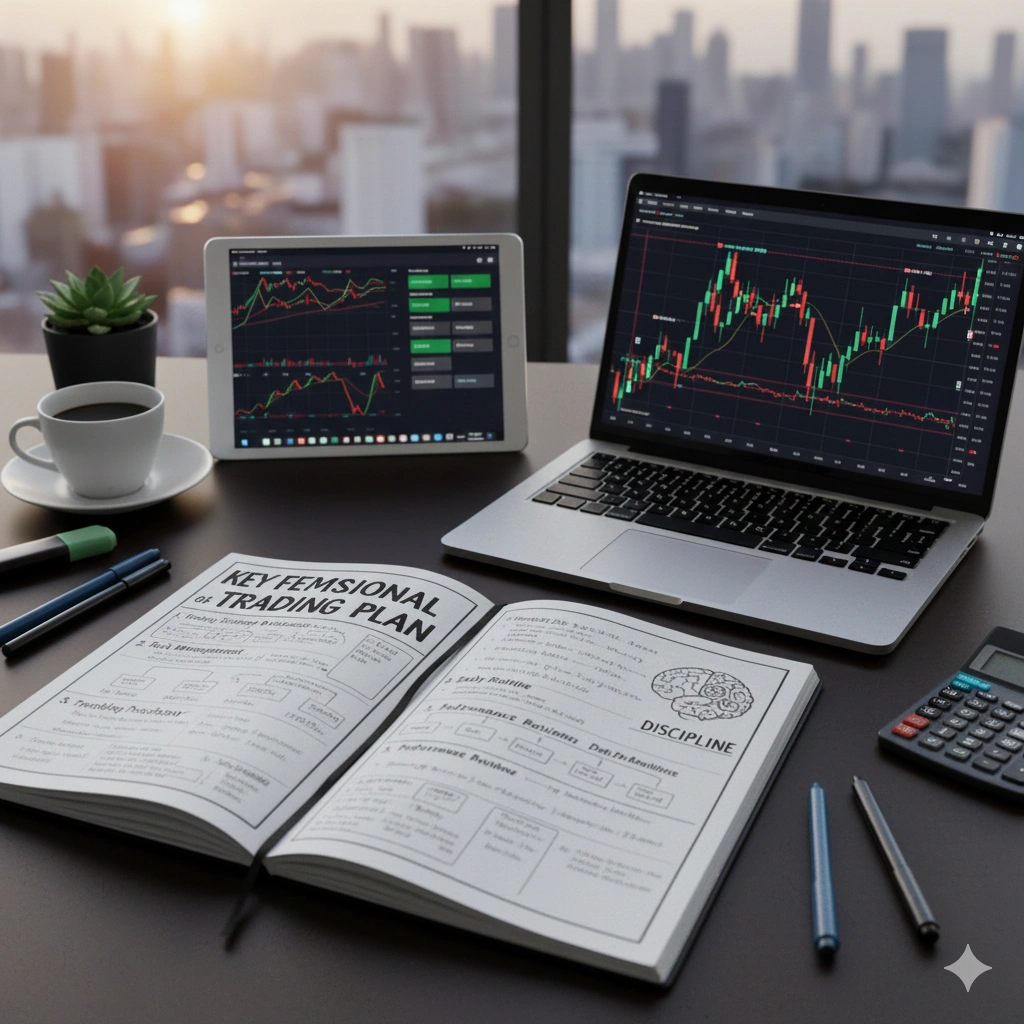
It is a piece of straightforward software that assists you in structuring your trading policies and plans. It saves time and makes you disciplined in determining your entry and exit as well as risk-reward rules.
Working with a template will minimize emotional trades and will increase your consistency. It is virtually your road map to trading smarter and saving your money. The best place to start in order to build trading plan that does work is to have a trading plan template.
How Do You Start to Build Trading Plan?
- The first step is to establish clear trading objectives, have a good idea of what you really expect, and know the amount of time you can devote and how much risk you can take.
- Thereafter, pick the markets and strategy that will suit you, and familiarize yourself with the rules of entry and exit.
- A trading plan template is to keep them all organized and disciplined to be able to trade with confidence and manage the risk and reward planning effectively.
What Are the Key Elements to Include in Your Trading Plan?
- Also, incorporate proper market selection and trading schemes in your plan.
- Decide on the markets you would like to trade and how you will enter and exit trades successfully.
- Added rules, such as stop-loss levels and position sizing, so as to manipulate your risk-reward planning and to ensure that emotions do not enter into your trading decisions.
How Do You Define Clear Trading Goals in Your Plan?
- Have specific and quantifiable trading objectives, such as aiming to make 5 to 10 percent per month or not more than a 2:1 loss per trading transaction.
- Ensure that you have realistic and attainable goals that are dependent on your present abilities, resources, and market knowledge.
- Give your goals a deadline so that you are motivated and responsible to achieve your goals, and monitor progress to make necessary changes in your build-to-trade plan.

How Important Is Risk-Reward Planning in Building a Trading Plan?
- It requires specific risk management rules, namely stop-loss levels, position sizing, and your risk-reward ratio.
- Put in exact entry and exit criteria, and plan to maintain a trading journal to revisit your trades on a periodic basis and get better.
What Formula Should You Use for Risk-Reward Planning?
The following is the equation that you can use to calculate the risk-reward ratio:
RRR = (entry price – stop loss price) / (target price – entry price)
Example:
You will purchase it at Rs. 2000 (entry price), establish a stop loss at Rs. 1900, and set a target of Rs. 2400.
Potential risk = 2,000 – 1,900 = Rs.100
Expected reward = 2400 – 2000 = Rs.400
Risk-reward ratio = 100/400 = 1:4
This implies that for every risk you take out of Rs 1, you hope to earn Rs 4. This formula makes it easy to construct your build trading plan and assists in the management of risk-reward planning and making wiser trades.
How Can You Use a Trading Plan Template for Risk Management?
- Pre-establish your trading plan template to determine levels of stop loss before each trade.
- This assists you on autopilot to restrict the losses and to comply with your risk-reward planning management.
- Include in your template the definition of take profit objectives and position size, and you will always know when to book profits and the size of the position to risk on any trade.
How Often Should You Review and Update Your Trading Plan?
| Review frequency | Why it matters |
| Weekly / Biweekly | Keep your grading plan responsive and practical |
| Monthly / quarterly | Helps you adjust and improve long-term strategy |
| After major market events | Aligns your plan with big market shifts |
What Are Common Mistakes to Avoid When Building a Trading Plan?
Lack of a clear trading plan
Lack of a concrete plan for trades translates to impulsive decisions and losses. You should always create your trading plan.
Neglecting risk management
You can lose your capital in a short time because you failed to establish adequate stop losses and position sizes.
Allowing emotions to influence decision-making
Fear and greed will lead to over-trading or holding losing trades too long. Be disciplined and follow your build trading plan whenever trading.
How Can You Track Your Trades Using Your Trading Plan?
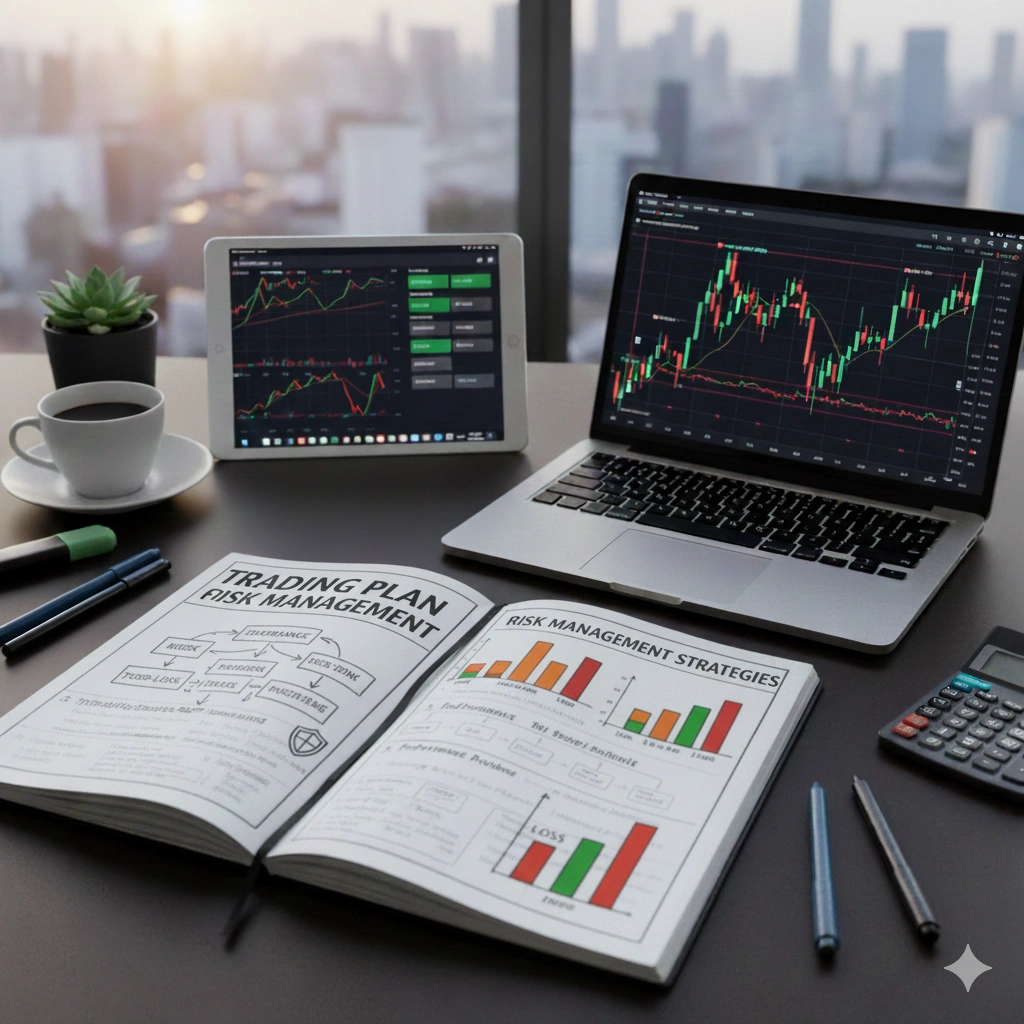
- Make a note in your reading journal, in which you are going to note all your trades: entry/exit points, entry purpose, stop loss, take profit, and results.
- You can use spreadsheets, trading applications, or books of accounts to systematize and analyze your trades regularly.
- Look through your journal frequently to identify winning trends and errors and revise your trading plan accordingly using actual outcomes.
What Role Does Discipline Play in Following Your Trading Plan?
Be consistent in your plans.
Discipline implies another aspect: to follow your trading plan each time and prevent emotional errors and keep your strategy going.
Calm down and make better decisions.
Having discipline will allow you to deal with fear and greed to make the trading decisions more logical and concentrated on long-term success.
How Does a Trading Plan Help Manage Your Emotions?
A trading plan controls your emotions, as it provides you with guidelines to follow when to sell, buy, and cut losses. Your plan prevents you from acting impulsively, as fear or greed takes over when it takes over you.
It is a systematic process that will ease your stress level, manage emotional trading, and assist you in remaining calm and resilient to long-term achievement.
How Do You Customize a Trading Plan Template to Fit Your Style?
- Change swing, day, or scalping styles by changing entry/exit rules and risk-reward planning settings in your build trading plan template. Adjust the strategy to your desired time and risks.
- Add certain arrangements and methods of trade management to your style so that you are assured of consistency and discipline in every trade.
Can You Use Your Trading Plan for Both Forex and Stocks?
Cross-market trading works
The fundamental aspects of a good trading plan—entry, exit, and risk reward planning management—are applicable in both forex and stocks; hence, it is cross-market trading.
Customise market information
Customize your strategy to market characteristics such as trading hours, volatility, and type of orders to suit either Forex or stock trading better.
FAQs
- Can I use one trading plan for Forex and stocks?
Yes, general rules apply to both; however, they adapt to market conditions such as market hours and volatility.
- How to customize a trading plan for swing or scalping?
Easily customize your entry/exit rules and risk limits to suit the time and frequency of your trades.
- How does a trading plan help control emotions?
Clear guidelines Prevent fear and greed, which may influence planned trades, making you disciplined.
- How often should I review my trading plan?
Every week to do quick checks; monthly or quarterly to do deeper checks, as well as post significant market events.
- What common mistakes should be avoided in a trading plan?
Never avoid a bad plan, risk management, and emotional trading; always adhere to your rules when trading.
Conclusion
Any trading plan is a road map to your trading, whether in Forex or stocks. It also offers obvious guidelines on entries, exits, risk management, and position sizing, which can assist in managing fear and greed. Trade to your liking by changing strategies and time frames to fit your trading style: swing, day, or scalping. Frequent reviews ensure that your plan is not outdated and that it maintains some sort of discipline, thus enhancing your performance and consistency.
The flexibility of a well-designed trading plan implies that the trading plan can be applied to various markets by adapting the trading plan to fit certain characteristics of the market, such as the trading hours or volatility. Finally, you have to be disciplined in following your trading plan in order to succeed and make profits in any market of your choice in the long run.
Craft your winning strategy today! Build a personalized trading plan with Insightful Trade to manage risks, seize opportunities, and trade smarter with clarity and confidence every time.
Author: Arihant Jain
Trading Experience: 5+ Years
Arihant Jain is a financial markets analyst and trading educator with expertise in Forex, Indices, Crypto, and risk-managed trading systems. His insights are based on real trading experience, data-driven analysis, and transparent market understanding. All content is reviewed for accuracy and aligns with Google’s EEAT guidelines.
Risk Disclaimer:
Trading involves substantial risk. All information is for educational purposes only and should not be taken as financial advice. Always do your own research.
Last Updated: 25 November 2025