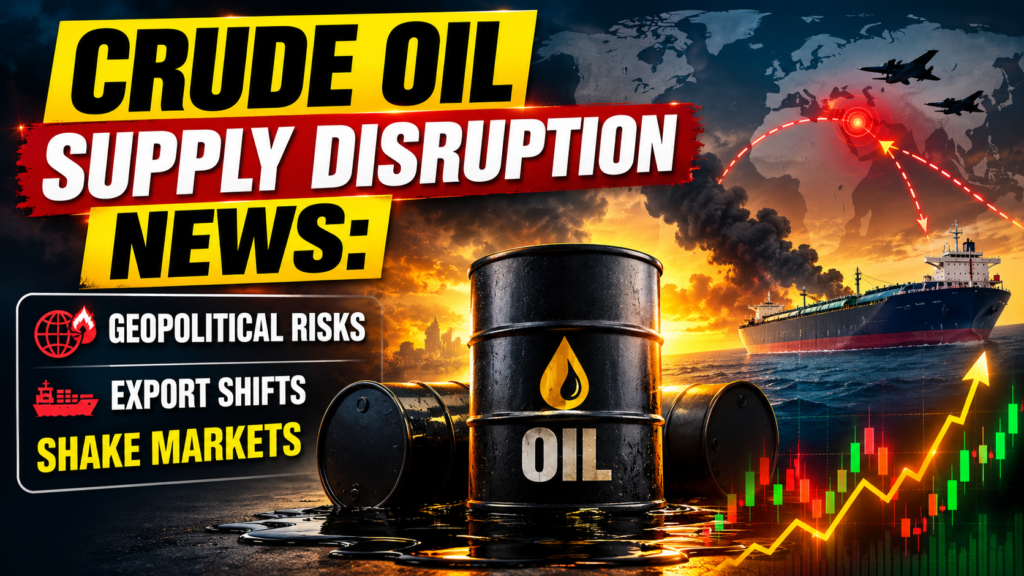

Crude oil is back in the headlines, as the market is feeling the heat. We’re constantly reading about oil supply being interrupted, and it’s making everyone nervous. With political tension leading to ships getting stuck, we’re seeing a lot of uncertainty in the market. We’re seeing how this news is the main reason prices are moving so wildly. The market is so sensitive right now that just a rumor of supply issues can change the price of oil in minutes. Currently, in this fast-moving environment, staying informed is the only way to keep up.
This blog explores the latest crude oil supply disruption news, what’s driving it, how markets are reacting, and what it means for oil prices going forward.
Why Crude Oil Supply Disruption News Matters So Much
Crude oil is a globally interconnected commodity, so a dispute in one country can send a vibration across the entire energy ecosystem.
Here’s why markets go crazy instantly with crude oil supply disruption news:
- Oil supply chains are tightly balanced
- Spare production capacity is limited
- Global inventories don’t have much backup
- Energy demand remains constantly strong
This is why a single piece of related crude oil supply disruption news can move the market in an instant.
Latest Crude Oil Supply Disruption News Shaking Markets
A fresh wave of news has brought back all the old worries about oil supply stability.
Key problems hitting the headlines are
- Political tensions in the world’s biggest oil-producing regions
- Risks to major shipping routes, including shipping lanes and chokepoints
- surprise breakdowns or shutdowns at big oil fields and facilities
- New trade bans and rules that are changing the oil flow around the world
All these factors are fueling the latest news alerts, making traders nervous and the market volatile.
Geopolitical Risks: The Biggest Trigger
When it comes to oil, nothing causes more stress than Global Politics.
Middle East Tensions
And since one-third of the world’s oil is produced by the Middle East, that region becomes highly sensitive for supply risk.
Current worries include:
- Threats to key shipping corridors
- Fights or military activity near oil wells and pipelines
- Rising cost of insurance for tankers
The interesting thing is there’s no need for a real shutdown to cause a stir in the prices. Every time a new headline drops, a risk premium is added to the price because everyone is preparing for the worst.
Export Shifts: A Silent but Powerful Disruptor
It’s not always wars or conflicts that cause a stir in oil prices. Sometimes, even changes in export policies can also shake up the market just as much as any headline about a crisis.
Changing Export Patterns
- Some producers are choosing to send more oil to Asia
- Others reducing exports to support their own industries
- Sanctions, forcing oil to take longer routes
When these reports shift, they create regional imbalances. Some parts end up with plenty of oil, while others are left dealing with shortages and high prices. It’s a recurring theme that keeps the global market very jumpy.
Shipping Routes and Chokepoints Under Pressure
Global oil trade depends heavily on narrow shipping passages.
Critical Chokepoints at Risk
- Narrow passage of water that carry millions of barrels per day
- Rising crowd and security threats
- Ships are forced to take longer routes, increasing delivery times
And a single disruption at these spots can delay deliveries for weeks. That’s why prices start jumping around the moment people think there is a problem, as traders know a delay is coming even before the actual oil even runs out.

Market Reaction: How Prices Respond to Supply Disruption Headlines
As of now, the oil price is very sensitive to any news floating in the market.
When a headline about an oil supply problem hits:
- Prices can spike 2–5% in a single session
- Volatility increases sharply
- Options markets price in higher risk premiums
Inventory Levels: Why Disruptions Matter More Now
Think of global oil inventories as the world’s emergency savings account.
Currently:
- Strategic reserves are lower than historical averages
- Private inventories are distributed unevenly
- Only a few countries have ability to pump oil
This means we don’t have a safety net against disruptions. When bad news about supply hits, the market panic increases even more when there is no safety cushion left.
OPEC+ and the Supply Balance
OPEC+ is the main character, which you can’t ignore when it comes to supply news.
Why OPEC+ Matters
- Production cuts limit supply flexibility
- Spare capacity is not evenly accessible
- Policy decisions can either offset or worsen disruptions
If OPEC+ signals that they won’t step in to help during disruption, the market will panic, sending the price to a new high.
Demand Still Matters — Even During Supply Shocks
Supply news might get all the headlines, but demand still remains the real engine behind the price.
- Global oil demand remains near record levels
- Emerging markets continue to drive consumption
- Seasonal demand adds pressure during peak periods
Because if there is a high demand for oil, then any bad news about supply can hit harder, and the price will stay high for long.
Short-Term Outlook: What to Expect Next
In the coming days, the market seems to be quite sensitive to:
- Escalation or easing of geopolitical tensions
- Shipping security updates
- Export policy announcements
As long as things remain uncertain, every crude oil supply disruption will keep sending oil prices on a wild ride.
Long-Term Implications of Repeated Supply Disruptions
Constant drama is changing the way the oil market works.
Structural Shifts Underway
- Higher baseline volatility
- Increased reliance on strategic reserves
- Greater price sensitivity to news rather than fundamentals
The markets react to headlines more than the actual supply and demand.
Conclusion: Crude Oil Supply Disruption News Is Reshaping Energy Markets
Look, today the world is so connected that a news headline in one country can stir the global market. With rising global issues, shifting exports, and spare capacity limited, even small disruptions can send shockwaves through the market.
To stay updated with world-class news about financial instruments, connect with InsightfulTrade; here they’re focused on providing rich trading content for beginners and professionals to help them understand current market situations and help them in making decisions.
FAQs
Q1: What exactly is crude oil supply disruption news?
It’s the news about events that could slow down or stop oil from being pumped, shipped, or sold.
Q2: Why do oil prices react so strongly to supply disruption news?
Since there is a limited source of oil, even a tiny disturbance can send the price sky-high.
Q3: Which part of the world affects these risks the most?
The Middle East, busy shipping shortcuts, and the world’s biggest oil exporting countries matter the most.
Q4: Does export policy count as a supply disruption?
Yes. When a country changes its export rules or stops selling to some other country, it creates a shortage in that country.
Q5: How should traders respond to crude oil supply disruption news?
Stay on alert to headlines, keep your risk low, and don’t panic while making trading decisions.
Author: Kumkum Chandak
Experience: 3+ Years in Trading Research & Market Content Strategy
Kumkum Chandak is a trading content strategist and market research writer who specializes in simplifying technical analysis, trading tools, and strategy-driven educational content. Her work is optimized for EEAT, accuracy, and user intent, ensuring every article delivers practical insights for traders of all levels.
Risk Disclaimer:
All content is strictly educational and not financial advice. Trading involves substantial risk. Always perform your own analysis or consult a professional advisor.
Last Updated: 15 January 2026