Introduction
Most of the time we are focused on finding the perfect entry, using the best indicators and market analysis. But even great analysis won’t lead to consistency if you don’t have a plan for what happens next. Entering a trade is just the start, how you handle it while it’s open is what actually determines your profit, loss or stress levels.
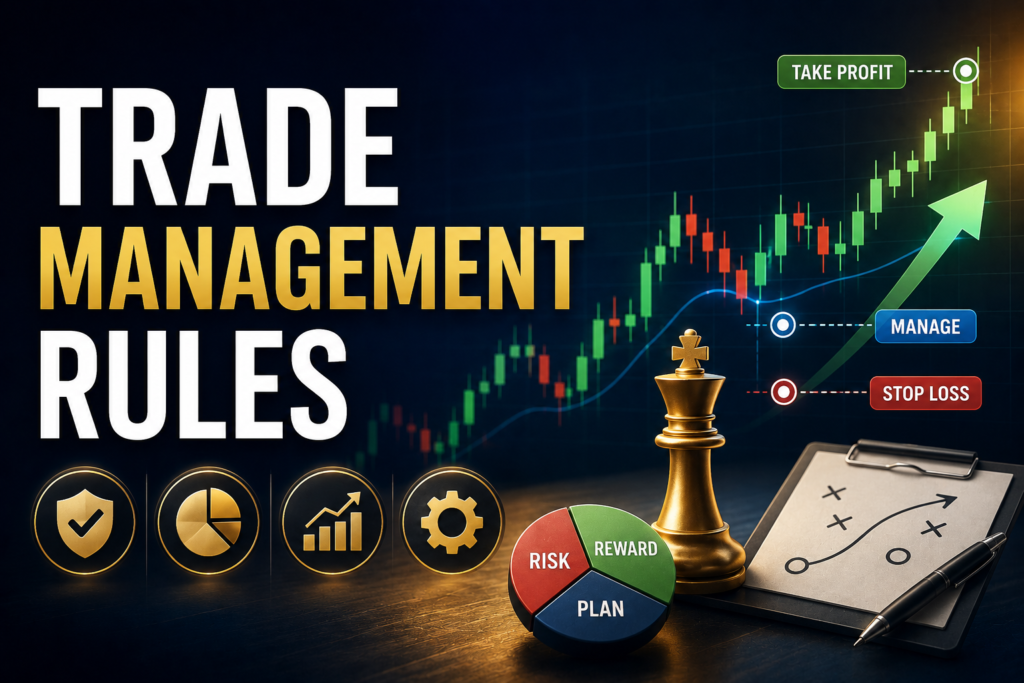
Trade management is very important for long- term participation in trading. Without these rules, you could easily panic and make impulsive choices that can ruin a good trade. This guide explains why these rules matter and how using them you can avoid losses and achieve longevity in trading. That’s why it’s important to make it a repeatable process that keeps you in control from entry to exit.

Core Elements of Trade Management Rules
| Component | Purpose | Why It Matters |
| Stop Loss | Limits downside risk | Prevents emotional holding |
| Profit Target | Defines reward | Ensures favorable risk-reward |
| Trailing Logic | Protects gains | Helps in locking some profit gradually |
| Exit Conditions | Ends trade logically | Avoids guesswork |
The Core Problem: Why Good Entries Still Fail
The Entry-Focused Mindset
Most of the time we’re busy looking for the perfect entry. While entries are important, they are only a small part of the ride. The moment you open your trade, you start dealing with total uncertainty, and watch your profits and loss bounce around with every move the market makes.
And if you trade without a clear plan of what to do next, you’ll end up:
- Panic selling or closing a winning trade too soon
- Waiting with a hope for your losing trade to turn around
- Set your stop-losses impulsively
- Keep moving your target while the trade is live
These common mistakes are rarely because of wrong analysis. They happen because you’re not following trade management rules.
Emotional Interference in Open Trades
The market will never stop moving, and having your money on stake creates a little pressure. And it’s natural to feel fear of losing profits or hoping for a losing trade to turn around, but these feelings often kill the logic behind your trades. Trade management rules act as a safety net to protect traders, it helps in reducing emotional decision-making and start following a proven process instead.
What Are Trade Management Rules?
Trade management rules are like a pre-game plan that helps you handle your trade once you’re in it. They are not some random guesses made in the heat of the moment, they are the rules you set by yourself to protect yourself during any uncertain situation, before the trade even begins.
- Initial stop loss to protect their capital
- Profit targets
- Break even rules
These rules are what keep you consistent in trading. Instead of panicking over a little price movement, you’re simply following the trading plan that fits your risk capacity and your logic.
Why Trade Management Rules Matter More Than Entries
Risk Is Dynamic, Not Static
At first when you enter a trader, the risk is quite clear. But as soon as the price starts moving your risk also shifts. The feeling of being profitable is different from being in losses, the latter one affects you both psychologically and financially. Managing an open trade means adapting to these changes without losing your calm or plan.
Having strict rules are necessary to make sure that your adjustments are smart, planned moves rather than panicked reactions.
Long-Term Performance Depends on Management
Two people can take the exact same trade, but still can end up with different outcomes. And the secret to this is not the entry, but how you manage the trade afterward. In this, there could be two types of traders: one trader who might protect his cash and let profits develop, while the other panics and sells the trade early, cutting his profits and magnifying losses.
Over time, these management choices actually matter a lot for your account’s growth.
Core Components of Effective Trade Management Rules
1. Initial Stop Loss Logic
Think of your initial stop loss as your overall capacity to risk. It’s the absolute most you are willing to lose to find out if your trade Idea was right or not.
It’s more like a safety net, in case your trade starts moving against you. Your stop loss will help you protect your capital and manage your trade successfully.
2. Profit Target Planning
Trade management rules should define how profits are taken. This includes:
- Fixed targets
- Trailing targets
- Booking Partial profit
Every method has its pros and cons. A fixed target is great but can limit your profit while trailing can lead to bigger gains but is tougher on your win rate. The key is consistency rather than optimization.
3. Break-Even Rules
Moving the stop loss to break‑even is a tempting move, but often it’s a trap. I have seen so many traders rushing to move the stop loss too early, only for the market to kick them out for nothing right before the price moves up in your favor. Do not rush.
To avoid this, your rules should clearly define:
- Exactly when you can move your stop
- What kind of price move justifies the shift
- Whether you’re basing it on market structure or just a spike in volatility
Having these rules in place keep you away from making any nervous, impulsive change every time the market moves.
4. Partial Profit Rules
Taking a partial profit is a great way to lower the risk while staying in the game. But without a well structured plan these exits can become random and messy.
Effective trade management rules define:
- Exactly how much of your trade to close
- An specific price level or trigger for the exit
- A plan for how to handle the remaining position
This approach helps you manage the risk while chasing the bigger opportunity.
Managing Open Trades Forex: A Process-Based Approach
From Entry to Exit
Managing open trades in forex is not about predicting the next candle. It is about following a predefined process that unfolds as price develops.
A process-based approach typically includes:
- Entry with a clear safety net
- Watching without messing with a trade
- Adjusting only when rules tells you
- Knowing exactly when you’re going to exit
This plan keeps you away from feeling overwhelmed and helps you stay consistent across different market conditions.

Trade Management Example: Practical Scenarios
Fixed Target Trade Management
Suppose you enter trade of EUR/USD with these rules:
- A gold to make double what you are rusting (1:2 ratio)
- With a fixed stop loss and fixed profit target
- And a rule of not touching the trade unless the market structure completely breaks down.
Why this works:
By following these rules you take the guesswork out of the equation and let the numbers do the job. This is the perfect practice for traders who want a simple and consistent routine without any stress of constantly watching the charts.
Why Trade Management Rules Improve Discipline
We often misunderstand discipline as willpower, but it’s actually just about having clarity. When trade management rules are crystal clear you don’t have to decide anything while the price is moving. You just follow the plan.
This reduces:
- Overtrading
- Emotional exits
- Inconsistent results
Trade management rules shift focus from outcome to execution quality.
Common Mistakes in Trade Management
Over-Managing Trades
Changing the stops and targets every time a small price movement happens often leads to an exit. Managing trades, in forex needs restraint much as managing open trades, in forex needs action. Do not chase every tick.
Changing Rules Mid-Trade
Altering trade management rules during a trade undermines the statistical foundation of the strategy. Rules must be tested and applied consistently.
Ignoring Market Context
While rules give you a great structure, they still need to fit with market conditions like volatility, session timing, and liquidity.
Tools That Support Trade Management Rules
You don’t need any high tech software to manage your traits just a few simple tools can make your work a lot more easier:
-
- Trade journaling helps in tracking your progress
- Price alerts to avoid watching charts all the time
- Risk calculators to keep your position safe
These tools keep you organised, but they are not a shortcut of success. Your rules should always be based on your logic, not just because a tool has a button for it.
Regulatory and Compliance Considerations in India
If you’re an Indian traders, it’s important to keep these things in mind:
- Only use brokers that are officially registered with SEBI.
- Stick to the specific currency pairs that Indian law allows.
- Make sure you’re following all the required risk and compliance rules.
These rules are meant for education, they are perfectly fine to use as long as your actual trading stays in line with RBI and FEMA guidelines.
Conclusion
Think of Trade management rules as the backbone of your success. While a good entry gets you into the game, how you manage your trade once it’s live is what actually decides your future in trading for a long- term success. When you have a solid plan to manage your trades, you avoid emotions from ruining the trades and start making much better and calmer decisions.
It’s not that this is only right, it’s just about picking a process that makes sense to you and sticking to it every single time. That’s why platforms like Insightful Trade keep management as a core skill, and help traders stay disciplined and make more logical and informed decisions.
Frequently Asked Questions (FAQs)
What do I need for trade management?
You don’t need any fancy tool, just basic charting softwares, a simple trading journal and risk calculator is enough. These tools will help you manage your trades more effectively and increase the potential of profits.
Are trade management rules suitable for beginners?
Yes. It works like a life saver for beginners. Having a set of rules for trading helps you manage your risk effectively and save your capital to maintain longevity in trading.
Is managing a live trade different from an entry strategy?
Yes. Entry strategies define where trades begin, while trade management rules define how trades evolve and end.
Are trade management strategies legal in India?
Yes. Trade management concepts are educational. Traders must ensure execution through SEBI-compliant brokers and follow RBI regulations.
Will these rules guarantee that I will make money?
No. There is no guarantee of such things in trading. You just need to stick to your rules and discipline to stay profitable and safe while trading.
Author: Kumkum Chandak
Experience: 3+ Years in Trading Research & Market Content Strategy
Kumkum Chandak is a trading content strategist and market research writer who specializes in simplifying technical analysis, trading tools, and strategy-driven educational content. Her work is optimized for EEAT, accuracy, and user intent, ensuring every article delivers practical insights for traders of all levels.
Risk Disclaimer:
All content is strictly educational and not financial advice. Trading involves substantial risk. Always perform your own analysis or consult a professional advisor.
Last Updated: 4 January 2026