
Understanding how the US Federal Reserve influences global markets is one of the most important skills a trader can develop. Decisions on interest rates and inflation don’t just affect the market, they decide the trend in forex pairs, gold prices, and indices like US30.
In today’s vlog, we’re breaking down Fed policy impact trading in a simple, story-driven and practical format — helping you understand exactly why the market reacts the way it does. Whether you’re just starting out or trading full-time, this guide will help you navigate the chaos that occurs during major news events.

1. Quick Refresher: What the Federal Reserve Actually Does
Before we get to the charts, let’s discuss the Fed’s actual role in navigating complex economics.
Basically, the Federal Reserve holds the key to the economy. They control:
- Interest rates
- Monetary policy
- Liquidity in the banking system
- Inflation control and employment stability goals
Every statement that the Fed gives highly impacts the trader and market sentiment because if it says borrowing will get hard, the market panics.
2. Why Fed Meetings Create the Biggest Market Volatility
Among all economic events, the FOMC meeting generates some of the strongest movements.
Here’s why:
- Rates determine the strength of the US dollar
- Liquidity affects risk-on and risk-off behavior
- The Fed’s comments create such strong market-moving power that they can completely alter the market’s overall direction.
- A single unexpected word can create sudden market fluctuations.
The interest rate effect on forex and FOMC impacts on indices and gold price fluctuations originate from the fundamental difference between market expectations and real-world decision-making processes.
3. Interest Rate Effect on Forex — Explained for Traders
Here, in this part of the blog we’ll discuss the effects of interest rates on Forex:
When the Federal Reserves increases the interest rates:
- The US dollar strengthens
- EURUSD, GBPUSD, AUDUSD fall
- USDJPY often rises due to yield differences
- Emerging market currencies weaken
Why?
Higher US interest rates attract foreign investors into dollar-based assets.
This creates demand for USD and lowers other currencies.
When the Federal Reserves cuts the interest rates:
- USD weakens
- EURUSD, GBPUSD usually rise
- Risk pairs like AUDUSD and NZDUSD also bounce
This is the core of Fed policy impact trading on forex — interest rates shift the flow of global money.
4. How Fed Policy Moves Gold — The Safe-Haven Dynamic
Now, let’s talk about the impact of Fed Policy on Gold because it is not a yield-bearing asset.
When the Fed raises rates:
- Gold usually drops
- Higher interest rates make bonds more appealing to investors.
- Investors start to move their investments from non-yield assets.
When the Fed cuts rates or signals easing:
- Gold prices experience a significant increase in value.
- Safe-haven demand increases
- Inflation concerns rise
Gold is considered the safest investment, whenever the market is in depression and falling, you’ll see how gold price rises and it attracts more investors.
This is a key component of understanding fed policy impact trading across asset classes.

5. FOMC Impact on Indices Like US30 — The Volatility Driver
The Federal Reserve is very crucial to understand the movements in Dow Jones (US30).
When the Fed is hawkish (raising rates, tightening):
- Borrowing becomes expensive
- Corporate profits may decline
- US30 often falls
- Tech and growth stocks take the biggest hit
When the Fed is dovish (cutting rates, adding liquidity):
- Borrowing is easier
- Spending increases
- Indices rally — often strongly
The FOMC impact on indices is straightforward: liquidity fuels buying, tightening slows it down.
6. A Story-Based Example: One Fed Meeting, Three Markets
Let’s make this practical with a story, since you prefer conversational explanations.
Imagine a trader named Ray.
Morning before the FOMC meeting
- DXY (dollar index) is flat
- Gold is consolidating
- US30 is moving sideways
- EURUSD is showing indecision
Everyone is waiting for the Fed.
The Fed announces a surprise tone: “Further tightening may be needed.”
Everything changes in minutes:
- USD spikes → EURUSD drops rapidly
- Gold falls as bond yields rise
- US30 dives 300–400 points instantly
- Volatility hits max speed
Ray had already defined his trading areas and selected safe investment opportunities because he knew how Federal Reserve actions affect market operations.
He chose to wait before entering the market because he monitored liquidity sweeps to confirm market structure before making his trades.
By the end of the session, he took two high-confidence trades — one on US30 and one on EURUSD — both aligned with the Fed’s direction.
7. What Traders Should Track Before Every FOMC Meeting
Here’s a trader-friendly preparation checklist:
Fed funds futures: It tells the expectations for rate changes.
CPI and PCE inflation data: The Fed reacts strongly to inflation trends.
Employment numbers (NFP): The strong jobs data makes the Fed become hawkish.
Bond yields: Rising yields often signal tightening.
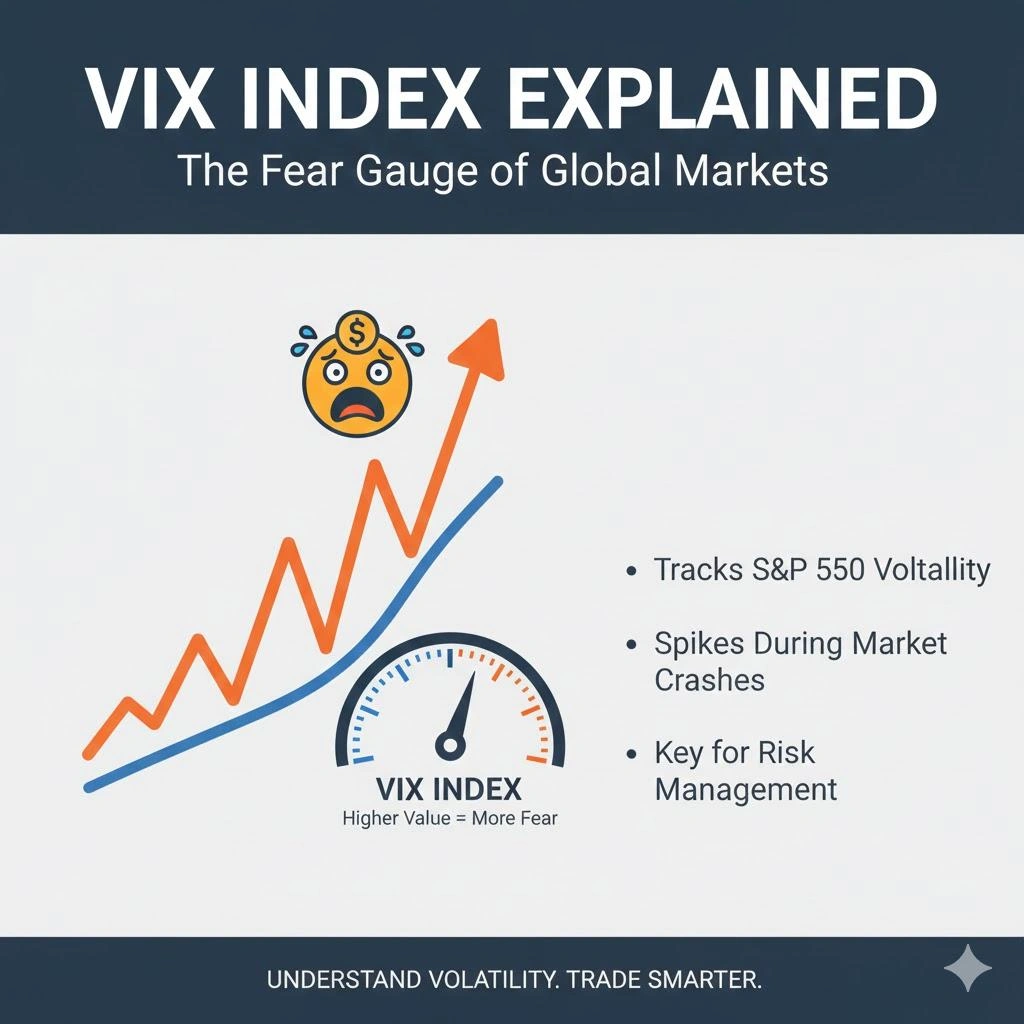
Market sentiment tools: Fear & risk measures help anticipate volatility.
Dollar index (DXY): A must-watch for forex and gold traders.
8. Immediate Trading Tips After Fed Policy Announcements
Here are practical, usable tips that you can use to become an impactful trader:
- Avoid trading at the beginning of first 5–10 minutes
- Wait for the dust to settle before making the entry
- Reduce lot sizes on high-volatility days
- Watch for reversal zones
- Check gold and dollar correlation
- Track US30 and NAS100 reactions
These habits will help you avoid the emotional traps of Fed-driven sessions.
9. Long-Term Effects of Fed Policy on Markets
While intraday movements are sharp, long-term effects are equally important.
Tightening cycles
- Strong dollar
- Weak gold
- Volatile indices
- Slow economic growth
Easing cycles
- Weak USD
- Strong gold
- Bullish indices
- Higher risk appetite
This is why understanding Fed policy impact trading helps both day traders and swing traders.
10. Mistakes Traders Make During Fed News Days
Avoid these common errors:
- Don’t jump to action too early. Wait for the dust to settle
- Guesswork wouldn’t support you for too long. Instead try to wait for the announcement, and form a strategy
- Watch your trade size during the volatility
- If you are not watching bond yields, you are making a huge mistake. They often give hint on the next market moves
- Relying only on technical analysis, ignoring the fundamentals of the stocks.
Successful traders combine technical levels with policy expectations.

Conclusion
The Federal Reserve is the most important factor in the market, whether it’s hiking rates or just giving hints in a speech – the effects instantly run through the forex pairs, gold, and indices like US30. That’s why understanding Fed policy impact trading is a game-changer task. It’ll not only help you predict the moves but also help you in finding opportunities in volatile markets.
If you ever find yourself confused about what the Fed is saying or how to trade during these strange sessions, check out InsightfulTrade. We break down the chaos with clear strategies and real-world examples so you can navigate big news days without stress.
FAQs
1. Why does the Fed influence global markets so strongly?
Because the US dollar is the world’s reserve currency, Fed decisions affect global liquidity.
2. Does raising interest rates always strengthen the dollar?
Mostly yes, but sentiment and expectations also play a role.
3. Why does gold drop when rates rise?
Higher yields make bonds more attractive, reducing gold demand.
4. Why do US30 and NAS100 fall during hawkish policy?
Higher borrowing costs reduce corporate earnings expectations.
5. How can beginners trade safely during FOMC?
Avoid early entries, use smaller lots, and wait for confirmed direction.
Author: Kumkum Chandak
Experience: 3+ Years in Trading Research & Market Content Strategy
Kumkum Chandak is a trading content strategist and market research writer who specializes in simplifying technical analysis, trading tools, and strategy-driven educational content. Her work is optimized for EEAT, accuracy, and user intent, ensuring every article delivers practical insights for traders of all levels.
Risk Disclaimer:
All content is strictly educational and not financial advice. Trading involves substantial risk. Always perform your own analysis or consult a professional advisor.
Last Updated: 9 December 2025