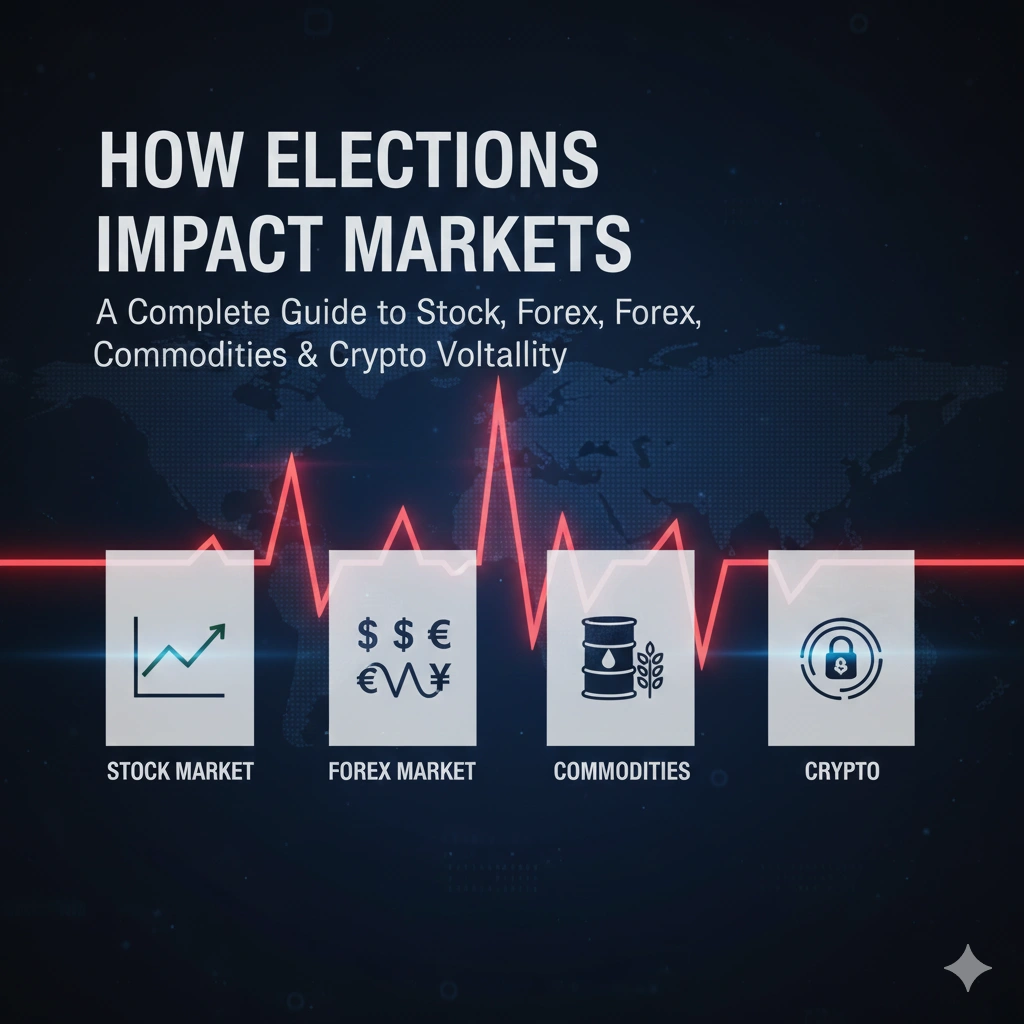
Have you ever noticed how markets will just get silent immediately before a major news release? That is what traders refer to as a pre news volatility drop. The calm before the storm is a bit like that; prices are hardly moving, volume is dropping, and everyone appears afraid to do anything. This market silence does not occur by chance but is a pattern that can be closely monitored by shrewd traders in order to know what will occur next.
Quick Summary
| Key concept | What it means |
| Pre News Volatility Drop | There is decreased movement of markets before planned news. |
| Market Quiet Before News | Before announcements, the trading becomes sluggish, and the movement of prices becomes narrow. |
| Why It Happens | Risk and uncertainty are minimized by traders, and this ensures that there is calmness in markets. |
| Historical Evidence | Research indicates that markets tend to freeze and then take time before major announcements. |
This pattern is most visible before events like CPI inflation data, central bank rate decisions, and major budget announcements, where traders reduce exposure hours or even days in advance.
The Market Quiet Before News—Explained
Here’s what you usually see: During a pre news volatility drop
- Prices are hardly shifting; trading is contracted.
- Volume drops as traders wait.
- Price fluctuations reduce; charts appear level.
- The liquidity providers expand spreads.
It is the calm before the storm; everything is quiet at the moment, but the news is likely to be followed by major movements.
Academic Evidence Behind the Calm
You might think the pre-news calm is just a rumor, but research shows it’s real.
- The volatility decreases before significant announcements.
- Markets remain stable during the pre-news days.
- Pre news is lower at a stronger rate than earlier.
- Supported by statistical data, and not trader instinct.

Pre News Volatility Drop Patterns in Major Economies
Across the globe, pre news volatility shows up in similar ways:
- Less volatility during the lead-up to any major events—the market is quieted before news.
- Immediate increase in volatility on the release of the news.
- Definitive movement after the announcement.
This pattern happens in equities, FX, bonds, and even commodities, but the strength of the trend is dependent on the type of news and the liquidity of the market.
Why Markets Stay Quiet: Trader Psychology
You usually break during a pre news volatility. Here’s why:
- Fear of surprises: no one is willing to be caught on the wrong side.
- Algorithms minimize activity on their own.
- Massive investment funds hedge or wait to cover the risk.
- Markets gradually put in pre-announcement expectations.
It is simply everybody pressing the pause button that makes the market silent, and then the news we tend to pick up comes in.
Liquidity Dynamics and Volatility Drop
During a pre news volatility, there is a significant role of liquidity changes:
- Less competition in the market.
- Reduced liquidity trading ranges.
- The greater the risk reduction by the providers, the greater the spreads widen.
- Any little gesture is less than a drop in the ocean until news breaks.
That is why the market being silent before news can be misleading; it will be quiet now, but then it will swing greatly when the news is announced.
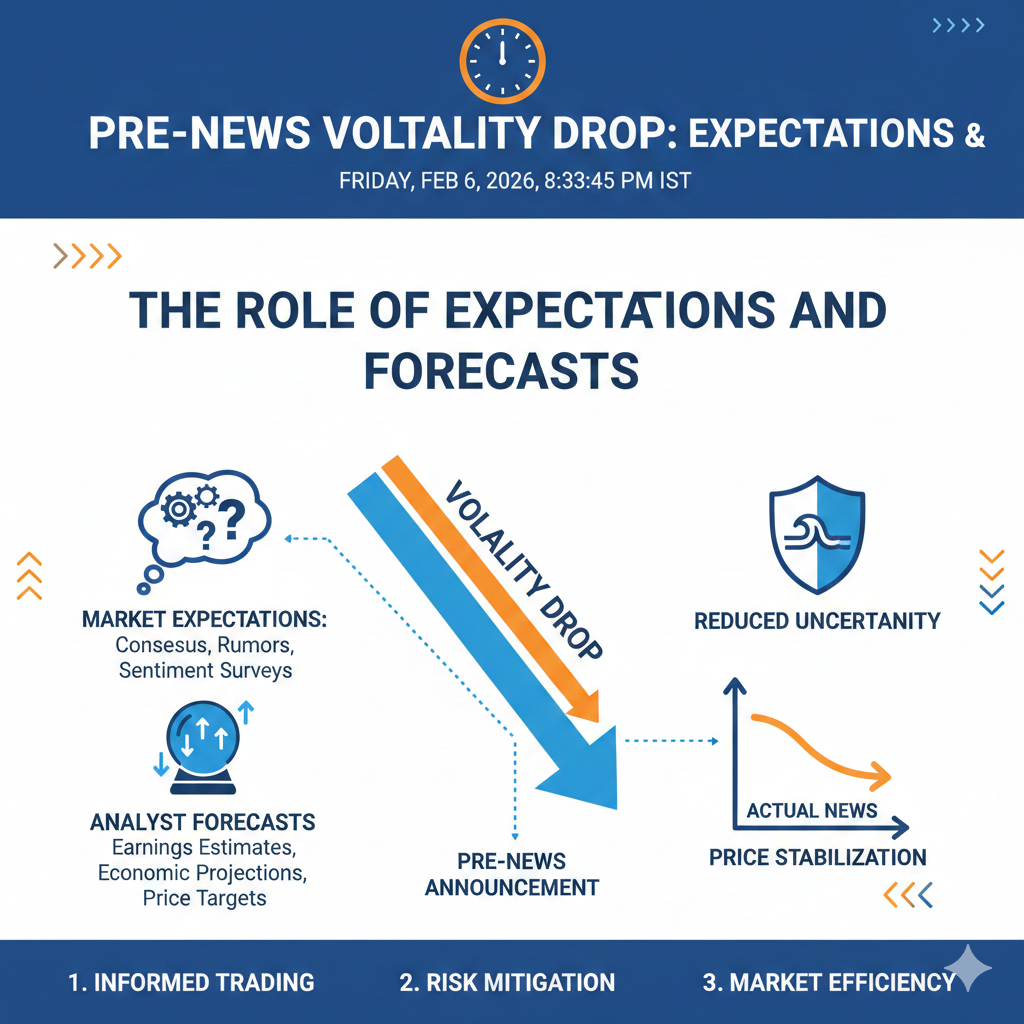
The Role of Expectations and Forecasts
During a pre news drop in volatility, the market is preconditioned:
- Forecasts are priced in by traders before the announcement.
- Even in quiet markets, little directional movement may occur.
- Silence in the market preceding news is anticipation expressed collectively.
- Minor indications disclose what traders believe may occur.
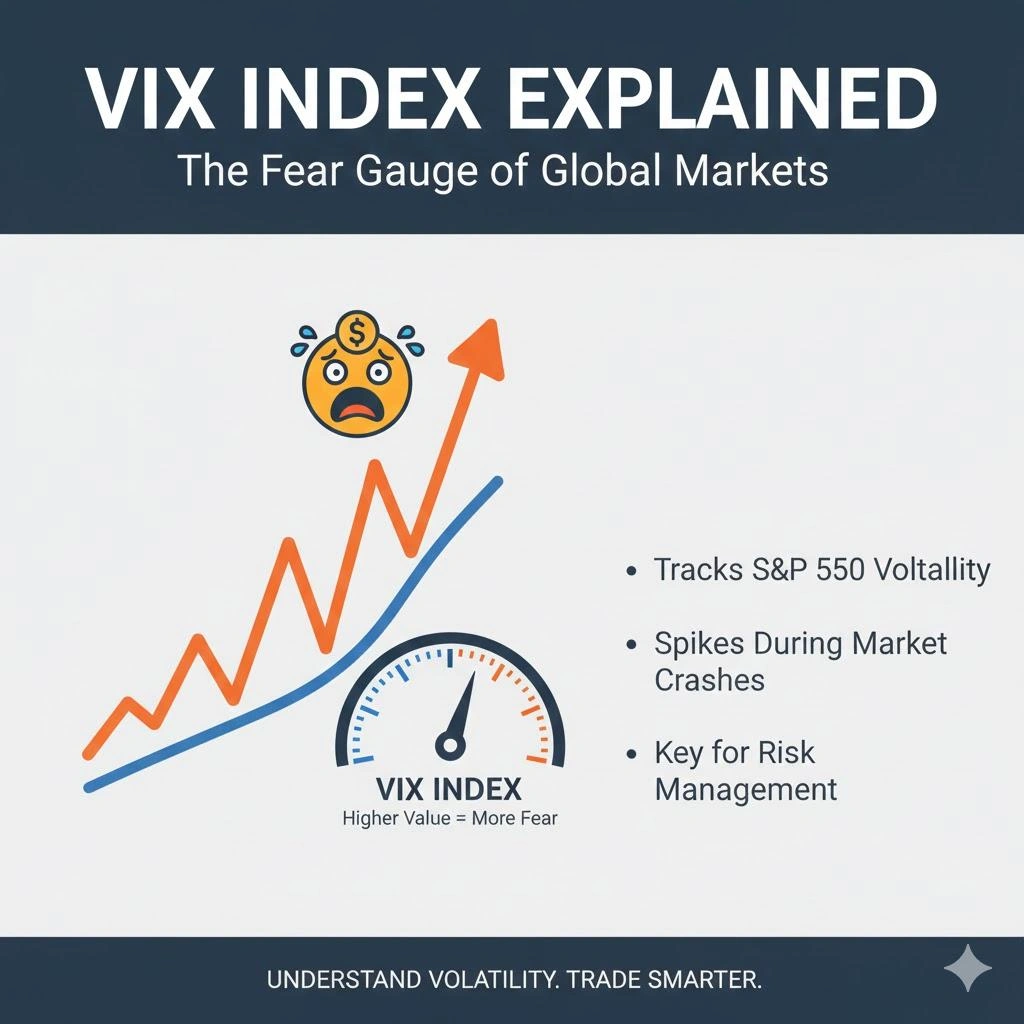
Case Study: Volatility Index (VIX)
The VIX often reflects a pre news volatility drop:
- Low values indicate that markets are serene before announcements.
- Spike occurs within the immediate period of news release.
- The news quietness before the market can be misleading—risk is contracted.
- Example: There is a tendency for trade negotiations or Fed action to appear placid, then extreme changes.
Empirical studies on FX volatility around macroeconomic announcements, including research on U.S. CPI and FOMC events, consistently show volatility compression before scheduled releases followed by sharp expansion after the announcement.
Trading Strategies Around Pre News Volatility Drop
Free economic calendars—be aware of when the big news occurs.
The volatility is likely to be small—prices fluctuate less during the market silence before the news.
Don’t overtrade the calm—wait till the announcement is confirmed.
Liquidity risk management—the volatility may explode as soon as the news arrives.
Be Patient: It is the virtue of a trader who is too fast to enter before things happen to find themselves in the wrong rut.
Trending Market Data on Volatility
The pre news drop in volatility is still real numbers even today:
- In India, the VIX stood at about 8.7 at the beginning of 2026, very low, indicating market calmness before the news of the Union Budget.
- Trade and policy uncertainty caused volatility to spike in the U.S. occasionally.
- These tendencies confirm that the quiet before significant announcements is a reality that is quantifiable and effective for traders.
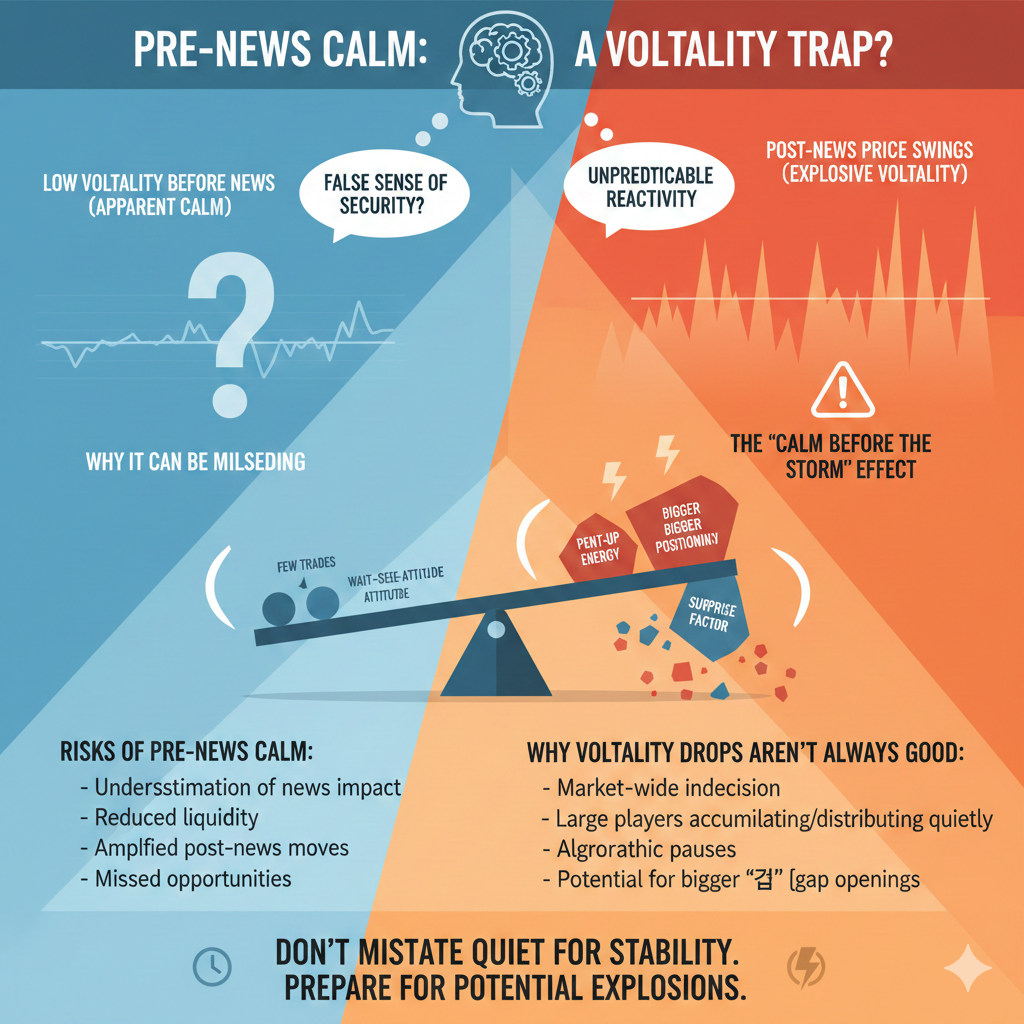
Why Pre News Calm Isn’t Always a Good Sign
Although the markets are relaxed, the pre news volatility drop may be deceptive:
- Being low-volatility does not imply that they are low-risk—surprises may occur very quickly.
- Liquidity declines have the effect of exaggerating small movements.
- The concealed stances can easily unravel when the news comes out.
- The market is quiet before the news can hide the built-up tension that explodes afterward.
FAQs
- What tools help track pre news volatility drop?
The VIX index, implied volatility charts, and economic calendars are excellent for identifying low volatility.
- Can retail traders anticipate market quiet before news?
Yes, through the use of an economic calendar and volatility indicators, one is able to know when the markets are prone to slow down.
- Does low volatility before news mean low risk?
Not every time, because calmness may mask unexpected peaks after the news has broken.
- What does pre news volatility drop” mean?
It is the market’s silence before news breaks, before a big move is taken.
- Does pre news volatility drop always lead to big moves?
Often, but not always. The direction will be determined by the expectations in the market and the actual news performance.
Conclusion
The real edge that traders can experience is through the comprehension of the pre news volatility drop. Markets are seldom really calm; market tranquility before news is but a prelude as the whole market anticipates news coming out. Having identified this tranquility, you will be able to anticipate the big moves, which usually come in the wake of it, and better control your exposure to them as well as make a more astute trading or analysis decision when the news breaks.
Stay ahead of pre-news volatility drops with Insightful Trade—analyze market calm, spot breakout setups early, and plan smarter entries before the news shakes prices.
Author: Arihant Jain
Trading Experience: 5+ Years
Arihant Jain is a financial markets analyst and trading educator with expertise in Forex, indices, crypto, and risk-managed trading systems. His insights are based on real trading experience, data-driven analysis, and transparent market understanding. All content is reviewed for accuracy and aligns with Google’s EEAT guidelines.
Risk Disclaimer:
Trading involves substantial risk. All information is for educational purposes only and should not be taken as financial advice. Always do your own research.
Last Updated: 06 January 2026