Quick Summary
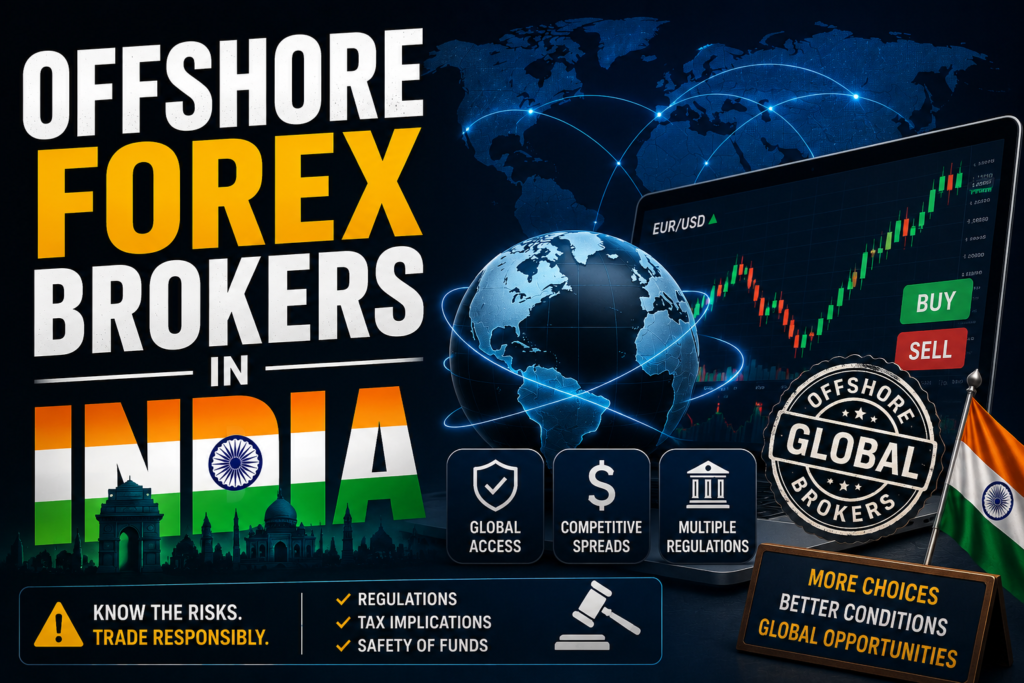
It’s no secret that more traders are showing interest in offshore forex brokers lately, mainly because they have bigger leverage and wider range of options. But trading outside India brings some serious legal and financial risks that are very easy to overlook. The blog explains how these brokers actually work, why they are so tempting and how you can check if one is truly safe before you trust them with your money.

Offshore Forex Brokers India: At-a-Glance
| Aspect | Offshore Brokers | Indian-Regulated Environment |
| Regulatory Oversight | Foreign jurisdictions | RBI / SEBI aligned |
| Legal Protection | Limited for Indian traders | Domestic dispute mechanisms |
| Leverage | Often high | Restricted |
| Currency Pairs | Wide range | Limited |
| Compliance Risk | High | Low |
What You Will Learn in This Guide
- What offshore forex brokers are and how they function
- Why Indian traders choose offshore forex brokers
- Key risks of offshore brokers India traders face
- Legal and regulatory considerations in India
- Practical examples of common problem scenarios
- Tools and checks to evaluate broker credibility
The Core Issue: Access vs Accountability
The biggest challenge with offshore forex brokers really comes down to a trade-off: Access vs Safety.
On one hand these brokers give you access to the things you can get easily in India, like much higher leverage or a massive variety of global currency pairs. But the catch is that you lose accountability. Because these companies are outside of India, you are basically giving up your legal safety net.
And if something goes wrong you can’t turn up to our local authorities for help. Before you jump in you have to decide if that extra flexilities is worth the risk of being on your own if a dispute even happens.
What Are Offshore Forex Brokers?
Offshore forex brokers are simply companies based outside of India, usually in places like:
- Mauritius
- Seychelles
- Cyprus
- Saint Vincent and the Grenadines
While they might be registered in those countries, they don’t work under Indian regulators like RBI or SEBI.
For you, this is a major distinction. It means if you ever have a problem, you will have to seek help from their local authorities, and our safety standards here at home won’t be able to protect you.
Why Indian Traders Look at Offshore Forex Brokers
Many traders explore offshore forex brokers India for structural reasons rather than lack of awareness.
Common Motivations:
- Access to higher leverage
- Ability to trade global forex pairs
- Fewer trading restrictions
- Compatibility with international platforms
These features look incredibly attractive, especially if you’re an experienced trader who values flexibility and wants to access the above things.

The Regulatory Reality in India
India maintains strict controls over forex trading. Retail forex trading is permitted only through:
- Recognized exchanges
- INR-based currency pairs
Trading forex with margin through overseas brokers falls into a regulatory grey area.
While individuals may access offshore platforms, doing so can raise compliance concerns under FEMA (Foreign Exchange Management Act).
Understanding the Risks of Offshore Brokers India
The risks of offshore brokers India are not theoretical. They stem from jurisdictional limitations and enforcement challenges.
1. Limited Legal Recourse
If things don’t work out with an offshore broker, you’re basically on your own. Indian authorities can’t step in to help, so you’d have to fight your legal battle in your broker’s home country, which can be quite expensive and complicated.
2. Regulatory Gaps
Not all offshore brokers play by the same rules. Some have someone watching them over their shoulder, but others are basically running their own show with zero supervision, increasing the risk of:
- Fund mismanagement
- Unfair trading practices
- Platform manipulation
Because of this you can’t just select any broker because they have a very shiny website. You need to do a proper background check to make sure you aren’t walking into a trap.
3. Fund Safety Concerns
In many countries, brokers aren’t legally required to keep your money in a separate bank apart from their own business cash. This puts your hard and money in a very vulnerable spot:
- Counterparty risk
- Withdrawal delays
- Insolvency-related losses
If a broker doesn’t segregate your funds, you aren’t just taking a risk on the market, but you are taking a big risk on the broker itself. Therefore, always check if a broker keeps client money in a completely separate, protected account.
4. Currency Transfer and Compliance Issues
Funding an offshore account means moving your money across borders, and that’s where things can get a little complicated. This can raise:
- FEMA compliance questions
- Banking scrutiny
- Tax reporting obligations
If your documentation is not complete you might be setting yourself up for a serious legal headache down the road. It might seem fine at the moment but a documentation mistake today can lead to a very long term problem with the regulators later.
Practical Example: A Common Risk Scenario
Imagine a trader in India is using a flashy offshore broker, because they offer high leverage. Things are going great, and they are making some solid profit. But when they try to pull their money out, the broker starts making excuses and delaying the refund.
Because the broker operates outside India:
- The trader cannot escalate to Indian regulators
- Legal remedies are costly and slow
- Funds may remain inaccessible
This is a perfect example of how risky trading through offshore broker can be.
Are All Offshore Forex Brokers Unsafe?
No. It is important to distinguish between:
- Poorly regulated offshore brokers
- Reputable international brokers with transparent practices
Some offshore brokers operate under established regulatory bodies and maintain strong compliance standards. However, even reputable offshore brokers do not offer Indian legal protection.
How to Evaluate Offshore Forex Brokers
Before you hand over hard-earned cash to an offshore forex broker, you need to do a thorough background check to make sure they are following the rules.
Key Checks:
- Regulatory license verification
- Jurisdiction reputation
- Client fund segregation policies
- Transparent fee disclosures
- Withdrawal history and user reviews
Doing this background check won’t make you 100% bulletproof, but it’s the best way to make sure you don’t walk into a trap with your eyes closed.
Taxation Implications for Indian Traders
Just a quick reality check: even if your broker is based on the other side of the world, the Indian tax commission still needs to know about your profits. Any money you make from offshore forex trading is taxable right here in India. Traders must:
- Report profits accurately
- Maintain transaction records
- Understand applicable tax treatment
If you ignore these steps, you could face heavy penalties. Remember, the government cares about where you are living and making money, not where your broker’s office is located.
Tools That Help Manage Risk
Tools won’t make the risk involved in offshore brokers disappear, but they can help you stay organised and on the right side of the rules.
Useful tools include:
- Trade journals
- Risk calculators
- Broker verification databases
- Accounting and tax tracking software
These tools are there to build your discipline and keep you professional, they aren’t there to encourage a gamble.
India-Specific Compliance Awareness
As an Indian traders you must keep this in your mind that, trading an offshore broker doesn’t put you outside the reach of local law:
- Offshore trading does not bypass Indian laws
- FEMA and tax rules still apply
- Ignorance of regulation is not a defense
Understanding these rules isn’t about being restricted, it’s about protecting yourself.
Psychological Risks Often Ignored
When a broker gives you massive leverage and makes it incredibly easy to start, it’s easy to fall into a psychological trap. It often leads to:
- Overtrading
- Excessive risk-taking
- Emotional decision-making
When you mix these bad habits with legal and safety risks of using an offshore broker, you’re essentially doubling your danger. It’s not just about market anymore, but it’s about protecting yourself from your own impulse.
Risk Mitigation Strategies
If you’ve decided to go the offshore route despite the risk, you need to be extra smart about how you handle your money. Here’s how to play it safe:
- Limiting account exposure
- Regular withdrawals
- Conservative leverage usage
- Maintaining detailed records
Remember, risk management starts way before you enter a trade, it starts the moment you choose where to invest your money.
Long-Term Perspective: Regulation Exists for a Reason
Regulatory rules are there to act as a safety net:
- Protect investors
- Ensure market is fair
- Provide dispute resolution mechanisms
Even though the Offshore Forex brokers offer flexibility. They operate outside of these Indian safety systems meaning if things go south, our local authorities won’t be able to step in and help you out.
Conclusion
As we can see, many traders are interested in offshore forex brokers in India, because they offer a higher level of flexibility and global access that you don’t get in India. But honestly, that freedom comes with some serious trade-offs. Using an offshore broker means giving up your legal safety net, and stepping into a world where the rules are different and your money is at a much higher risk.
That’s why before you start trading through offshore brokers, please do a background check and ensure all the legal documents are complete. Platforms like InsightfulTrade focus on helping you understand the real mechanism of the market and how to manage your risk, so you can make confident, smart decisions rather than just jumping into the unknown.
Frequently Asked Questions (FAQs)
Are offshore forex brokers legal in India?
Trading with offshore brokers exists in a regulatory grey area. Indian laws restrict retail forex trading beyond approved exchanges.
What are the biggest risks of offshore brokers India?
Limited legal protection, fund safety concerns, and compliance risks are the most significant.
Can Indian traders withdraw profits from offshore brokers?
Withdrawals may be possible, but delays and disputes are common risks.
Are profits from offshore forex trading taxable in India?
Yes. Indian residents must report and pay tax on global income.
Author: Kumkum Chandak
Experience: 3+ Years in Trading Research & Market Content Strategy
Kumkum Chandak is a trading content strategist and market research writer who specializes in simplifying technical analysis, trading tools, and strategy-driven educational content. Her work is optimized for EEAT, accuracy, and user intent, ensuring every article delivers practical insights for traders of all levels.
Risk Disclaimer:
All content is strictly educational and not financial advice. Trading involves substantial risk. Always perform your own analysis or consult a professional advisor.
Last Updated: 6 January 2026