Introduction
The forex market is heavily influenced by economic data releases, and inflation reports are among the most important events that traders monitor. Inflation affects purchasing power, economic growth, and most importantly, central bank decisions regarding interest rates. When inflation figures differ significantly from market expectations, the result is known as an inflation surprise forex event. These surprises can trigger substantial price movements in currency pairs within minutes, creating both opportunities and risks for traders. Understanding how inflation data impacts currencies can help traders make informed decisions and improve their trading performance during periods of heightened market activity
Understanding Inflation Surprises in Forex Trading
An inflation surprise occurs when the actual inflation reading, usually measured through CPI data (Consumer Price Index), comes in higher or lower than economists and market analysts expected. Financial markets continuously price in expectations about future economic conditions. When inflation data deviates from these expectations, traders quickly reassess their outlook on monetary policy and economic growth. As a result, currency values can experience sharp fluctuations. For example, if inflation rises much faster than expected, traders may anticipate higher interest rates from the central bank, leading to increased demand for that country’s currency. Conversely, lower-than-expected inflation may weaken a currency because it suggests reduced pressure on policymakers to raise rates.
Why CPI Data Matters for Forex Traders
The Consumer Price Index is one of the most closely watched economic indicators in global financial markets. CPI measures the average change in prices paid by consumers for a basket of goods and services over time. It provides valuable insights into inflation trends and helps central banks determine whether monetary policy adjustments are necessary. Forex traders pay close attention to both headline CPI and core CPI figures. Headline CPI includes all goods and services, while core CPI excludes volatile categories such as food and energy. Strong CPI readings generally indicate rising inflationary pressures, while weaker readings suggest inflation is cooling. Since central bank policies often depend on inflation trends, CPI releases frequently become major catalysts for currency movements.
The Relationship Between Inflation and Interest Rates
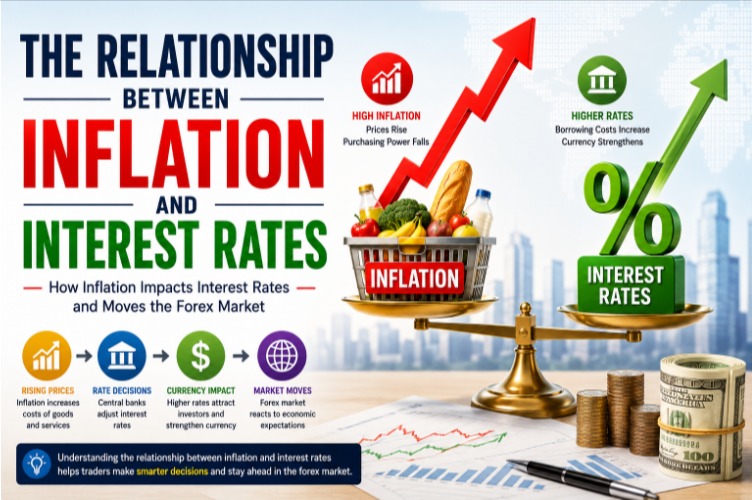
One of the primary reasons inflation data has such a significant impact on forex markets is its connection to interest rates. Central banks aim to maintain stable inflation while supporting economic growth. When inflation rises above target levels, policymakers may increase interest rates to slow spending and reduce inflationary pressure. Higher interest rates tend to attract foreign investment because investors seek better returns on deposits and bonds. This increased demand for financial assets usually strengthens the country’s currency. On the other hand, when inflation falls below expectations, central banks may consider lowering rates or delaying planned hikes, which can weaken the currency. Therefore, understanding the link between inflation and interest rates is essential for anyone involved in inflation surprise forex trading.
How Inflation Surprises Create Market Volatility
Inflation announcements are well-known for causing intense market volatility. Before the release, traders often position themselves based on expectations and forecasts. Once the actual data becomes available, the market rapidly adjusts to the new information. This adjustment can result in sudden spikes, sharp reversals, and large price swings across major currency pairs. During these periods, liquidity may decrease and spreads can widen, making trading more challenging. However, volatility also creates opportunities for traders who have prepared in advance and understand how to react to the data. The larger the gap between actual inflation figures and market expectations, the stronger the market reaction is likely to be.
Market Volatility in Inflation Surprise Forex Trading
Market volatility refers to the speed and magnitude of price movements in the forex market. During an inflation surprise forex event, volatility typically increases because traders rapidly adjust their expectations regarding future interest rates, economic growth, and central bank policies. Since inflation data is one of the most important economic indicators, even a small difference between expected and actual CPI figures can trigger significant fluctuations in currency prices. When CPI data comes in higher than expected, traders may anticipate tighter monetary policy and higher interest rates. This often leads to a sharp appreciation of the currency as investors move capital into assets offering potentially higher returns. On the other hand, weaker-than-expected inflation data may increase expectations of rate cuts, causing the currency to decline rapidly. These reactions create sudden bursts of market volatility that can lead to large gains or losses within a short period.
Market volatility during inflation releases is also influenced by uncertainty. Before the announcement, traders position themselves based on forecasts and consensus estimates. Once the actual data is released, positions are quickly adjusted, resulting in increased trading volume and rapid price swings. Currency pairs such as EUR/USD, GBP/USD, and USD/JPY often experience the strongest reactions because they are highly sensitive to changes in interest rate expectations. For forex traders, volatility can be both an opportunity and a risk. High volatility creates the potential for larger profits because price movements are more significant. However, it also increases the likelihood of sudden reversals, wider spreads, and execution slippage. This is why risk management becomes especially important during inflation-related events. Traders often reduce position sizes, use stop-loss orders, and avoid excessive leverage to protect their capital.
Interest Rates and Inflation Surprise Forex Trading
Interest rates are one of the most important factors influencing currency values in the forex market. Central banks use interest rates as a tool to control inflation and maintain economic stability. When inflation rises too quickly, policymakers often increase interest rates to reduce spending and borrowing. Conversely, when inflation slows significantly, central banks may lower interest rates to stimulate economic activity. Because of this close relationship, interest rate expectations play a crucial role in inflation surprise forex trading.
When CPI data is released and shows higher-than-expected inflation, traders often anticipate that the central bank will adopt a more aggressive monetary policy. This may include raising interest rates or keeping them elevated for a longer period. Higher interest rates generally make a country’s financial assets more attractive to investors because they offer better returns on savings, bonds, and other investments. As foreign capital flows into the country, demand for the currency increases, causing its value to appreciate in the forex market.
On the other hand, if inflation data comes in lower than expected, traders may believe that the central bank has less reason to raise rates. In some cases, markets may even begin pricing in future rate cuts. Lower interest rates tend to reduce investment returns, making the currency less attractive to global investors. As a result, demand for the currency may weaken, leading to depreciation against other currencies.
Economic Indicators and Their Role in Inflation Surprise Forex Trading

Economic indicators are statistical reports that provide valuable insights into the health and performance of an economy. In the forex market, these indicators help traders evaluate economic conditions, predict potential changes in monetary policy, and anticipate currency movements. When trading an inflation surprise forex event, economic indicators become especially important because they provide context for understanding how inflation trends may affect future interest rate decisions and overall market sentiment
Among all economic indicators, Consumer Price Index (CPI) data is one of the most influential for forex traders. CPI measures changes in the prices consumers pay for goods and services and serves as a primary gauge of inflation. A higher-than-expected CPI reading often signals increasing inflationary pressure, which may encourage central banks to raise interest rates. Conversely, weaker inflation data may suggest that policymakers have more room to maintain or lower rates. As a result, CPI releases frequently generate significant market volatility and can lead to rapid currency price movements.
Understanding economic indicators allows traders to interpret inflation surprises more effectively and make informed trading decisions. By combining CPI data with other key economic reports, traders can gain a broader view of market conditions, anticipate potential policy changes, and better navigate the volatility that often follows major economic announcements.
Conclusion
Trading forex during inflation surprises requires more than simply reacting to headline numbers. Successful traders understand how CPI data, interest rates, market volatility, and other key economic indicators interact to influence currency values. Inflation surprises often trigger rapid market movements because they can significantly alter expectations about future central bank policies and economic conditions.
By closely monitoring inflation reports, analyzing market expectations, and understanding the broader economic environment, traders can identify high-probability trading opportunities while minimizing unnecessary risks. However, the increased volatility surrounding inflation announcements also makes disciplined risk management essential. Using appropriate position sizing, stop-loss orders, and a well-defined trading plan can help protect capital during unpredictable market conditions.
Ultimately, inflation surprise forex trading is about understanding the market’s reaction rather than just the inflation figure itself. Traders who combine fundamental analysis with technical analysis, stay informed about economic developments, and maintain a disciplined approach are better equipped to navigate volatile markets and capitalize on opportunities created by unexpected inflation data. In an environment where central bank decisions and inflation trends continue to shape currency movements, mastering inflation-based trading strategies can become a valuable edge in the forex market.