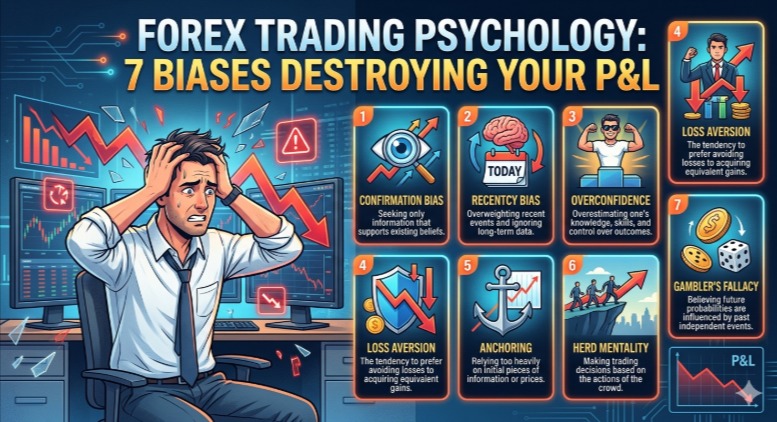
It is time we were truthful with each other. Trading psychology is the very last thing that traders pay heed to until it begins to take a toll on their finances. There are dozens of strategies you can know, but what you can never know is what trading psychology is and how to develop trading psychology, and consistency will remain elusive. Be it understanding forex trading psychology or finding tips for practical trading psychology, it all boils down to being able to control your emotions and make smarter decisions when under pressure.
Quick summary
| Aspect | Key sight |
| Definition | Trading psychology is the emotional and mental discipline behind trading decisions |
| Failure rate | Nearly 90% of traders fail due to psychological mistakes |
| Importance | Up to 80–85% of trading success depends on psychology |
| Common issue | Fear, greed, FOMO, overtrading, revenge trading |
| Solution | Build discipline, journaling, and emotional awareness |
What is Trading Psychology?
Trading is your emotional and mental frame of mind when trading. The question is, what is trading psychology, right? It is just a matter of how you respond when money is involved.
It consists of your response to:
- Profits and losses
- Market volatility
- Risk and uncertainty
Trading psychology, in simple terms, means that you will
- Follow your plan
- Or be emotional in decisions.
It becomes all the more interesting.
- Approximately one out of every 100 traders goes bust, and this is primarily due to mental errors rather than a plan.
- Almost 68% of blown accounts occur as a result of psychological problems.
Why Trading Psychology Matters More Than Strategy
Most traders put effort into strategies, yet they overlook trading psychology, which is, in fact, the most significant in success.
Most traders:
- Increase time on strategies.
- Ignore mindset
But in reality:
- The trading psychology contributes about 85% to success.
Here’s why:
1. Markets Trigger Emotions
Your decisions are influenced by fear, greed, and stress—that is where the tips of trading psychology come in.
2. Emotions Distort Decisions
Traders lose money and get out of the trade prematurely without knowing what trading psychology is.
3. Discipline Breaks
Unless you are aware of how to develop trading psychology, you are sure to violate the rules and overtrade, particularly when it comes to forex trading psychology.
Common Trading Psychology Mistakes
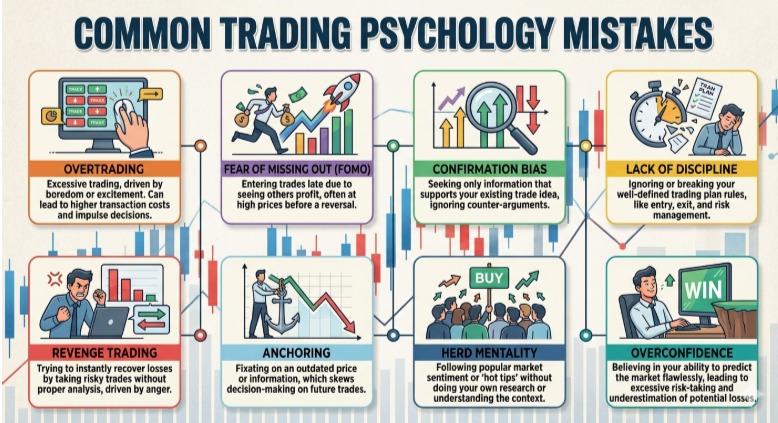
Let’s be real: most errors in trading are due to poor trading psychology, rather than poor strategies.
1. Revenge Trading
- Attempting to recoup the losses in a short time.
- Causes greater losses.
2. Social loafing.
- Entering trades late
- Chasing the market
Occurs when you do not completely comprehend what trading psychology is.
3. Overtrading
- Eating excessively of trades.
- Trading emotionally
This is the area where trading psychology tricks, such as being patient, come in handy.
4. Cutting Winners Early
- Realizing profits in time.
- Logic is conquered by fear.
5. Overconfidence
- Winning more and taking more chances.
- Ignoring rules
Widespread problem with forex trading psychology.
Forex Trading Psychology
Being real, forex trading psychology is intense as compared to trading.
The market is a fast-moving, 24/5 leverage market that puts pressure on you. In the absence of knowledge of what trading psychology is, it is so easy to lose track.
It is associated with problems such as the following:
- Trading to the downside and retaining.
- Over-leveraging
- Impulsive trades
This is why it is essential to learn how to develop the trading psychology and adhere to appropriate trading psychology tips.
How to Build Trading Psychology (Step-by-Step)
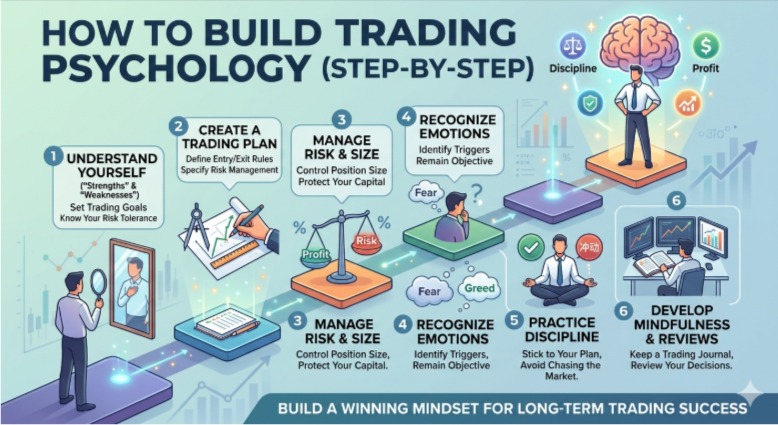
Let’s keep it simple; it is just a matter of control and consistency when it comes to developing a good trading psychology.
1. Create a Trading Plan
- Rules of entry, exit, and risk.
Lack of a plan = emotional trading.
2. Record with a Trading Journal.
- Follow the trades, feelings, and errors.
Assists you in realizing what trading psychology is in practice.
3. Control Risk
- Only 1-2 percent risk per trade.
One of the best trading psychology tips.
4. Be Emotionally Aware
- Do not trade when aggravated or angry.
Major action in the way to develop trading psychology.
5. Stay Disciplined
- Trade by the book; do not overtrade.
Play an important role in forex trading psychology as well.
6. Focus on Process
- Don’t make profits; follow your plan.
A good trading psychology brings about consistency.
Proven Trading Psychology Tips
We can make it simple. When you want to be consistent, you cannot neglect the trading psychology.
The following are some of the simple trading psychology tricks:
Accept Losses
- It is not uncommon to make losses in trading.
This is where you begin to learn about what trading psychology entails.
Avoid Emotional Trading
- Never trade when angry, stressed, or overexcited.
Feebleness of emotions = poor judgment.
Use a Checklist
Prior to all trades, inquire.
- Is setup valid?
- Am I calm?
Easy action in the direction of constructing trading psychology.
Avoid Overtrading
- Excess of trades = emotional errors.
Essential in great trading psychology.
Stay Calm in Forex
- A cool mind is required in the psychology of forex trading.
Collective mind = improved control.
Latest Trading Psychology Data & Trends (2026)
Be it real, these numbers indicate clearly the significance of trading psychology in trading success.
73% Revenge Trading
- A majority of traders who make losses attempt to get back the losses at once.
One of the most common trading psychology traps is emotion-based.
2.3x Increased Trades When there is a loss.
- Days lost cause traders to be more active rather than reduce their activity.
Weak on how to develop trading psychology.
42% first-hour losses.
- Virtually half of the daily losses are a result of rushed decisions.
Good trading psychology advice: be patient.
FOMO = Loss Driver of Major Size.
- Few in number, yet results in a total of up to 60% loss.
Typical problem with forex trading psychology.
Conclusion
It is the trading psychology that determines whether you will have a good day or not in the market. When you get the idea of what trading psychology is and work on how to develop trading psychology, then you begin to make less emotional, more intelligent decisions. The key to consistency, rather than luck, in forex trading can be using the right trading psychology tips and enhancing your forex trading psychology.
Enhance your trading psychology and use InsightfulTrade. Discover effective trading techniques, psychological tricks of the trade, and mindset training to become a smarter trader and profitable every day.
FAQs
Q.1 What is trading psychology in simple terms?
Your feelings and attitude toward trading influence your trading behavior, and this is called trading psychology.
Q.2 Why is trading psychology important?
Since it affects 80-85% of the success of trading, rather than the strategy.
Q.3 How can beginners improve trading psychology?
- Start journaling
- Take stringent risk management.
- Avoid emotional trades
Q.4 What is forex trading psychology?
It is the emotional control that is needed to trade forex markets, particularly in high volatility and leverage.
Q.5 Can trading psychology be learned?
Yes. Anyone can enhance his or her trading psychology with practice, discipline, and awareness.
Author: Arihant Jain
Trading Experience: 5+ Years
Arihant Jain is a financial markets analyst and trading educator with expertise in Forex, indices, crypto, and risk-managed trading systems. His insights are based on real trading experience, data-driven analysis, and transparent market understanding. All content is reviewed for accuracy and aligns with Google’s EEAT guidelines.
Risk Disclaimer:
Trading involves substantial risk. All information is for educational purposes only and should not be taken as financial advice. Always do your own research.