Introduction
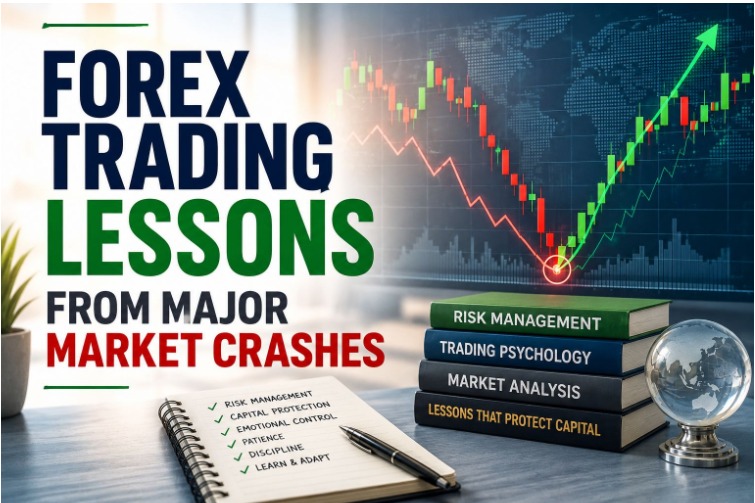
The history of the forex market is filled with periods of extreme turmoil that have reshaped trading strategies and investor behavior. Major events such as the 2008 Global Financial Crisis, the Swiss Franc shock of 2015, and the market volatility triggered by the COVID-19 pandemic demonstrated how quickly currency values can change during times of uncertainty. These events serve as powerful examples of how forex market crashes can create both significant risks and unique opportunities for traders.
Understanding the lessons from past market crashes is essential for anyone involved in forex trading. During these periods, factors such as panic selling, economic instability, central bank interventions, and geopolitical tensions can cause dramatic currency fluctuations. Traders who are prepared for such conditions often focus on strong risk management, adapt their strategies to volatility trading, monitor the movement of safe haven assets, and maintain disciplined trading psychology. By studying previous market crashes and the reactions of successful traders, investors can develop the skills needed to navigate future market disruptions with greater confidence and resilience.
Market crashes also reveal the critical influence of central banks and government policies on forex markets. Emergency interest rate changes, quantitative easing programs, and direct currency interventions can dramatically alter market direction within a short period. Traders who closely monitor these developments are often better positioned to respond to changing market conditions. Studying past forex market crashes provides valuable insights into how markets react under pressure and how traders can strengthen their strategies. The lessons learned from these events continue to shape modern trading practices, emphasizing the importance of discipline, patience, and continuous learning in achieving long-term success in the forex market.
Risk Management: The Most Important Lesson From Forex Market Crashes
One of the biggest lessons from major forex market crashes is the importance of effective risk management. During periods of market stress, currency prices can move hundreds or even thousands of pips within a short time. Traders who fail to control risk often experience significant losses that can wipe out months or even years of profits.
Risk management begins with determining how much capital should be exposed on each trade. Professional traders often risk only a small percentage of their account balance on any single position. This approach ensures that even a series of losing trades will not severely damage the trading account. During market crashes, when volatility increases dramatically, reducing position sizes becomes even more important
Stop-loss orders represent another critical risk management tool. A stop-loss helps limit potential losses by automatically closing a position when a predetermined price level is reached. Market crashes can create sudden price gaps and sharp movements, making stop-loss placement essential for capital preservation. While stop-losses may not eliminate all risk during extreme events, they significantly reduce exposure compared to trading without protection.
Successful traders understand that preserving capital is more important than maximizing short-term gains. Market crashes reinforce the reality that survival is the first objective in trading. Traders who effectively manage risk are better positioned to take advantage of opportunities once market conditions stabilize
Volatility Trading: Turning Market Turbulence Into Opportunity
Market crashes often generate extraordinary levels of volatility, creating both risks and opportunities for forex traders. Volatility refers to the speed and magnitude of price movements within a market. During normal conditions, currency pairs may trade within predictable ranges, but during crises, these ranges can expand dramatically.
Volatility trading involves adapting strategies to benefit from larger market movements. Traders who understand volatility dynamics can potentially capitalize on rapid price fluctuations while maintaining disciplined risk controls. One common approach involves breakout trading, where traders enter positions when prices move beyond established support or resistance levels. During market crashes, breakouts can produce substantial trends that offer attractive profit potential.
Another volatility trading method involves momentum strategies. As fear or uncertainty spreads through financial markets, strong trends often develop. Traders who identify and follow these trends may benefit from sustained directional moves. For example, during economic crises, investors may rapidly sell risk-sensitive currencies while buying safer alternatives, creating powerful momentum opportunities.
However, increased volatility also increases uncertainty. Market conditions can change rapidly, and false breakouts become more common. Traders must avoid the temptation to chase every price movement. Instead, successful volatility trading requires patience, clear entry criteria, and strict risk management.
The key lesson from volatility trading during forex market crashes is that extreme price movements are not inherently good or bad. They simply create a different trading environment. Traders who remain disciplined and adapt to changing conditions can find opportunities while avoiding unnecessary risks.
Safe Haven Assets: Understanding Currency Flows During Crises
A recurring pattern during major forex market crashes is the movement of capital toward safe haven assets. Safe haven currencies are those that investors perceive as relatively stable during periods of economic uncertainty. Understanding these capital flows can provide valuable insights into market behavior during crises.
Understanding safe haven flows helps traders anticipate potential market trends during crises. However, traders should remember that historical patterns do not guarantee future outcomes. Each market crash has unique characteristics, and currency behavior may vary depending on the specific causes of the crisis.
Monitoring economic indicators, central bank policies, and geopolitical developments can provide additional context when evaluating safe haven demand. Traders who understand the relationship between risk sentiment and currency flows can make more informed decisions during volatile market environments.
Trading Psychology: Staying Disciplined During Market Panic

Perhaps the most difficult lesson from major forex market crashes involves trading psychology. Financial crises create intense emotional pressure, causing fear, greed, and uncertainty to influence decision-making. Even technically skilled traders can struggle if they fail to manage their emotions effectively.
Fear is one of the most common psychological challenges during market crashes. Sharp price movements and negative news headlines can encourage traders to abandon their strategies and make impulsive decisions. Some traders close positions prematurely, while others hesitate to enter valid trading opportunities because they fear additional losses.
Greed can be equally dangerous. Large market movements often create the illusion of easy profits. Traders may increase position sizes excessively or ignore risk management rules in pursuit of larger returns. This behavior frequently leads to significant losses when markets reverse unexpectedly.Overconfidence is another common psychological trap. Traders who experience early success during volatile periods may begin believing they can accurately predict market movements. This confidence can result in excessive risk-taking and poor decision-making. Major market crashes repeatedly demonstrate that no trader can consistently predict every market move.Accepting losses is equally important. Losses are an unavoidable part of trading, particularly during volatile periods. Traders who view losses as learning opportunities rather than personal failures are better positioned for long-term success.
The greatest psychological lesson from forex market crashes is that emotional control often matters more than technical analysis. Traders who remain calm, disciplined, and focused on their process are more likely to survive difficult market conditions and capitalize on future opportunities.
Conclusion
Major forex market crashes provide valuable lessons that can help traders navigate future periods of uncertainty. The most important takeaway is the necessity of strong risk management, which protects trading capital and ensures long-term survival. Understanding volatility trading allows traders to adapt their strategies and potentially benefit from large market movements while maintaining discipline. Knowledge of safe haven assets helps traders recognize how capital flows during crises and identify potential currency trends. Finally, mastering trading psychology enables traders to remain calm and rational when fear and uncertainty dominate the market.
While no trader can predict every market crash, studying historical events provides important insights into how currencies behave during periods of stress. By combining effective risk controls, strategic adaptability, awareness of safe haven dynamics, and emotional discipline, traders can better prepare for future market disruptions. The lessons learned from past crashes remain essential tools for building resilience and achieving consistent success in the forex market.