Introduction
The volatile market forex strategy is one of the most effective approaches for traders who want to profit from strong price movements while managing risk effectively. Volatility is a natural characteristic of the Forex market, especially during major economic releases, geopolitical events, central bank announcements, and unexpected global developments. While many traders fear volatile markets because of rapid price swings, experienced traders recognize that these conditions create some of the best trading opportunities
Unlike quiet market conditions where price movement is limited, volatile markets provide larger trading ranges, stronger breakouts, and faster profit potential. However, these opportunities also come with increased risks. Without a well-defined volatile market forex strategy, traders can easily experience emotional decision-making, poor entries, oversized losses, and inconsistent performance.
A successful strategy combines risk management, breakout trading, news trading, and volatility analysis. These components help traders understand when to enter trades, how to protect capital, and when market conditions favor aggressive or conservative trading. This guide explains each element in detail and provides practical techniques to help traders confidently navigate volatile Forex markets
Understanding Volatile Market Forex Strategy
A volatile market forex strategy focuses on trading periods when currency pairs experience significant price movement within short periods. Volatility can be measured by how quickly prices move and how large the trading ranges become
The objective of a volatile market strategy is not simply to trade every large candle. Instead, traders identify high-probability opportunities where strong momentum aligns with technical confirmation and proper risk control.
Volatility also changes throughout the trading day. Sessions such as the London-New York overlap typically experience higher trading volume and greater price movement compared to the Asian session. Understanding these timing differences helps traders avoid low-quality trades while focusing on periods that offer better opportunities.
Successful volatile market trading requires discipline because price moves rapidly. Traders must prepare their analysis before volatility begins rather than reacting emotionally after large moves occur.
Risk Management: The Foundation of a Successful Volatile Market Forex Strategy
Risk management is the most important aspect of any volatile market forex strategy because price movements during volatile conditions can be both highly profitable and extremely risky. When markets become volatile due to economic news, central bank announcements, or geopolitical events, currency pairs can move hundreds of pips within a short period. Without proper risk management, even a single trade can cause significant damage to a trading account. Successful traders typically risk only 1% to 2% of their capital on each trade and adjust their position size according to market volatility rather than using fixed lot sizes. Stop-loss orders should be placed beyond key support or resistance levels to avoid being triggered by normal market fluctuations, while take-profit targets should maintain a favorable risk-to-reward ratio of at least 1:2. Traders should also avoid overleveraging during volatile sessions, as increased leverage magnifies both profits and losses. Diversifying trades, avoiding emotional decisions, and sticking to a predefined trading plan further strengthen risk management. Ultimately, consistent profitability in volatile Forex markets depends less on finding perfect entries and more on protecting capital through disciplined risk management practices.
Breakout Trading: Capturing Strong Price Movements in Volatile Markets
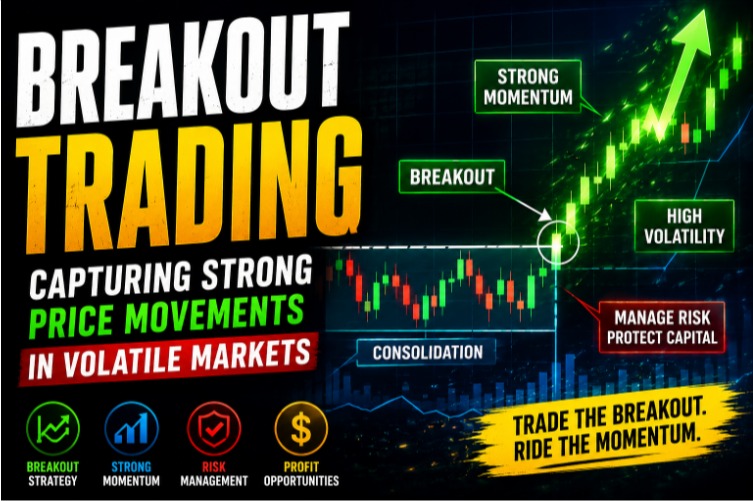
Breakout trading is one of the most effective techniques within a volatile market forex strategy because high volatility often leads to powerful price movements beyond important support and resistance levels. Breakouts occur when the market escapes a consolidation phase and begins a new directional move with strong momentum. Traders should first identify key price zones, including horizontal support and resistance, trendlines, chart patterns, and consolidation ranges. Rather than entering immediately after a level is broken, experienced traders wait for confirmation such as a strong candle close, increased momentum, or a successful retest of the breakout level. This confirmation helps reduce the risk of false breakouts, which are common during volatile trading sessions. Breakout trading works particularly well during the London and New York trading sessions, where liquidity and institutional participation are highest. Combining breakout entries with proper stop-loss placement and realistic profit targets enables traders to capitalize on sustained trends while minimizing unnecessary risk. When executed with patience and discipline, breakout trading can become one of the most profitable components of a volatile market Forex strategy
News Trading: Profiting from High-Impact Economic Events
News trading plays a significant role in a successful volatile market forex strategy because major economic announcements often trigger sharp and rapid movements in currency prices. Events such as interest rate decisions, Non-Farm Payrolls (NFP), inflation reports, GDP releases, employment data, and central bank speeches can create exceptional trading opportunities within minutes. Before entering any news trade, traders should monitor an economic calendar to identify upcoming high-impact events and understand market expectations. Instead of trying to predict whether the news will be positive or negative, many professional traders focus on the market’s reaction after the announcement, as actual price movement often differs from expectations. During major news releases, spreads may widen and slippage can occur, making proper risk management essential. Waiting for the initial volatility to settle before entering a trade often provides clearer direction and reduces unnecessary risk. Combining technical analysis with fundamental news interpretation allows traders to make more informed decisions while avoiding emotional reactions. By preparing in advance and following a disciplined approach, news trading can become a valuable part of a volatile market Forex strategy.
.Volatility Analysis: Understanding Market Conditions Before Trading
Volatility analysis is a crucial element of every volatile market forex strategy because it helps traders understand how aggressively the market is moving and whether current conditions are suitable for trading. Volatility measures the speed and size of price movements over a given period, allowing traders to adjust their strategies accordingly. During periods of high volatility, wider stop-loss levels and smaller position sizes are often necessary to accommodate larger price swings, while low-volatility environments may require different trading techniques. Traders commonly use tools such as the Average True Range (ATR), Bollinger Bands, historical price ranges, and session analysis to evaluate current market volatility. Monitoring the economic calendar also helps anticipate periods when volatility is expected to increase significantly. Understanding volatility enables traders to choose appropriate entry points, manage risk effectively, and set realistic profit targets based on prevailing market conditions. Rather than applying the same trading approach every day, successful traders adapt their strategies to changing levels of volatility, improving both consistency and long-term profitability. Mastering volatility analysis allows traders to identify higher-probability opportunities while avoiding unnecessary exposure during unpredictable market conditions.
Conclusion
A well-planned volatile market forex strategy can help traders turn rapid price movements into profitable opportunities while protecting their trading capital. Although volatile markets often appear unpredictable, they usually follow recognizable patterns driven by economic news, market sentiment, institutional activity, and technical price action. Traders who understand these dynamics are better equipped to make informed decisions rather than reacting emotionally to sudden market fluctuations. Success in volatile conditions does not come from taking more trades; it comes from waiting patiently for high-quality setups that align with a well-defined trading plan.
Throughout this guide, we explored the key elements of a successful volatile market Forex strategy. Risk management serves as the foundation by ensuring that losses remain controlled through proper position sizing, stop-loss placement, and disciplined money management. Breakout trading allows traders to capitalize on powerful momentum when price moves beyond significant support and resistance levels. News trading provides opportunities to benefit from high-impact economic events while emphasizing the importance of preparation and understanding market expectations. Finally, volatility analysis helps traders assess current market conditions and adjust their strategies to suit changing levels of price movement, improving both trade selection and overall consistency.
One of the biggest mistakes traders make during volatile market conditions is allowing emotions to influence their decisions. Fear of missing out often leads to chasing trades, while panic after a loss can result in revenge trading or abandoning a trading plan. Successful Forex traders understand that discipline is more valuable than excitement. They accept that not every opportunity needs to be traded and that preserving capital is just as important as generating profits. Maintaining patience, following predefined rules, and reviewing trading performance regularly are habits that separate consistently profitable traders from those who struggle over the long term.
Ultimately, mastering a volatile market forex strategy is about balancing opportunity with discipline. High volatility creates the potential for larger profits, but it also demands greater responsibility in managing risk. By combining sound risk management, effective breakout trading, strategic news trading, and accurate volatility analysis, traders can develop a structured approach that performs consistently across different market conditions. Instead of fearing market volatility, traders who are well-prepared can use it to their advantage and build a sustainable path toward long-term success in the Forex market.