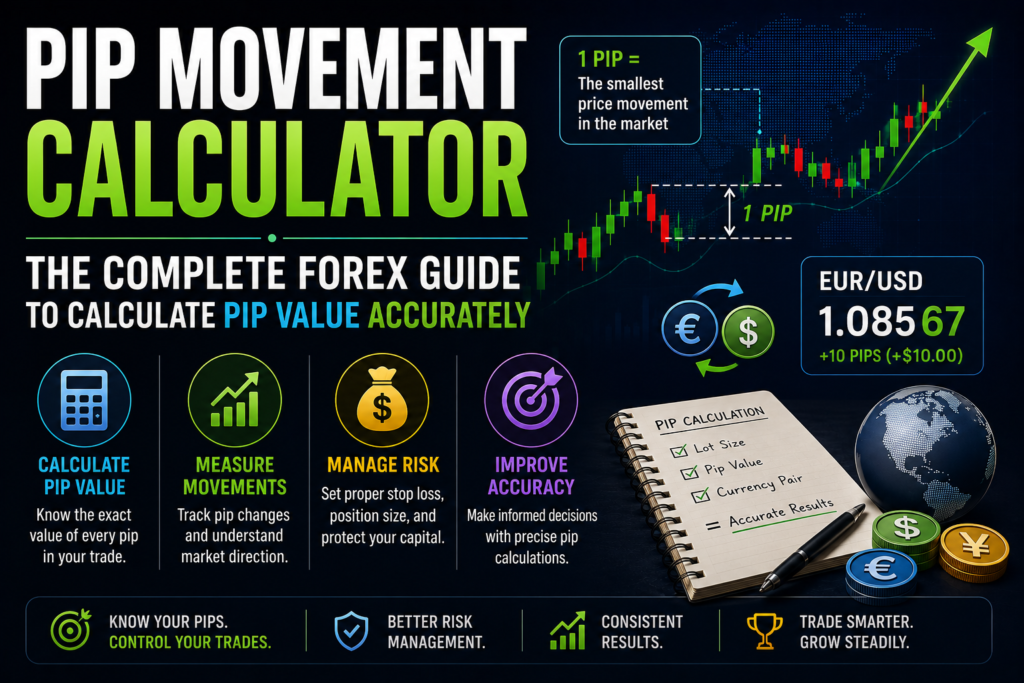

Understanding the Importance of Forex Position Sizing
Success in forex trading is not determined solely by finding profitable entry and exit points. Many traders spend countless hours studying charts, indicators, and market trends while overlooking one of the most critical aspects of trading success: forex position sizing. Position sizing determines how much capital is allocated to each trade and plays a major role in preserving trading capital over the long term.
A trader may have an excellent strategy, but without proper forex position sizing, even a series of small mistakes can significantly damage an account. Position sizing helps control risk exposure, maintain consistency, and protect traders from emotional decision-making during periods of market volatility.
Professional traders often consider forex position sizing to be one of the most important elements of a successful trading plan because it directly influences both profitability and account survival. Understanding how to size positions correctly allows traders to remain active in the market while minimizing unnecessary risk.
By integrating sound position sizing principles into a trading strategy, traders can create a more sustainable path toward long-term success.
What Is Forex Position Sizing?
At its core, forex position sizing refers to determining the appropriate trade size for a specific market opportunity. Rather than entering every trade with the same volume, traders adjust position size based on account size, risk tolerance, and market conditions.
The purpose of forex position sizing is to ensure that no single trade has the potential to cause significant damage to the trading account. Even highly successful traders experience losing trades, making proper position sizing essential for long-term survival.
A structured approach to forex position sizing allows traders to manage uncertainty while maintaining discipline. Instead of making emotional decisions, traders rely on predetermined rules that guide risk exposure.
When combined with effective market analysis, position sizing becomes a powerful tool for improving consistency and reducing unnecessary losses.
The Relationship Between Risk Management and Position Sizing
One of the primary goals of risk management is to protect trading capital. Position sizing serves as the practical implementation of this objective.
Without proper risk management, traders may expose themselves to excessive losses during unfavorable market conditions. Even a strong trading strategy can fail if position sizes are too large relative to account equity.
Effective risk management begins with determining how much capital can be risked on a single trade. This information is then used to calculate the appropriate position size based on stop-loss distance and market conditions.
Professional traders view risk management as a continuous process that extends beyond individual trades. Proper position sizing helps ensure that temporary setbacks do not threaten long-term trading goals.
Why Lot Size Calculation Matters
An essential component of forex position sizing is accurate lot size calculation. Forex positions are measured in lots, and understanding how lot sizes affect risk exposure is critical for successful trading.
A standard lot represents 100,000 currency units, while mini lots and micro lots represent smaller amounts. Choosing the correct lot size determines the financial impact of market movements on the trading account.
The process of lot size calculation involves evaluating account balance, risk percentage, stop-loss distance, and currency pair characteristics. This calculation ensures that risk remains consistent across different trades.
Accurate lot size calculation allows traders to maintain control over risk exposure while adapting to varying market conditions. Without proper calculations, traders may unintentionally expose themselves to greater risk than intended.
Money Management as the Foundation of Trading Success
Strong money management is often what separates successful traders from those who struggle to achieve consistent results. While market analysis determines where to trade, money management determines how much to trade.
The purpose of money management is to protect capital while maximizing long-term growth potential. Effective money management strategies help traders survive inevitable losing streaks and remain focused on their overall objectives.
Many experienced traders prioritize money management above all other aspects of trading because capital preservation is essential for future opportunities. Even the most profitable trading systems can fail without proper financial discipline.
By incorporating forex position sizing into a comprehensive money management plan, traders can reduce emotional stress and improve overall performance.
Calculating Risk Before Entering a Trade
Before placing any trade, traders should evaluate potential risk relative to account size. This process forms the foundation of both risk management and forex position sizing.
The first step involves determining the percentage of account equity that will be risked on a single trade. Many professional traders risk between one and two percent of their account balance per trade.
Once risk tolerance has been established, lot size calculation can be performed using stop-loss distance and currency pair value. This ensures that losses remain within acceptable limits if the trade does not perform as expected.
Combining accurate calculations with strong money management practices creates a disciplined framework that supports long-term success.
Trading Discipline and Position Sizing
Successful trading requires more than technical knowledge and market analysis. It also demands consistent trading discipline.
Many traders understand the principles of forex position sizing but fail to apply them consistently. Emotional decisions often lead traders to increase position sizes after losses or during periods of overconfidence.
Strong trading discipline helps traders follow established risk rules regardless of market conditions or recent performance. This consistency reduces emotional decision-making and improves long-term results.
The connection between trading discipline and risk management is particularly important because disciplined traders are more likely to protect capital during challenging market environments.
The Impact of Position Sizing on Account Growth
One of the most significant benefits of proper forex position sizing is its ability to support steady account growth while limiting downside risk.
Traders who use excessive leverage often experience dramatic fluctuations in account equity. While large position sizes may generate substantial profits, they also increase the likelihood of severe losses.
A structured approach to money management encourages gradual growth by maintaining consistent risk levels. This approach allows traders to benefit from compounding returns without exposing themselves to unnecessary danger.
Proper lot size calculation ensures that position sizes increase gradually as account balances grow, creating a sustainable path toward profitability.
Common Position Sizing Mistakes

Many traders make avoidable mistakes when implementing forex position sizing strategies. One of the most common errors is risking too much capital on a single trade.
Another mistake involves ignoring lot size calculation entirely and selecting trade sizes based on intuition rather than objective analysis. This often leads to inconsistent risk exposure and unpredictable results.
Poor risk management practices can also result from moving stop-loss orders or increasing position sizes after losses in an attempt to recover quickly. Such behavior frequently causes larger losses and emotional stress.
Maintaining strong trading discipline helps traders avoid these common mistakes and remain focused on long-term success.
Position Sizing Across Different Market Conditions
Market conditions constantly change, requiring traders to adapt their forex position sizing strategies accordingly.
During periods of high volatility, wider stop-loss levels may be necessary. This often requires smaller position sizes to maintain consistent risk exposure. Conversely, lower volatility environments may allow for larger positions while maintaining the same level of risk.
The flexibility provided by accurate lot size calculation enables traders to adjust position sizes according to market conditions without compromising their overall risk management framework.
Combining adaptability with strong money management practices allows traders to remain effective across a variety of market environments.
Building a Comprehensive Money Management Plan
A successful trading plan should include detailed guidelines regarding money management, risk exposure, and position sizing.
The first step is establishing clear risk limits for individual trades and overall account exposure. These limits provide structure and support effective risk management decisions.
Next, traders should develop a standardized approach to lot size calculation that can be applied consistently across different currency pairs and market conditions.
Finally, maintaining strong trading discipline ensures that the plan is followed regardless of emotions or market fluctuations. Consistency is often the key factor that separates profitable traders from unsuccessful ones.
How Professional Traders Use Position Sizing
Professional traders understand that preserving capital is essential for long-term success. As a result, they place significant emphasis on forex position sizing and risk management.
Rather than focusing exclusively on profit potential, professionals evaluate each trade in terms of risk-adjusted returns. This perspective encourages disciplined decision-making and consistent execution.
Accurate lot size calculation allows professional traders to maintain predictable risk exposure across all market conditions. Combined with strong money management, this approach helps protect capital while supporting steady growth.
The consistency created by proper position sizing contributes directly to improved trading discipline and long-term profitability.
Conclusion
Mastering forex position sizing is one of the most important steps toward becoming a consistently profitable trader. While market analysis helps identify opportunities, position sizing determines how those opportunities affect overall account performance.
Strong risk management practices protect trading capital, while accurate lot size calculation ensures that exposure remains appropriate for each trade. Effective money management supports long-term growth, and consistent trading discipline ensures that risk rules are followed regardless of market conditions.
By combining these principles into a structured trading plan, traders can improve consistency, reduce emotional decision-making, and build a more sustainable approach to forex trading. Ultimately, successful forex position sizing provides the foundation upon which long-term trading success is built.