

Introduction
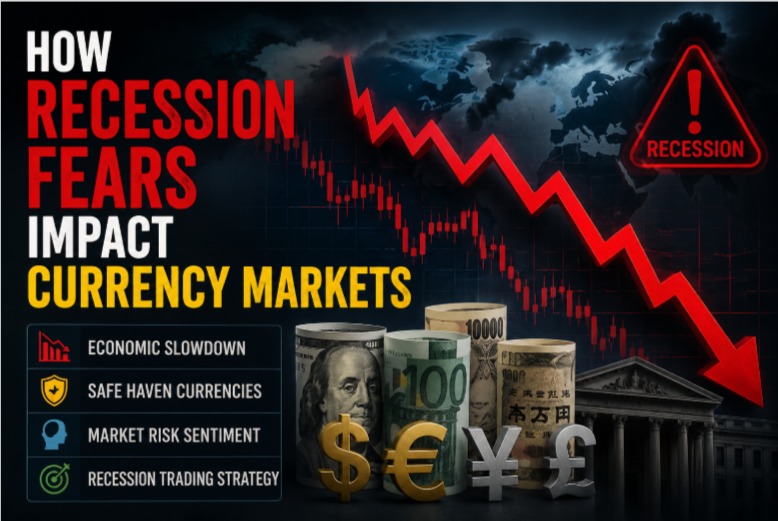
Global economies move in cycles, and every cycle brings a different level of uncertainty for businesses, investors, and governments. One of the most discussed concerns during uncertain periods is the fear of recession and its effect on financial markets. Currency markets are often among the first areas to react because traders continuously monitor economic data, interest rates, inflation, and geopolitical events. Understanding how recession fears influence forex trading can help investors make informed decisions and reduce unnecessary risks.
When investors anticipate a recession, they usually shift their investments toward safer assets and currencies. This shift directly affects exchange rates, global trade, and investor confidence. The relationship between a recession market and currency fluctuations is extremely important because forex markets are highly sensitive to economic conditions. Traders who understand the connection between a recession market and investor behavior can identify opportunities while protecting their capital.
At the same time, an economic slowdown forex environment creates volatility in currency pairs across developed and emerging economies. During an economic slowdown forex situation, investors often avoid high-risk currencies and move toward safer alternatives. This behavior is closely connected with safe haven currencies, which tend to gain strength during uncertain economic periods.
Another major factor influencing currency movement is market risk sentiment. Positive or negative market risk sentiment can quickly shift exchange rates within minutes. Traders who carefully study market risk sentiment often gain a better understanding of how the forex market may react during recessions. In addition, building a proper recession trading strategy becomes essential for traders who want to survive and profit during difficult economic conditions.
Understanding Recession and Currency Markets
What Is a Recession?
A recession is generally defined as a period of declining economic activity that lasts for several months or even years. It often includes reduced consumer spending, lower business investment, increasing unemployment, and declining industrial production. When economies weaken, investor confidence falls, creating uncertainty across financial markets.
A recession market usually creates fear among investors because companies earn lower profits and economic growth slows significantly. In a recession market, central banks may reduce interest rates to stimulate spending and borrowing. These policy decisions directly affect the value of currencies in international forex markets.
Currency markets react quickly because traders continuously price in future economic expectations. During an economic slowdown forex traders focus heavily on economic reports such as GDP growth, inflation data, employment numbers, and interest rate decisions. These indicators help determine whether a country’s currency may strengthen or weaken.
Why Currency Markets React Strongly During Recession Fears
Forex markets operate based on expectations and investor confidence. When traders believe that a recession may occur, they adjust their portfolios immediately. This creates rapid changes in exchange rates and increases volatility.
The connection between a recession market and currency values becomes stronger when central banks intervene. For example, if a central bank cuts interest rates aggressively during a recession market, the domestic currency may weaken because investors seek higher returns elsewhere.
An economic slowdown forex environment also impacts international trade. Countries that rely heavily on exports may experience weaker currencies because reduced global demand lowers economic activity. On the other hand, countries with strong financial systems may see their currencies strengthen as investors search for stability.
The Role of Safe Haven Currencies During Recession
What Are Safe Haven Currencies?
Safe haven currencies are currencies that investors trust during periods of financial uncertainty and economic stress. These currencies typically belong to countries with stable economies, strong financial institutions, low debt levels, and political stability.
Common safe haven currencies include the US Dollar, Swiss Franc, and Japanese Yen. Investors often buy these currencies when global markets become unstable. During periods of economic slowdown forex trading activity usually shifts toward these stable currencies.
The demand for safe haven currencies increases significantly when recession fears grow. Investors want to protect their capital from major losses, so they move away from risky assets and toward currencies considered safer.
Why Investors Prefer Safe Haven Currencies
There are several reasons why investors choose safe haven currencies during uncertain times:
Stability and Confidence
Countries associated with safe haven currencies often have strong economies and trusted banking systems. Investors believe these currencies are less likely to experience extreme volatility during recessions.
Liquidity in Global Markets
Another reason safe haven currencies are attractive is their high liquidity. Investors can easily buy and sell these currencies in large volumes without major price disruptions.
Protection Against Economic Uncertainty
During an economic slowdown forex traders often avoid currencies from emerging markets because they are more vulnerable to economic shocks. Safe haven currencies provide a sense of security during periods of uncertainty.
The movement toward safe haven currencies is heavily influenced by market risk sentiment. Negative market risk sentiment increases investor demand for safe assets and strengthens currencies viewed as stable.
Market Risk Sentiment and Currency Volatility

Understanding Market Risk Sentiment
Market risk sentiment refers to the overall attitude of investors toward risk in financial markets. It is usually categorized into two conditions: risk-on and risk-off.
In a risk-on environment, investors are willing to invest in higher-risk assets because they feel optimistic about economic growth. In a risk-off environment, investors avoid risky investments and move toward safer assets.
Market risk sentiment plays a major role in forex trading because currency values are closely connected to investor confidence. During recession fears, negative market risk sentiment dominates global financial markets.
When market risk sentiment turns negative, traders often sell currencies associated with economic growth and buy safe haven currencies instead. This creates significant volatility in forex markets.
Factors That Influence Market Risk Sentiment
Several factors can impact market risk sentiment during recession periods:
Economic Data Releases
Weak employment reports, declining GDP growth, and poor manufacturing data can reduce investor confidence. These indicators often signal the possibility of a recession market.
Central Bank Policies
Interest rate cuts and stimulus measures can influence market risk sentiment. While some investors view stimulus positively, others see it as confirmation of economic weakness.
Geopolitical Events
Wars, political instability, and global trade conflicts can increase uncertainty and negatively impact market risk sentiment.
Inflation and Consumer Spending
Rising inflation combined with weak consumer spending often creates fears of an economic slowdown forex traders carefully monitor.
How Central Banks Influence Currency Markets During Recession
Interest Rate Decisions
Central banks play a critical role during recessions because they manage monetary policy to stabilize the economy. One of the most common tools is adjusting interest rates.
When economies weaken, central banks often reduce interest rates to encourage borrowing and spending. However, lower interest rates may weaken a country’s currency because investors receive lower returns on investments.
In a recession market, central bank actions become one of the most important drivers of currency movement. Traders closely analyze statements from central bank officials for clues about future policy changes.
Quantitative Easing and Stimulus Measures
During severe recessions, central banks may introduce quantitative easing programs. These programs increase money supply and support financial markets.
Although stimulus measures can help economies recover, they may also weaken currencies over time. This creates additional volatility in an economic slowdown forex environment.
Safe haven currencies may strengthen when investors believe other economies are struggling more severely. Once again, market risk sentiment determines how traders react to central bank announcements.
Building a Successful Recession Trading Strategy
Importance of Risk Management
A strong recession trading strategy focuses heavily on risk management because recession periods create unpredictable market conditions. Traders should avoid excessive leverage and maintain disciplined trading practices.
One of the most important aspects of a recession trading strategy is setting stop-loss orders. Stop-loss levels help limit potential losses during sudden market movements.
Diversification is another essential component of a recession trading strategy. Traders should avoid placing all investments into a single currency pair or market.
Focus on Fundamental Analysis
Fundamental analysis becomes extremely important during recessions. Traders need to monitor:
- Interest rate decisions
- Inflation reports
- Employment data
- GDP growth figures
- Central bank speeches
A well-planned recession trading strategy combines technical analysis with fundamental analysis to identify high-probability trading opportunities.
Trading Safe Haven Currencies
Many traders include safe haven currencies in their recession trading strategy because these currencies often perform well during uncertain economic conditions.
For example, traders may buy the US Dollar or Japanese Yen when global market risk sentiment becomes negative. Understanding shifts in market risk sentiment helps traders identify potential safe-haven opportunities.
Managing Volatility in Forex Markets
Volatility can create both risks and opportunities. During an economic slowdown forex traders often experience wider price swings and unpredictable market reactions.
To manage volatility effectively, traders should:
- Reduce position sizes
- Use stop-loss protection
- Avoid emotional trading decisions
- Monitor global economic developments
- Follow market risk sentiment carefully
A disciplined recession trading strategy helps traders remain calm during uncertain periods.
Historical Examples of Recession Impact on Currency Markets

The 2008 Global Financial Crisis
The 2008 financial crisis is one of the clearest examples of how a recession market can impact global currencies. During the crisis, investors rushed toward safe haven currencies such as the US Dollar and Japanese Yen.
Negative market risk sentiment dominated global markets as banks collapsed and stock markets declined sharply. The crisis also demonstrated how an economic slowdown forex environment can create extreme volatility across multiple currency pairs.
Central banks around the world reduced interest rates and launched stimulus programs to stabilize economies. These actions significantly influenced currency values and investor behavior.
The COVID-19 Economic Shock
The COVID-19 pandemic created another major recession market that disrupted global financial systems. Lockdowns, reduced consumer spending, and supply chain disruptions created economic uncertainty worldwide.
During this period, safe haven currencies gained strength as investors searched for stability. Market risk sentiment changed rapidly as governments introduced stimulus packages and central banks implemented emergency policies.
The pandemic also highlighted the importance of having a flexible recession trading strategy capable of adapting to sudden market changes.
Long-Term Effects of Recession on Forex Markets
Changes in Investor Behavior
Recession periods often permanently change how investors approach risk. Many traders become more cautious after experiencing large market declines.
In an economic slowdown forex environment, investors may prioritize stability over aggressive growth opportunities. This shift can influence currency trends for years after a recession ends.
Impact on Emerging Market Currencies
Emerging market currencies are often more vulnerable during recession periods because these economies rely heavily on foreign investment and exports.
When market risk sentiment becomes negative, investors frequently withdraw capital from emerging markets and move toward safe haven currencies instead.
Increased Importance of Economic Data
Recessions increase the importance of economic indicators in forex trading. Traders pay closer attention to inflation, unemployment, and central bank policies when evaluating currency strength.
A recession trading strategy that incorporates economic analysis becomes increasingly valuable during uncertain periods.
Conclusion
Recession fears have a powerful influence on global currency markets because forex trading is deeply connected to economic expectations and investor confidence. A recession market creates uncertainty that encourages investors to move away from risky assets and toward stability.
During an economic slowdown forex markets become highly volatile as traders react to changing economic conditions, central bank decisions, and geopolitical developments. Safe haven currencies often strengthen during these periods because investors view them as reliable stores of value.
At the same time, market risk sentiment remains one of the most important factors influencing currency movement. Positive sentiment encourages risk-taking, while negative sentiment increases demand for safer investments.
For traders and investors, developing a disciplined recession trading strategy is essential for managing risks and identifying opportunities during uncertain economic conditions. By understanding the relationship between recession fears, safe haven currencies, and market risk sentiment, traders can make more informed decisions and navigate volatile forex markets with greater confidence.
FAQs
What happens to currency markets during a recession?
During a recession market, currency values fluctuate significantly as investors react to economic uncertainty, central bank actions, and changes in investor confidence.
Why do traders prefer safe haven currencies during recessions?
Investors prefer safe haven currencies because they are associated with stable economies, strong financial systems, and lower levels of risk during uncertain times.
How does market risk sentiment affect forex trading?
Market risk sentiment influences whether investors choose risky or safe assets. Negative market risk sentiment usually increases demand for stable currencies.
What is the importance of a recession trading strategy?
A recession trading strategy helps traders manage volatility, reduce losses, and identify trading opportunities during economic downturns.
How does an economic slowdown affect forex markets?
An economic slowdown forex environment often creates volatility, weakens growth-sensitive currencies, and increases demand for safer currencies.
Which currencies usually perform well during recessions?
Safe haven currencies such as the US Dollar, Swiss Franc, and Japanese Yen often perform well during recession periods because investors seek stability.
Can traders profit during a recession market?
Yes, traders can profit during a recession market if they use proper risk management, follow market risk sentiment, and implement a disciplined recession trading strategy.