Introduction
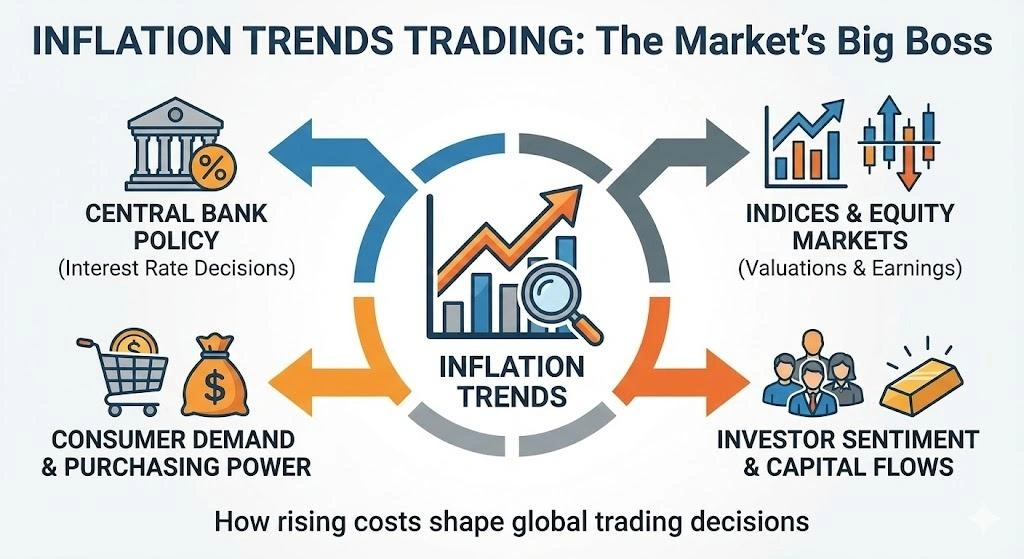
Over time inflation has become the big boss; it’s one of the important factors that investors are worried about. It doesn’t matter what you trade (stocks or currencies), it’s all reacting to how the cost of living is rising and how the central banks are handling it. If you don’t understand how inflation-driven trading works, you’re trading blindly and missing out on the core part of market analysis. And it’s clear how inflation is influencing bank rates, corporate earnings, consumer demand, and investor sentiment. This blog explores how inflation trends impact trading decisions, how indices react to inflation data, and what traders should prepare for as we approach the inflation forecast 2026.
Understanding Inflation and Why It Matters for Traders
Inflation refers to the increase in price of goods and services, while the people are getting the same paychecks which slow down the economic growth. And to a certain extent like 2% the inflation is considered healthy, but when no one knows how high the price will go it creates uncertainty across markets.
Inflation matters to traders because it:
- It influences the central banks decision on interest rates
- It affects the purchasing power of the company to maintain the margin
- High inflation scares the investors, and make them look for safer options
- Inflation cause big investors to move their money to gold or real estates
Inflation Trends Trading vs One-Time Inflation Events
Many traders make the mistake of reacting to a single inflation report. Professionals do not react to one day’s number, they look at the 6 month average to analyze better. A consistent upward or downward trend in inflation has a far greater impact than a one-month spike.
Key distinctions include:
- Don’t let one bad news distract you from long-term direction
- The Market always guess the results before, so you can the big move when result is different from expectation
- Pros look at the past headlines to figure out the bank’s reaction.
Understanding this difference will help you avoid emotional overreactions.’
How Inflation Impacts Central Bank Policy
Central banks use inflation as a guide to decide the interest rates. When inflation rises beyond the limit, the central bank increases the interest rates to put it under control. And if the inflation cools down then the banks lower the rates to encourage the public and get the economy moving again.
Inflation influences central banks through:
- Interest rate hikes or cuts
- Balance sheet expansion or contraction
- Forward guidance and market communication
Traders closely monitor inflation trends to anticipate policy shifts before they occur.
Inflation Effect on Indices
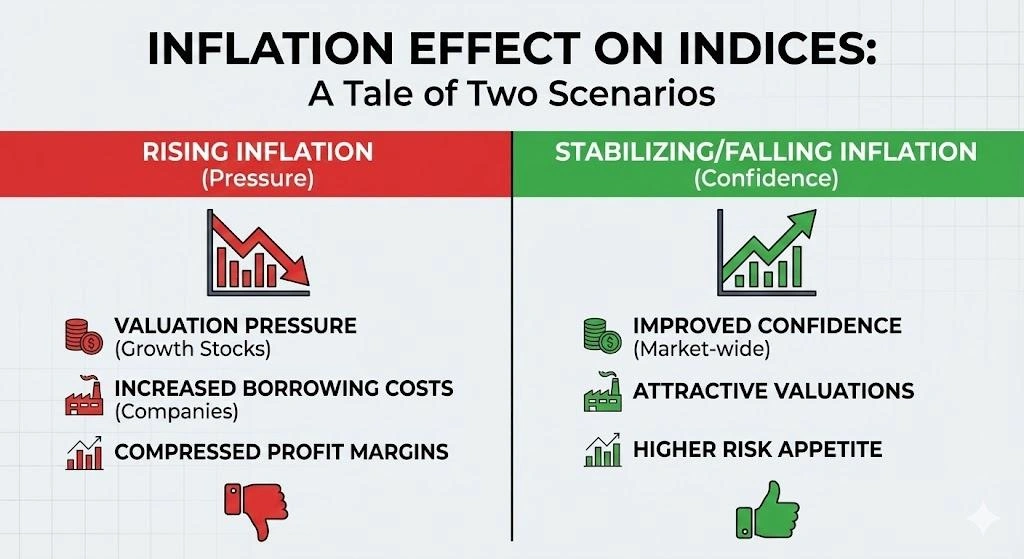
Equity indices are highly sensitive to inflation dynamics. The inflation effect on indices depends on the stage of the economic cycle and how inflation interacts with interest rates.
When inflation rises sharply:
- Growing sectors faces the valuation pressure
- Company’s interest payment amount increase
- The company’s profit margin decreases.
When inflation stabilizes or declines:
- Equity markets regains its strength, investors stop panicking
- With low inflation, the companies valuation becomes more attractive
- Investors are now willing to take risk and trade
Understanding the inflation effect on indices will help you align your strategies with broader market concepts.
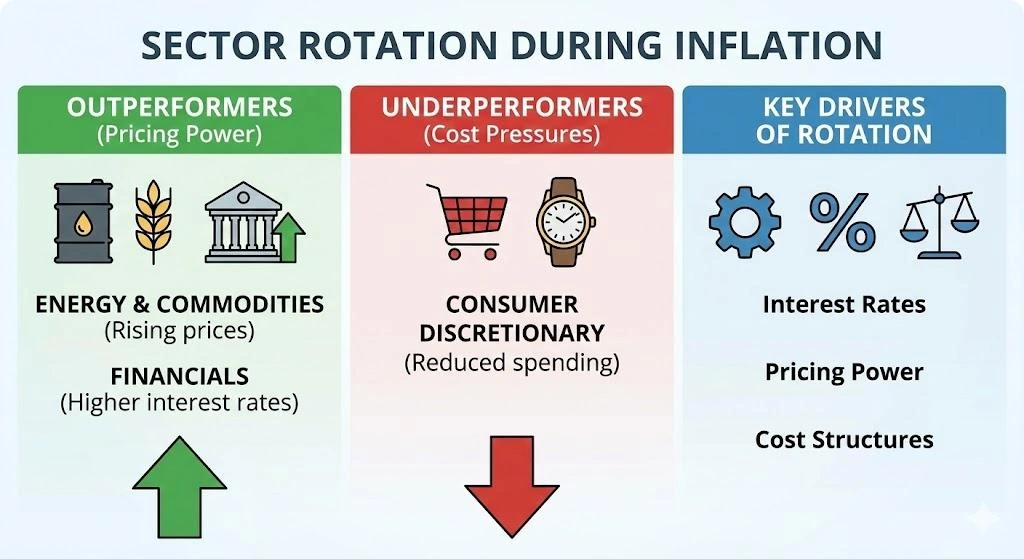
Sector Rotation During Inflationary Periods
Inflation does not impact all sectors equally. During inflationary cycles, capital often rotates between sectors depending on pricing power and cost structures. This rotation is a key component of inflation trends trading.
Common sector behaviors include:
- Energy and commodities sectors earns profits when prices rises
- Discretionary companies (non-essential) suffers the most, as public’s preferences changes during inflation
- Financials institutes gets benefits as higher interest rates increases their profit margin
Inflation and Market Sentiment
Inflation is the ultimate economic thermometer that tells whether the economy is healthy or not. When the prices keep on rising showing no sign of stopping, investors get nervous and defensive. But when price finally starts to settle down it improves the markets mood and restores investors confidence.
Inflation-driven sentiment changes include:
- Risk-off behavior during uncontrolled inflation
- Risk-on behavior when inflation moderates
- Increased volatility around inflation data releases
Reading sentiment alongside inflation trends improves trade timing.
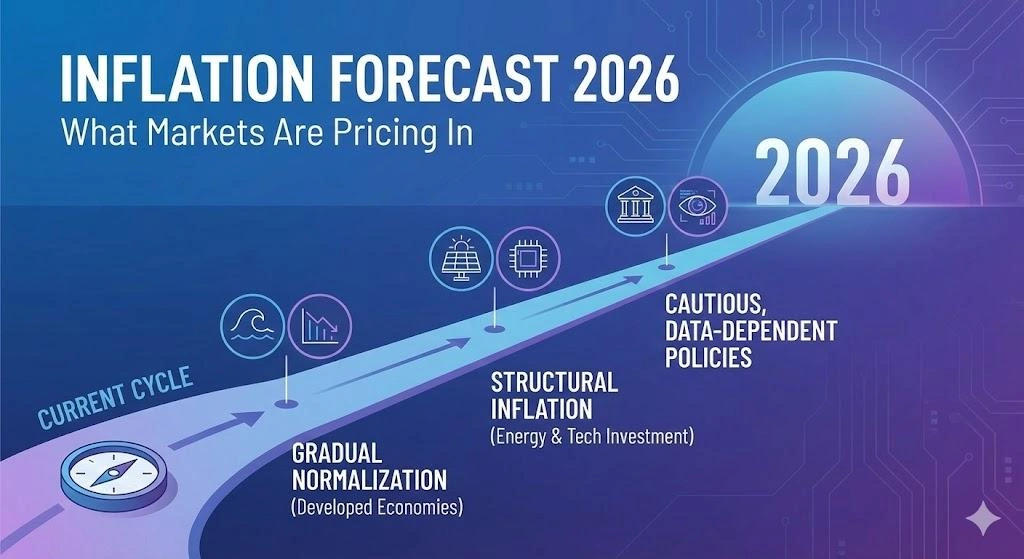
Inflation Forecast 2026: What Markets Are Pricing In
As we’re just days away from 2026 the market seems more focused toward finding the reasons behind inflation rather than obsessing over it. These include demographic shifts, supply chain restructuring, energy transition costs, and fiscal policy expansion.
Key themes influencing the inflation forecast 2026:
- Now the inflation is slowly shifting back to the 2% goal
- Building the future is expensive, but it also creates jobs and demand keeping a balance in the economy
- Central banks are being cautious, they’re staying data-dependent and extra careful.
How Traders Use Inflation Data in Market Analysis
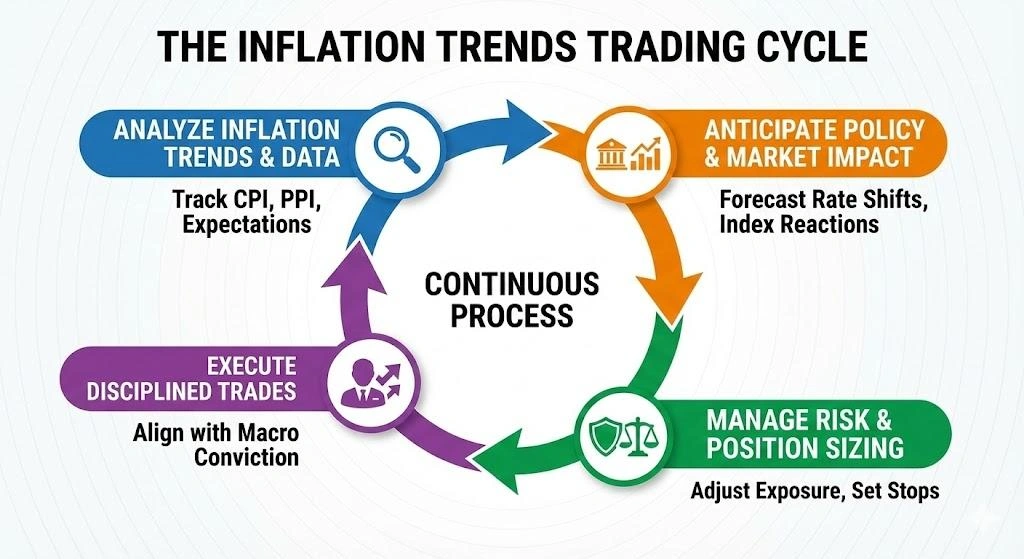
Professional traders don’t just sit watching charts, they’re looking at the macro framework. They are evaluating how inflation influences interest rates and bonds.
A structured inflation trends trading approach includes:
- Tracking CPI, PPI, and inflation expectations
- Monitoring bond yields and real interest rates
- Observing index reactions to inflation surprises
This approach reduces noise and improves consistency.
Short-Term vs Long-Term Inflation Trading Strategies
Inflation affects markets differently across timeframes. Short-term traders may focus on volatility around data releases, while long-term traders position around structural inflation trends.
Key distinctions:
- A short-term chaos and volatility on the release day
- It’s on the basis of 6-18 months with central banks forming new policies
- Long-term strategies changes how you invest in gold and real estates.
Understanding timeframe alignment is essential in inflation trends trading.
Common Mistakes Traders Make With Inflation Analysis
Despite its importance, inflation is often misunderstood.
Common mistakes include:
- Trading during inflation without proper analysing
- Ignoring initial expectations when entering the market
- Overreacting to single data points
- Separating inflation from interest rate analysis
Avoiding these mistakes will help you in using inflation as a strategic tool rather than a reactive trigger.
Inflation Trends Trading and Risk Management
Inflation-driven markets tend to experience elevated volatility. When people are worried about the price of goods, they trade with more fear and more aggression. Prices will zig-zag much more than usual. If you don’t protect yourself, you will get wiped out by a random price swing.
Risk management principles include:
- Adjusting position sizes around major inflation releases
- Avoiding excessive trading during policy uncertainty
- You stop-lose shouldn’t be random, it should be well panned
Strong risk control enhances long-term success in inflation trends trading.
Conclusion
By now the importance of inflation should be clear to you. It is a crucial factor in predicting central bank policies and determining market sentiment when the cost of living increases. As we move to 2026, traders who know the influence of inflation will be better equipped to handle the market volatility and identify sustainable opportunities.
For better understanding on inflation-driven markets, visit InsightfulTrade’s website. Here the experts can help you align inflation with trading strategies to make correct trading decisions and manage risk effectively.
FAQs
- What is inflation trends trading?
It is the analysis of inflation direction and persistence to guide trading decisions. - How does inflation affect stock indices?
Inflation influences valuations, earnings, and interest rates, which impact indices. - Is inflation always bad for markets?
No, moderate inflation can support growth, while extreme inflation creates risk. - Why is the inflation forecast 2026 important?
It reflects long-term structural expectations shaping market positioning today. - Should beginners trade directly on inflation data?
Beginners should focus on trend context rather than headline reactions.
Author: Kumkum Chandak
Experience: 3+ Years in Trading Research & Market Content Strategy
Kumkum Chandak is a trading content strategist and market research writer who specializes in simplifying technical analysis, trading tools, and strategy-driven educational content. Her work is optimized for EEAT, accuracy, and user intent, ensuring every article delivers practical insights for traders of all levels.
Risk Disclaimer:
All content is strictly educational and not financial advice. Trading involves substantial risk. Always perform your own analysis or consult a professional advisor.
Last Updated: 21 December 2025