Introduction
In financial markets when we see prices moving and creating new highs and lows we think it’s due to some fundamental news or chart patterns. However, human behavior also plays a large role. Many times the market moves according to what we feel, feelings like fear, greed and optimism, can also drive the market beyond their fundamentals. And to be a successful trader, mastering market sentiment analysis is essential. By understanding it you can prepare yourself better and predict the market reaction before it takes place. In this blog, we explore various methods and indicators you can use to read market sentiment correctly, and how to make it a part of your professional routine.

What Is Market Sentiment Analysis?
To really understand the market, you have to look past the data and check its pulse. That’s what sentiment analysis is: a look into the psychological state of the traders. Instead of focusing on ‘how much,’ sentiment focuses on ‘why’—is the crowd acting on greed or fear?
Sentiment can be:
- Bullish, which means everyone is optimistic and are expecting rise in price
- Bearish, the mood is sour and fear is causing traders to pull out their money
- Neutral, everyone is confused and lacks direction
Understanding these conditions will help you align your strategies with prevailing market behavior.
Why Market Sentiment Matters in Trading
Have you ever seen the market get terrible news, only for the price to go up? I know it does not make sense. Trading isn’t about what is happening right now—it’s about whether what happened was better or worse than everyone expected.
Key reasons sentiment matters include:
- It helps in identifying the overcrowded stocks
- It highlights the chance of a potential reversal
- It explains why the market is acting crazy
By keeping this case in your mind you can avoid trading in FOMO, the fear of missing out.
The Psychology Behind Market Sentiment
Underneath all the fancy graphs, the market is really just a reflection of our own human thoughts. We don’t like logical machines; we act like people. When things get uncertain, we get scared and run for the exits (panic selling). When things look too good to be true, we get overconfident and take risks we probably shouldn’t (greed).
Common psychological drivers include:
- We often jump to trade in FOMO
- Cause it hurt to admit we lead a small loss to big one
- Ignoring the markets signal to stay away
Effective market sentiment analysis requires recognizing these emotional patterns rather than becoming part of them.
Fear and Greed: The Core of Sentiment
At its core, market sentiment fluctuates between fear and greed. These emotions create cycles that repeat across markets and timeframes.
Fear-Dominated Markets
When fear is high:
- Volatility increases
- Safe-haven assets gain demand
- Risk assets experience selling pressure
Fear-driven markets often create opportunities for contrarian traders who understand sentiment extremes.
Greed-Dominated Markets
When greed dominates:
- Price trends accelerate
- Valuations become stretched
- Risk-taking increases
Understanding where the market sits on the fear-greed spectrum is a key part of market sentiment analysis.

Fear Greed Index Explained
One of the most widely used sentiment indicators is the fear greed index. It’s not a single tool; it’s a combination of several other measures, like how fast the price is moving, and whether people are making exit or taking risk and together it gives one result.
The index typically ranges from:
- Extreme Fear, indicating prices hit the floor
- Neutral, suggesting everything is normal and calm
- Extreme Greed, signals toward FOMO
Sentiment Tools Trading: Key Indicators Used by Traders
Professional traders rely on multiple sentiment tools to gain a broader perspective. These sentiment tools trading methods help quantify what is otherwise subjective.
Common sentiment tools include:
- Commitment of Traders (COT) reports
- Put/Call ratios in options markets
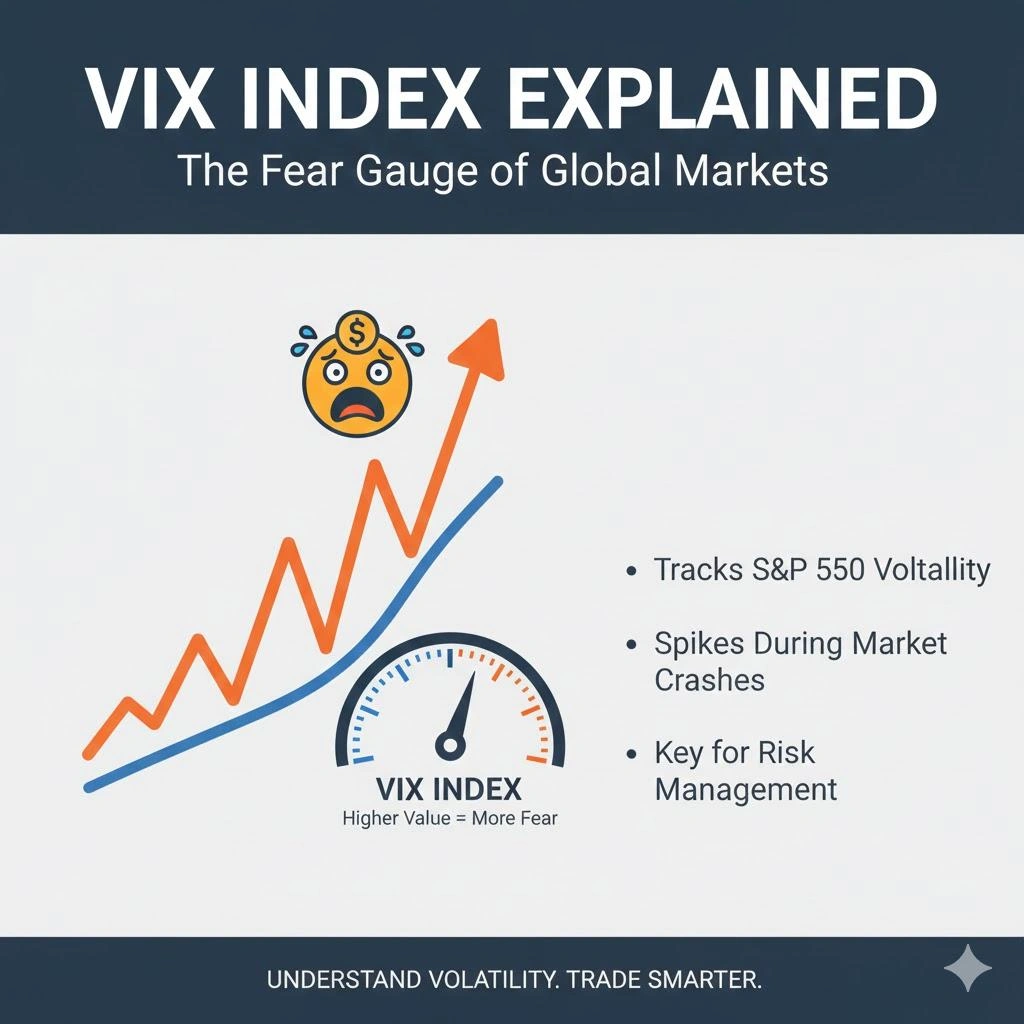
- Using VIX tool to measure the volatility in market
- Watching where the retailers are investing
Each tool captures a different segment of market participants, making it essential to combine them for accurate market sentiment analysis.
Modern Sentiment Sources: Social Media and Retail Data
In today’s world, you can’t avoid the street noise. Platforms like Reddit and X have become massive, with single posts they drive market sentiment. Sudden spikes in mentions, trending tickers, or viral narratives can influence price action.
Modern market sentiment analysis increasingly includes:
- Using softwares to scan what trending on social media
- Watching retail flow to see where the small traders are buying
- Trending asset online which often leads to FOMO among retailers
These sources help traders stay aware of speculative excess and crowd behavior.
Market Sentiment vs Technical and Fundamental Analysis
Sentiment analysis works best when integrated with other forms of analysis. On its own, sentiment will give you hints on market conditions but lacks complete information.
Therefore, to be successful you need to use it like:
- Use sentiments to identify markets direction toward buying or selling
- Then use charts and technical analysis to find the best entries or exit for your trades
- Then use fundamental to make sure it actually supports your decision and market condition
With these three things you can reduce the chances of failure and achieve a higher probability of success.

Contrarian vs Trend-Following Sentiment Strategies
There are two main ways traders use sentiments: either they follow the trend or wait for it to crash.
Contrarian Approach
The Contrarian approach is about going against the markets sentiments. It is a very common trick that traders use believing that sometimes the market overreacts to the news, and starts selling in fear and green leading to prices fall. And after that, these traders starts buying.
Trend-Following Approach
Trend-following traders use sentiment to check the strength in the market, if the price is going up and sentiments show that traders are confident and confirm that trend is going to continue. Then also join the trend.
Common Mistakes in Market Sentiment Analysis
Despite its importance, sentiment analysis is often misunderstood.
Common mistakes to avoid:
- Treating sentiment as the final call, immature traders often sell or buy just on the basis of market sentiments
- Ignoring timeframe, if you’re a day trader avoid placing your trade on weekly or long-term reports
- Relying on a single tool, it can be wrong
- Avoid trending on a single headline, cause many times market drop for an hour but then it again get bet to track
How Market Sentiment Changes Across Timeframes
Market sentiment is not static. It evolves across different timeframes.
- Short-term sentiment reacts quickly to news and data
- Medium-term sentiment reflects broader trends
- Long-term sentiment is driven by economic cycles
Effective market sentiment analysis requires aligning sentiment insights with the intended trading timeframe.
Conclusion
Market sentiment analysis is the lens that lets you see clearly what everyone else is trying to hide. While the retailers or individuals are staring at a red candle on a chart and panicking, you’re looking calm and understanding market sentiment. Integrating the Fear & Greed Index into your strategy doesn’t mean that you are ignoring the actual facts and fundamentals —it’s just you’re trying to understand the ‘mood’ behind it. This shift from reacting to observing is what transforms a gambler into a professional. Mastering this discipline will help you stay consistent, calm, and ready for whatever the 2026 market brings.
If you’re looking forward to gaining more knowledge about other complex concepts of the market then visit InsightfulTrade’s website. Here we have well structured educational sources and expert traders who can guide you in your trading journey.
FAQs
- What is market sentiment analysis?
It is the study of trader and investor emotions to understand market behavior. - How reliable is the fear greed index?
It is useful for context but should be combined with other tools. - Can beginners use market sentiment analysis?
Yes, it helps beginners understand market psychology. - Is sentiment analysis better than technical analysis?
No, it works best when combined with technical and fundamental analysis. - How often should sentiment be reviewed?
Regular review is recommended, especially during volatile periods.
Author: Kumkum Chandak
Experience: 3+ Years in Trading Research & Market Content Strategy
Kumkum Chandak is a trading content strategist and market research writer who specializes in simplifying technical analysis, trading tools, and strategy-driven educational content. Her work is optimized for EEAT, accuracy, and user intent, ensuring every article delivers practical insights for traders of all levels.
Risk Disclaimer:
All content is strictly educational and not financial advice. Trading involves substantial risk. Always perform your own analysis or consult a professional advisor.
Last Updated: 21 December 2025