
 Introduction
The concept of trading US indices India has proved to be among the most thrilling ventures for Indian traders who do not have to trade in the global markets blindly by trading overnight. So, have you ever wondered how to trade US indices in India? Then this is the guide you are looking at. Between knowing the US market timing IST to identifying the most suitable index strategy to use by Indians, the US index trading has high volatility, distinct price action, and flexibility in evening trading hours.
Indian traders are now busy trading US indices to diversify their markets beyond their domestic markets, whether it is the Dow Jones (US30), the NASDAQ (US100), or the S&P 500. Here on the blog, we are going to deconstruct all the information on the trading of US indices in India in an easy, real-life, and trader-friendly manner—no jargon, just information you can put into real practice.
What Does Trading US Indices India Mean?
The US indices trading in India do not imply the trading of US subjects but rather the movement of the US stock market. Trading through CFDs, Indian traders trade indices such as US30, US100, and US500 to gain profit in the market, thanks to the fluctuations.
Traded Indian Major US Indices.
| Index | Symbol | Market type |
| Dow Jones | US$30 | US Blue-chip companies |
| NASDAQ | US$100 | Tech-heavy US market |
| S&P 500 | US$500 | Broad US market |
Why Are US Indices So Popular Among Indian Traders?
The popularity of trading US indices India is due to their quick-moving nature and daily trading. Indices such as US30 and Nasdaq have a distinct price action and respond well to news; hence, they are easier to trade.
- Quick high volatility profits.
- Clean technical movements
- Strong US news impact
- Favorable US market timings (IST).
Is Trading US Indices Legal in India?
Yes, trading US indices India is not illegal as long as it is conducted through the LRS routes recognized by the RBI and international brokers that are SEBI compliant and provide index CFDs.
This is what you should know, provided that you are searching for how to trade us indices India:
- It is possible to trade through CFD platforms.
- The brokers have to act as per the instructions of the RBI and SEBI.
- The money is remitted through the Liberalized Remittance Scheme (LRS).
What Are the US Market Timings IST for Indian Traders?
US market times IST is best suited to the Indian traders since the US market is open in the evening; hence, trading US indices India is easy and convenient. A majority of traders who learn to trade US indices in India pay attention to the New York session, as it is characterized by a lot of volatility.
US Indices Trading Hours (IST)
| Session | IST time | Volatility |
| Pre-Market | 5:00 PM – 6:00 PM | Low |
| New York Open | 6:00 PM – 9:30 PM | High |
| Mid-Session | 9:30 PM – 1:30 AM | Medium |
| Closing Hour | 1:30 AM – 2:30 AM | High |
Which US Index Is Best for Indian Beginners?
Best US indexes to invest in as a beginner investor, up to a pro.
| Trader level | Recommended Index |
| Beginner | US$500 |
| Intermediate | US$30 |
| Advanced | NASDAQ |
US500 is best when you are a beginner because it is less volatile, whereas US30 and NASDAQ are more advantageous when you know the US market timings in IST, as well as risk management.
- Good price movement that honors the support and resistance.
- NFP, CP, I, and FOMC news-related actions.
- Ideal for scalping and intraday trade arrangements.
What Is the Best Index Strategy for Indians?
To be able to trade US indices in India, Indian traders require a straightforward strategy, which can be performed during the US market hours (IST). A breakout-based approach is one of the best techniques employed by traders who have studied how to trade US indices in India.
Best Index Strategy of Indians.
Name of the Strategy: NY Open Breakout Strategy.
Step-by-Step Strategy
- Mark Asian session high & low
- Wait for New York open (6 PM IST)
- Trade the breakout
- Use fixed SL
- Target 1:2 RR
This arrangement is most effective with the US30 and NASDAQ and is very common with trading US indices India.
How Much Capital Is Required to Trade US Indices from India?
In case you are trading with us, the starting capital is an issue. Those who are new to trading US indices India can start with 10,000 rupees, while those who are serious traders with higher capital will have the ability to implement the best index strategy for the Indians.
Indian Traders Capital Recommendation
| Capital | Suitable for |
| ₹10K | Learning |
| ₹25K | Small Lots |
| ₹50K+ | Proper risk management |
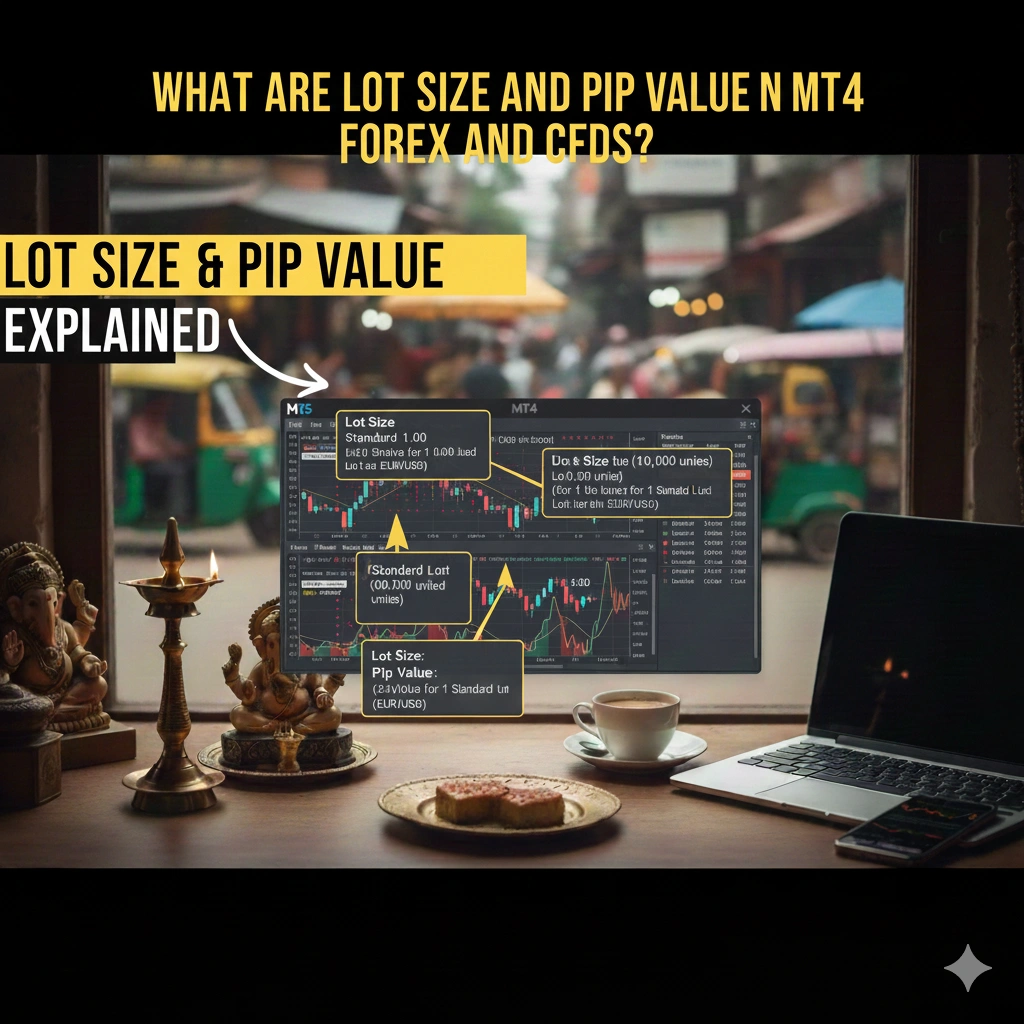
What Are the Lot Size and Pip Value of US Indices?
In the trading US indices India, the lot size and the point (pip) value would be essential in achieving the right risk management. The Indian traders who learn that they can trade US indices in India can compute the potential losses and profits using these values.
US Indices Lot Size Table
| Index | 1 lot value | 1 point value |
| US$30 | 1 contract | $1 per point |
| NASDAQ | 1 contract | $1 per point |
| US$500 | 1 contract | $0.5 per point |
Profit Formula
Profit = Points × Lot Size × Value
Example:
Purchasing US$30 and earning 50 points profit = 50 x $1 = $50 profit.
This assists the Indian traders in planning trades well as they trade the US indices in India using the best index strategy of Indians.
What Are Real Market Examples from Live Trading?
It is easier to see the actual trades to get a clear picture of trading US indices India. The following are practical examples of how Indian traders can learn how to trade the US indices in India with the best index strategy to use by Indians.
Example 1: US30 NY Session Trade
- Entry: 34,500
- SL: 34,420
- Target: 34,650
- Result: +150 points
An example of a trade involving correlation with the EURUSD is below.
When the US30 is bullish, USD becomes weak, and the EURUSD buy signal is verified.
These are instances of how to combine trading in US indices in India with forex pairs to have superior arrangements and manage the risk.
What Are Common Mistakes Indians Make While Trading US Indices?

- Overleveraging—betting the ranch.
- Purchase and sell when the market is not liquid—it causes unforeseeable changes.
- No US news is ignored—significant events such as NFP or FOMC may cause volatility to soar.
- No stop loss—magnifies possible loss.
- Revenge trading is trading blindly.
FAQs
Q.1 Is trading US indices legal in India?
Yes, using CFD brokers as per the RBI regulations.
Q.2 What is the best US index for beginners in India?
US$500 or US$30.
Q.3 What are the US market timings IST?
6:00 PM – 2:30 AM IST.
Q.4 How much can I earn trading US indices?
Relies on capital, strategy, and discipline.
Q.5 Is index trading better than forex?
To be voluble and transparent—yes.
Conclusion
In India, trading in the US indices is an excellent way through which Indian traders can trade in high volatility markets with distinct price movements across the world markets. You can become a smart trader; you can risk-manage effectively by knowing the US market timings IST, the lot sizes that you must use, and the optimal index strategy that is applicable to the Indians.
Indians who are new to the task of trading the US indexes must learn to think small, stick to simple rules such as the NY Open Breakout, and avoid many of the pitfalls, including over-leveraging or ignoring news. Trading in US indices in India is a potentially remunerative part-time or full-time business that can be achieved with practice and discipline.
Trade US indices from India with clarity and confidence. InsightfulTrade helps you understand taxation, compliance, and risks—so you focus on smarter decisions, not surprises. Start trading informed today.
Author: Arihant Jain
Trading Experience: 5+ Years
Arihant Jain is a financial markets analyst and trading educator with expertise in Forex, indices, crypto, and risk-managed trading systems. His insights are based on real trading experience, data-driven analysis, and transparent market understanding. All content is reviewed for accuracy and aligns with Google’s EEAT guidelines.
Risk Disclaimer:
Trading involves substantial risk. All information is for educational purposes only and should not be taken as financial advice. Always do your own research.
Last Updated: 19 December 2025