The movements in global markets are very fast; you can’t just sit analyzing the charts, or else you will lose the opportunities. That’s why you need to stay ahead with understanding the connection between different asset classes. In this, traders often forget about global bond yields, one of the important figures influencing the market force. By using the bond yields, you can measure the growth of the economy, inflation rates, and the global risk capacity.
The further you try to understand how bond yields impact trading, the better you’ll get at trading; it will bring accuracy to your strategies and help you gain confidence in all kinds of financial instruments. This blog explores why bond yields matter, how their correlation with other assets works, and the key market risk signals traders must monitor daily.

Why Bond Yields Matter: A Core Driver of Global Markets
Bond yields refer to the interest investors receive for holding government bonds. When yields move, almost every asset class reacts—sometimes instantly. This makes bond yields one of the strongest market risk indicators in global finance.
Bond Yields and Their Role in Market Sentiment
- High yields → rising interest rates, tightening conditions, stronger currencies
- Low yields → easier monetary policy, lower borrowing costs, higher equity valuations
This is why traders worldwide track yield movements in the US, EU, Japan, the UK, and emerging markets.
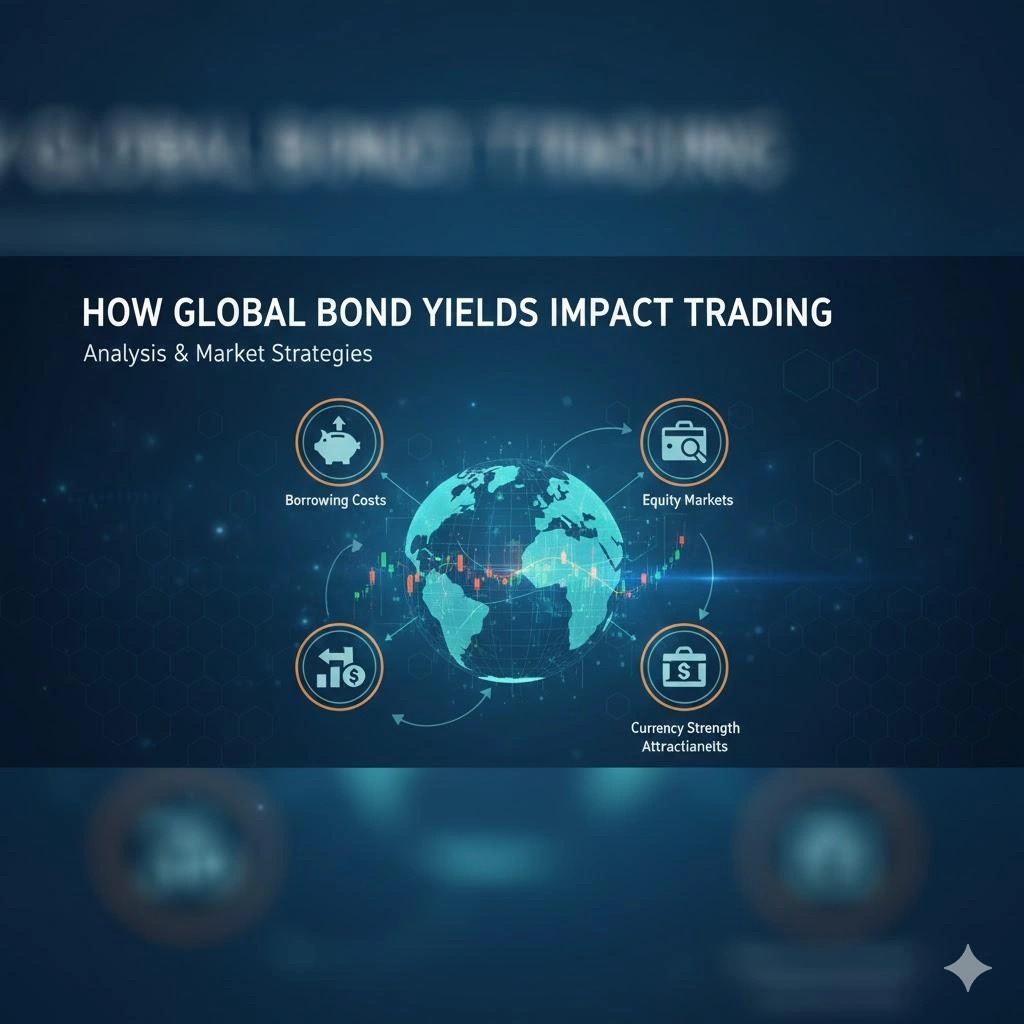
How Bond Yields Impact Trading Across Markets
Bond yields affect nearly every class of tradable assets. Let’s break down the major relationships.
1. Stocks: The Sector Rotation Strategy
Most traders think, “High yields = bad for stocks.” This is only half true.
- Tech & Growth Stocks (NASDAQ): These companies rely on borrowing cheap money to grow. When yields rise, their future earnings are worth less. Result: Yields Up – Tech Down.
- Financials (Banks): Banks profit from higher interest rates. When yields rise, they earn more on loans. Result: Yields Up – Bank Stocks Rally.
Pro Tip: If you see yields spiking, don’t just short the whole market. Rotate out of tech and into financials or energy.
2. Forex: The “Carry Trade” Engine
Currencies are driven by yield spreads—the difference in interest rates between two countries.
- The Carry Trade: Investors borrow money from a country with low yields (like Japan) to buy currency in a country with high yields (like the US).
- The Signal: If the US 10-year yield rises while the Japanese yield stays flat, the spread widens, and USD/JPY rockets higher.
Visual Check: Overlay the US 10-Year Yield chart on top of your USD/JPY chart. You will often see them move in near-perfect lockstep.
3. Commodities: The “Real Yield” Trap
Gold is a non-interest-bearing asset. It pays you nothing to hold it.
- The Correlation: When bond yields are high, investors sell gold to buy bonds (which pay a guaranteed return).
- The Nuance (Real Yields): Smart traders watch real yields (nominal yield minus inflation). If inflation is high but yields are higher, gold will crash. Gold only shines when inflation runs hotter than interest rates.
4. Volatility: The MOVE Index
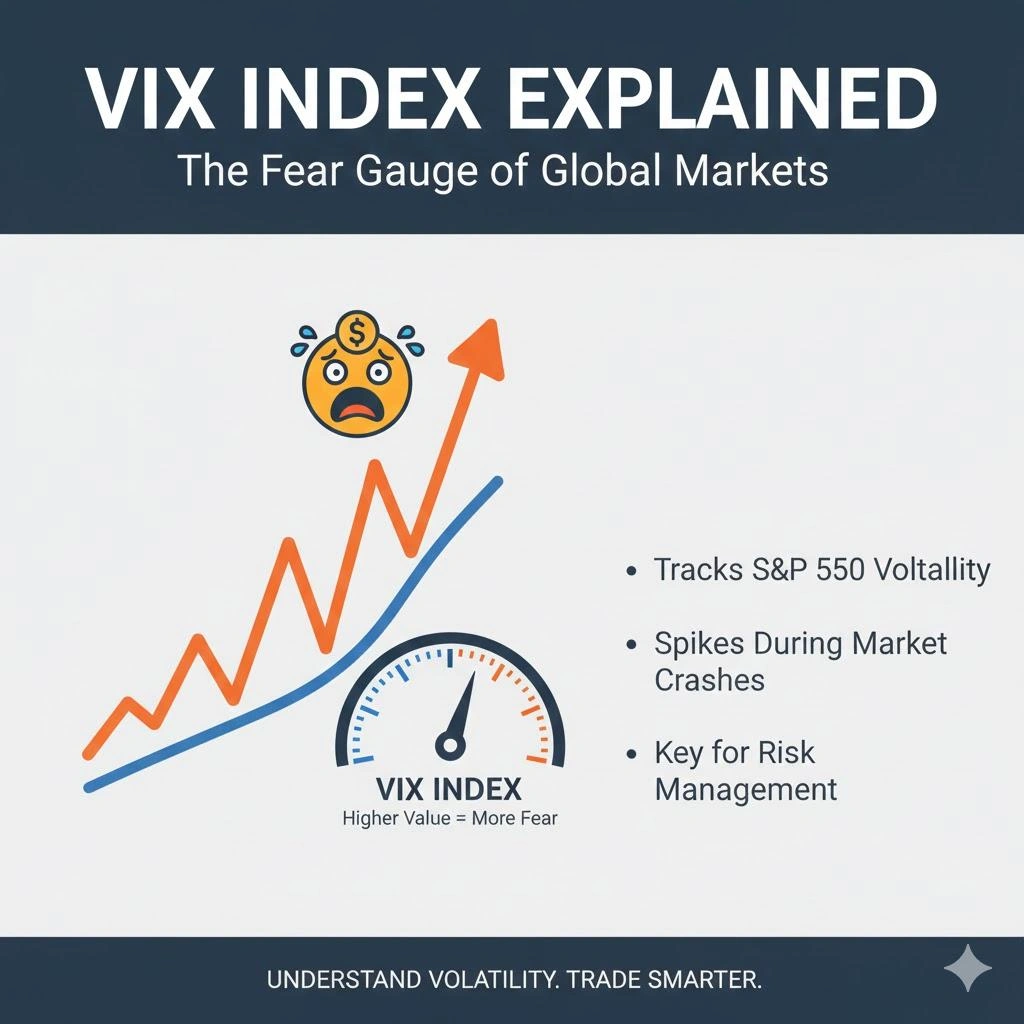
Stock traders watch the VIX (Fear Gauge). But what predicts the VIX?
- The MOVE Index: This measures volatility in the US bond market.
- The Rule: Bond volatility almost always precedes stock market panic. If the MOVE index spikes, a stock market crash is often days or weeks away.

Global Bond Markets Traders Must Track
1. US Treasuries – The World’s Benchmark
The 10-year US Treasury is the most influential yield globally.
Moves in this yield affect:
- USD pairs
- Gold
- US indices
- Global risk sentiment
2. German Bund Yields
Bund yields guide:
- EUR movements
- EU equity valuations
- Bond spreads in Europe
3. Japanese Government Bonds (JGBs)
JGBs matter due to Japan’s yield-curve control policies.
- When JGB yields rise → Yen strengthens
- When JGB yields fall → Yen weakens
4. Emerging Market Yields
Countries like India, Brazil, and South Africa influence forex flows and investor risk appetite.
Key Market Risk Signals Bond Yields Provide
Bond yields are leading indicators that help traders forecast shifts before they appear in price charts.
1. Inflation Expectations
- Rising yields = markets expect inflation
- Falling yields = inflation fears easing
2. Central Bank Policy Direction
Yields often move before central banks announce rate changes.
3. Recession Alerts (Yield Curve Inversion)
An inverted yield curve is one of the strongest predictors of recessions.
4. Risk-On vs Risk-Off Trends
- Higher yields → risk-off sentiment
- Lower yields → risk-on sentiment
5. Liquidity Stress Signals
Sharp yield spikes suggest tightening liquidity, which can trigger market sell-offs.
These signals give you a huge advantage while planning short-term and long-term strategies.

Practical Lessons Traders Can Apply Today
To use bond yields like a professional analyst, traders should:
- Before buying or selling, you should check bond yields to understand the market’s mood.
- Check the difference in interest rates between different countries to grab better opportunities.
- When the bond yield spikes lower, reduce your trade size and tighten the stop-losses.
- Make sure your trades align with the macro trends to avoid wrong investments
- Analyze the bond yields to predict the next movements in stocks, currencies, and metals.
Understanding how bond yields impact trading will help you anticipate shifts instead of reacting late.
Conclusion: Stay Ahead of the Market With Smart Yield Analysis
Look, bond yields are the most important signal of the next market move. So, if you want to stop gambling and want to become a confident trader, then you should watch the yields regularly to form strategies. With the market reacting to it instantly, understanding the bond yield correlation and market risk signals is important for smart, profitable trading.
In this you are not alone; at InsightfulTrade we will teach you how to study the global market trends and make money. Start refining your strategy with expert insights today.
FAQs: Bond Yields Impact Trading
Q1: Why should I track bond yields?
With financial markets reacting instantly to the bond yields. It is beneficial for you to study the bond movements to improve your trading decisions across multiple markets.
Q2: What is the bond yield correlation with stock markets?
When yields rise, stocks—especially tech and growth stocks—tend to fall. When yields drop, equity markets usually benefit.
Q3: Which bond yields matter the most?
The US 10-year Treasury matters the most, as it’s the world’s reserve currency, along with German Bunds, JGBs, and key emerging-market bonds.
Q4: How do yields signal market risk?
When yields rise, it increases the interest rates, and when it falls, borrowing becomes cheaper. Yield curve inversions warn of recession risks.
Q5: How do bond yields affect forex trading?
In bond yields, if the interest rates for one country are high, then it will strengthen the country’s currency, while with lower rates, it will weaken it. That’s why Forex traders track yield spreads between nations.
Author: Kumkum Chandak
Experience: 3+ Years in Trading Research & Market Content Strategy
Kumkum Chandak is a trading content strategist and market research writer who specializes in simplifying technical analysis, trading tools, and strategy-driven educational content. Her work is optimized for EEAT, accuracy, and user intent, ensuring every article delivers practical insights for traders of all levels.
Risk Disclaimer:
All content is strictly educational and not financial advice. Trading involves substantial risk. Always perform your own analysis or consult a professional advisor.
Last Updated: 9 December 2025