 The market runs on confidence and discipline, you can’t predict the next move here. But in the cases of Geopolitical events— like sudden wars, elections, and diplomatic tensions—one thing is certain: market instability. For you, understanding how geopolitical risks influence the market is no longer optional; it’s a survival skill.
In today’s globally connected world, an announcement made in one country immediately ripples effect across the foreign markets, currencies, and commodities worldwide. This Geopolitical Impact Markets blog will help you understanding how global data or news influences the financial market with real time examples, helping you manage these situations calmly with confidence and discipline.
1. Why Geopolitics Matters in Global Trading
Geopolitical events often cause uncertainty, and the market reacts strongly to uncertainty. So whenever there is high political tension present the investors immediately starts questioning:
- Where capital is safest
- Which assets may benefit
- How global growth may be impacted
- What central banks are likely to do next
This creates a ripple effect that brings huge changes in pricing and volatility of the market. We have seen this happening during the Russia–Ukraine war, US–China tensions, Middle East conflicts, or sanction-driven energy disruptions. As a trader it is important for you to understand how Geopolitical impact markets and know how to tackle them.
2. How Geopolitical Risk Spreads Across Global Financial Markets
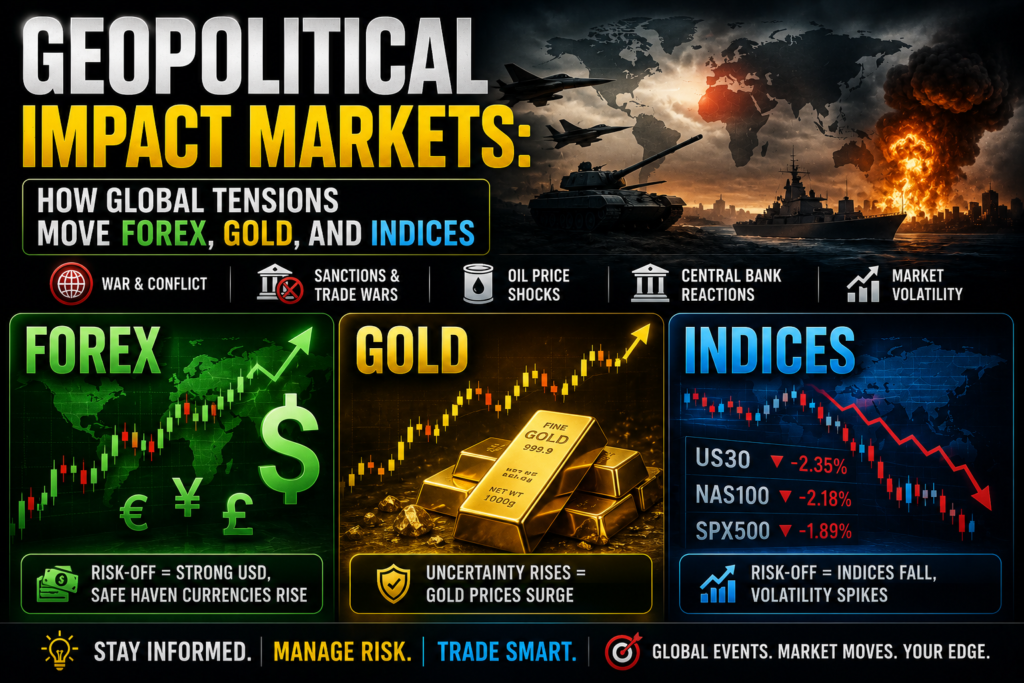
When geopolitical tensions rise, markets adjust through four major channels:
1. Safe-Haven Flows
In volatile market when assets are risky to trade, investors shift their money into assets more safer, such as:
- Gold (XAU/USD)
- USD
- JPY
- CHF
- US Treasury bonds
2. Commodity Supply Shocks
Wars or sanctions often disrupt:
- Oil supply
- Natural gas pipelines
- Agricultural exports
- Industrial metal production
These shocks can lead to sudden price spikes.
3. Risk-Off Sentiment in Equities
Uncertainty pressures global indices, especially:
- US30 (Dow Jones)
- NAS100 (tech-heavy and sensitive to global confidence)
- DAX40 (closely linked to European geopolitical stability)
- NIKKEI225 (influenced by Asia-Pacific tensions)
4. Currency Volatility
Forex markets react very quickly. Markets react strongly to news related to War, sanctions, or diplomatic conflicts can cause sudden spikes or crashes in the currencies.
3. Geopolitical Events and Their Impact on Forex Markets
Forex markets are usually the first to react to geopolitical headlines. Because currencies reflect economic strength and investor confidence, even minor political stress can generate large intraday movements.
Safe-Haven Currency Behavior
During geopolitical shocks:
- JPY strengthens due to Japan’s safe-haven status.
- CHF gains because Switzerland remains politically neutral.
- USD appreciates as global investors seek stability.
Risk Currencies Under Pressure
Currencies linked to global growth tend to weaken during tensions:
- AUD
- NZD
- CAD (especially when oil is volatile)
- Emerging market currencies (INR, ZAR, TRY)
War News Impact on Forex: Recent Examples
Russia–Ukraine War (2022–present)
- EUR declined sharply due to Europe’s dependence on Russian energy.
- USD surged as investors fled to safety.
- Commodity currencies like NOK and CAD saw unusual volatility due to oil fluctuations.
US–China Trade Tensions
- CNY weakens when tariffs or sanctions escalate.
- AUD is indirectly affected due to Australia’s export ties to China.
- JPY strengthens as risk sentiment deteriorates.
These patterns illustrate why geopolitical risk trading requires understanding how currency markets connect to global economic flows.
4. Geopolitical Influence on Commodities: Oil, Gold & Metals
Commodities are extremely sensitive to geopolitical tensions, especially when they threaten physical supply chains.
1. Gold (XAU/USD): The Ultimate Hedge
Gold rises consistently during times of:
- War
- Political uncertainty
- Sanction threats
- Banking system instability
Example:
During the 2023 Middle East tensions, gold surged as traders sought protection from rising risk.
Gold Price Reaction to Geopolitical Shock (Oct 2023)
Visual evidence shows how Gold (XAU/USD) tends to surge sharply when geopolitical risks escalate, as seen in the sudden spike on Oct 7, 2023.
2. Crude Oil (WTI, Brent)
Oil is directly affected by geopolitical events involving:
- Middle East instability
- OPEC+ policy shifts
- Russia sanctions
- Supply chain disruptions
Example:
When Red Sea shipping lanes were threatened in 2024 due to geopolitical conflict, oil prices jumped as traders priced in potential transport delays.
3. Industrial Metals
Copper, aluminum, and nickel move sharply during:
- Trade disputes
- Sanctions on major exporters
- Military conflict affecting mining areas
Commodities traders must follow geopolitical developments closely since pricing moves can occur within seconds of breaking news.
5. How Global Indices React to Geopolitical Events
Equity markets generally dislike uncertainty. Here are some glimpses of how the equity market reacts when geopolitical risk rises.
US Indices:-
US30 (Dow Jones)
- Highly Sensitive to the geopolitical events affecting the manufacturing, energy, and industrial stocks.
NAS100 (NASDAQ)
- More sensitive to global investor sentiment and capital flows.
- Tech stocks decline faster during risk aversion.
European Indices:-
DAX40 (Germany)
- Strongly affected by external geopolitical shocks, especially energy issues and export disruptions.
FTSE100 (UK)
- Moves with global commodity prices; rises when oil is strong.
Asian Indices:-
NIKKEI225 (Japan)
- Falls during Asia-Pacific tensions (North Korea, Taiwan, etc.).
- Impacted by yen strength during safe-haven flows.
Hang Seng (Hong Kong)
- Highly sensitive to China-related geopolitical events.
Case Study: US–Iran & Middle East Conflicts
- Oil stocks surge.
- Airlines, logistics companies, and travel sectors decline.
- US futures often open with large gaps.
All of these reactions show how geopolitical events create multi-layered volatility across stock markets worldwide.
6. Key Geopolitical Events Traders Must Track
Here are the geopolitical events that triggers the market most:
- Events like Wars, Military Conflicts among countries like Ukraine-Russia, Israel-Palastine etc.
- Trade deals and tariffs: This year the crazy tariff war between US vs. China made a huge impact on market fluctuations.
- The Elections: They create tension among traders leading to volatility in the market.
- Diplomatic Strain: NATO mobilizations, UN resolutions, and border disputes.
- The market reacts instantly to the Policy Shifts like Budget, New defense pacts, fiscal overhauls, or shifting alliances etc.
7. Trading Strategies for Geopolitical Risk Events

Geopolitical trading carries opportunity, but also significant risk. Here are practical strategies to stay protected and profitable:
- Trade With the Trend, Not Against Sentiment
During high geopolitical uncertainty:
- Safe havens trend higher
- Risk assets trend lower
Trying to fight the trend is costly.
- Reduce Leverage in Unstable Market
Volatility increases during geopolitical events, leaving tight positions to hit their stop-loss. It’s safe to reduce your lot sizes and widen the stop-loss until the market calms down.
- Track Market Data in Real Time
Use:
- Live news feeds
- Economic calendars for sudden policy changes
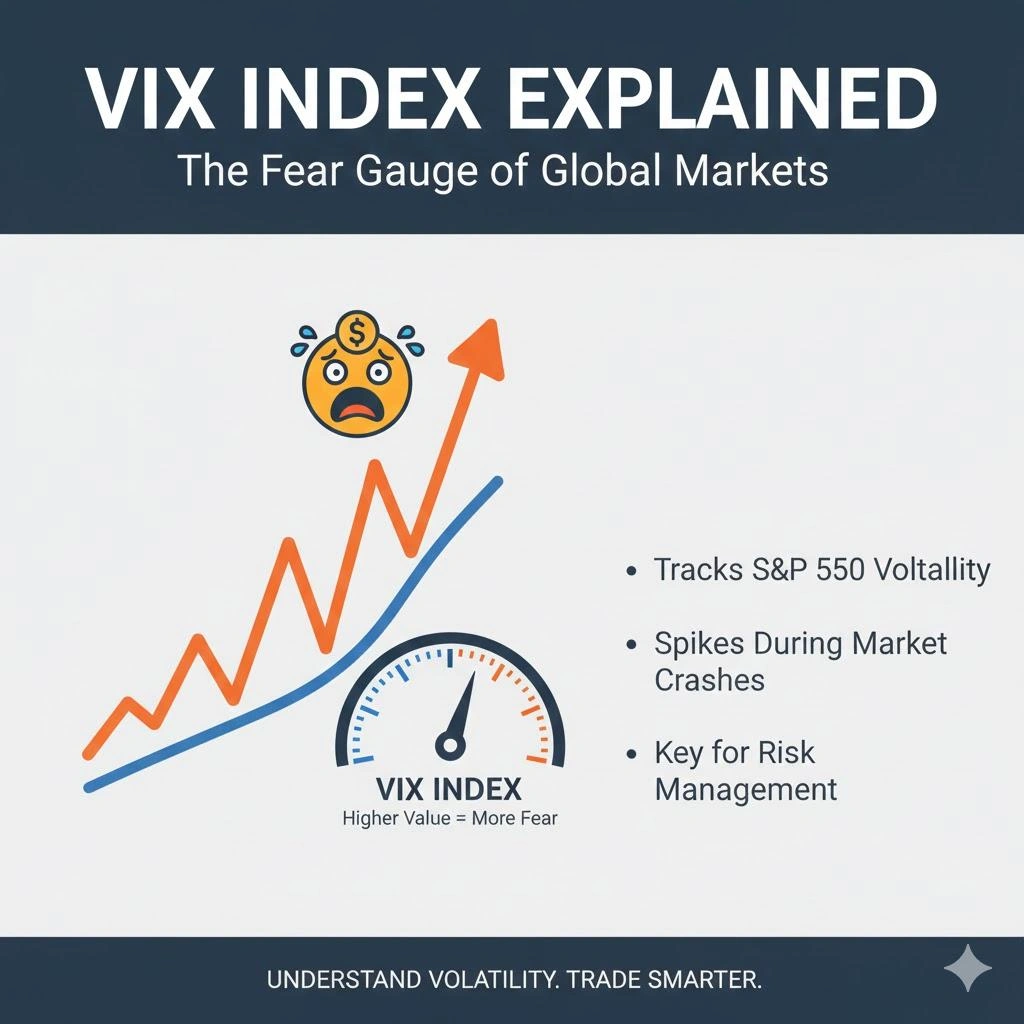
- Volatility dashboards (like the VIX or OVX) to gauge market fear
- Watch Out For Weekends Gaps
Global events usually happen during the weekends leading to gaps opening on Monday’s, sometimes hitting the stop-losses. So be cautious about holding positions during weekends.
- Hedge Using Correlated Assets
Examples:
- Long gold + short indices
- Long USD/JPY during uncertainty
- Long oil when Middle East tensions rise
- Avoid Emotional Trading
During any Geopolitical event, try to trade with patience and maintain discipline in your trade. Focus on price action and fundamentals rather than reacting impulsively to breaking news.
Conclusion: Geopolitical Impact Markets
Geopolitical events reshape markets faster than almost any other catalyst. Understanding how geopolitical impact markets allows you to anticipate volatility and manage your risk rather than just reacting to it. Whether it is the war news impact on forex, the reaction of commodities to supply disruptions, or the pressure on major indices during conflict, geopolitical awareness gives traders a major analytical advantage.
If you’re looking for further classification, visit Insightful Trade website. Their expert breakdowns and real-time market commentary keeps you informed, helping you make your trading decisions more confidently.
FAQs: Geopolitical Impact Markets
1. How do geopolitical events impact forex markets?
During the high volatility market, traders shift their capital to safe-havens like USD, JPY, and CHF while pulling out their capital from risky bets like AUD or emerging market currencies.
2. Which commodities react most to geopolitical tensions?
Oil and gold show the strongest reactions because they are directly linked to supply stability and investor risk sentiment.
3. Why do stock indices fall during geopolitical crises?
Uncertainty kills the confidence of a traders, in this case traders stop taking risk and sell their stock positions.
4. How should traders approach geopolitical risk trading?
To trade safely during the volatile period make sure to stay updated with the news, keep position size small, prioritize safe-haven assets, and hedge positions.
5. What are the geopolitical events that you should keep an eye on every day?
Usually the events that affect the market most are war, elections, sanctions, and trade disputes etc.
Author: Kumkum Chandak
Experience: 3+ Years in Trading Research & Market Content Strategy
Kumkum Chandak is a trading content strategist and market research writer who specializes in simplifying technical analysis, trading tools, and strategy-driven educational content. Her work is optimized for EEAT, accuracy, and user intent, ensuring every article delivers practical insights for traders of all levels.
Risk Disclaimer:
All content is strictly educational and not financial advice. Trading involves substantial risk. Always perform your own analysis or consult a professional advisor.
Last Updated: 9 December 2025